 EN
EN

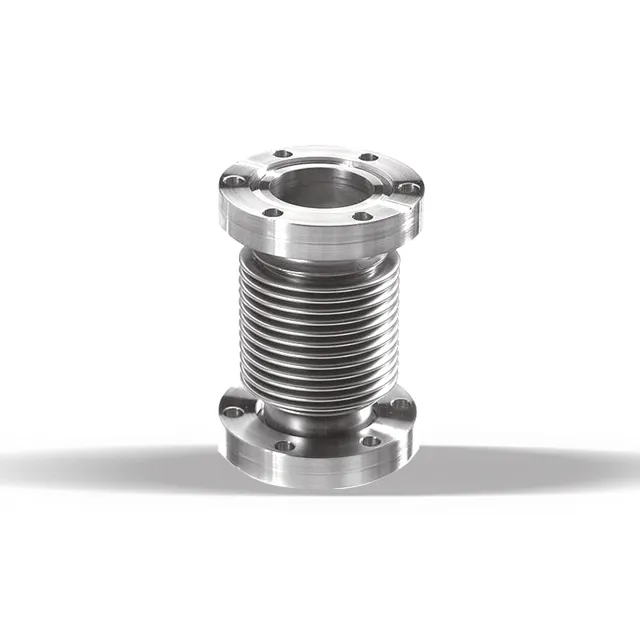
Selecting the right edge welded bellow unit is a critical decision that directly impacts the reliability and performance of your industrial equipment. An edge welded bellow serves as a precision component that accommodates movement, absorbs vibrations, and maintains pressure seals in demanding applications across aerospace, automotive, and process industries. Before committing to an order, buyers must understand the specific requirements their applications demand and evaluate how different edge welded bellow designs and materials will perform under operating conditions.

The process of specifying an edge welded bellow requires careful attention to operational parameters, material compatibility, and design standards that govern your industry. Purchasing without thorough evaluation can result in premature failures, unplanned downtime, safety risks, and costly replacements. This guide walks you through the essential factors that distinguish a suitable edge welded bellow from one that will underperform in your specific application environment.
Understanding Pressure Ratings and Performance Limits
Determining Your Operating Pressure Requirements
Every edge welded bellow unit has a maximum allowable pressure rating that cannot be exceeded safely. This specification defines the upper limit at which the bellows can operate continuously without risk of rupture or permanent deformation. Before ordering, you must identify your system's actual operating pressure, peak pressure spikes, and safety margins required by industry standards or your internal engineering specifications. The edge welded bellow rating must exceed your worst-case pressure scenario by a documented safety factor, typically 1.5 to 2.0 times the maximum operating pressure.
Understanding whether your application requires constant pressure operation or intermittent cycling changes how you should specify the edge welded bellow. Continuous-duty applications with stable pressure profiles may tolerate lower design margins than systems experiencing frequent pressure transients. Conversely, equipment subjected to rapid pressure fluctuations or shock loads demands an edge welded bellow with higher structural capacity and fatigue resistance. Consult your process engineers to confirm the actual pressure envelope your system will experience over the service life of the bellows component.
Cycle Life and Fatigue Considerations
An edge welded bellow subjected to repeated flexing accumulates fatigue damage with each operating cycle. The number of cycles a bellows can withstand before failure depends on the amplitude of movement, material properties, and welding quality. Before ordering, define how many cycles your application expects from the edge welded bellow over its intended service life. This might range from thousands of cycles for laboratory equipment to millions for high-speed machinery or automotive components.
The edge welded bellow's cycle life is directly proportional to the quality of the edge weld itself. Defects, incomplete fusion, or improper welding procedures can initiate cracks that propagate under cyclic loading and cause premature failure. Request documentation of welding standards, inspection procedures, and cycle testing data from your supplier. The edge welded bellow must demonstrate documented cycle life performance that matches or exceeds your application's realistic demands with appropriate safety margins built in.
Material Selection and Environmental Compatibility
Evaluating Fluid Compatibility and Chemical Resistance
The material you select for your edge welded bellow must remain chemically compatible with all fluids, gases, or vapors it contacts during operation. Incompatible material selection is a leading cause of edge welded bellow failures in the field. Different stainless steel grades, special alloys, and coating systems offer varying resistance to corrosive environments, high temperatures, and aggressive chemical exposure. An edge welded bellow fabricated from standard 304 stainless steel may perform reliably in mild applications but fail rapidly if exposed to chloride-rich environments or strong solvents.
Before ordering, compile a complete inventory of all substances the edge welded bellow will contact: process fluids, cleaning solvents, atmospheric moisture, salt spray, or extreme pH conditions. Provide this information to your supplier so they can recommend the appropriate material grade or protective coating for your edge welded bellow. Some applications benefit from specialized alloys like Hastelloy or Inconel, while others require electropolishing, passivation, or proprietary surface treatments to ensure the edge welded bellow survives its operating environment.
Temperature Performance and Material Limits
Temperature extremes directly affect the mechanical properties of the material in your edge welded bellow. As temperature increases, most metals lose strength and become more susceptible to creep and stress relaxation. The edge welded bellow must be fabricated from materials rated for the minimum and maximum temperatures your application will experience, including thermal transients during startup and shutdown cycles. Standard austenitic stainless steels maintain reasonable properties up to about 400 degrees Celsius, while high-temperature applications require nickel-based superalloys or other specialty materials.
Cryogenic applications present equally severe challenges in the opposite direction, as many materials become brittle at extremely low temperatures. An edge welded bellow intended for cryogenic service must be fabricated from materials specifically certified for that temperature range. Additionally, the welding process itself must be adapted to ensure the edge welded bellow's weld heat-affected zone does not develop brittleness or reduced toughness at operating temperature. Always verify that your selected edge welded bellow carries material certifications and temperature ratings documented by recognized testing standards.
Design Specifications and Manufacturing Standards
Establishing Correct Geometric Dimensions
The physical dimensions of your edge welded bellow determine how much axial movement it can accommodate and how it interfaces with your equipment. Before ordering, you must precisely specify the compressed length, extended length, and the total travel distance required for your application. An undersized edge welded bellow that cannot provide sufficient movement will create binding forces and premature wear, while an oversized unit wastes space and cost. The bellows convolutions, diameter, and wall thickness all interact to determine the final movement capability and flexibility characteristics of the edge welded bellow.
Work with your design team to produce detailed dimensional drawings that clearly show how the edge welded bellow interfaces with mating components, mounting flanges, and the surrounding equipment enclosure. The edge welded bellow mounting interfaces must align precisely with your equipment to prevent installation problems and ensure predictable performance. Communicate these specifications unambiguously to your supplier. Dimensional errors discovered after fabrication can delay project schedules and increase costs significantly, so verify that your supplier's drawing review and confirmation step occurs before manufacturing begins.
Quality Standards and Certification Requirements
Different industries enforce specific manufacturing and quality standards that govern how an edge welded bellow must be designed, fabricated, inspected, and certified. Aerospace applications demand compliance with AS9100 quality management standards and may require third-party inspection and certification. Medical and pharmaceutical equipment often requires FDA compliance or ISO 13485 documentation. Industrial applications may specify ASME or ISO standards for pressure-containing components. Before ordering, confirm which standards apply to your application and ensure your supplier's quality management system and manufacturing capabilities align with those requirements.
Request that your supplier provide third-party inspection reports, material certs, weld procedure specifications, and testing data for the edge welded bellow unit you order. This documentation becomes critical evidence if the bellows fails prematurely and creates liability questions. A reputable supplier will provide comprehensive documentation and traceability for every edge welded bellow produced. Do not accept vague assurances about quality; require specific, written certifications that demonstrate the edge welded bellow has been manufactured, inspected, and tested according to documented procedures and relevant industry standards.
FAQ
What is the typical lifespan of an edge welded bellow unit?
The lifespan of an edge welded bellow depends on pressure cycling, operating temperature, material selection, and environmental exposure. An edge welded bellow in a benign, stable application might last ten or more years, while high-cycle applications could require replacement after months of operation. The edge welded bellow's documented cycle life rating provides the manufacturer's prediction under specific test conditions. Your actual service life may differ based on how closely your operating conditions match the test parameters used to establish the edge welded bellow's rating.
Can an edge welded bellow be repaired after failure?
Most edge welded bellow units cannot be economically repaired once they fail. The edge welded bellow's welded construction and precision engineering make field repairs impractical and potentially unsafe. Repair attempts often compromise the integrity of the edge welded bellow beyond recovery. The best approach is to replace a failed edge welded bellow with a properly specified new unit designed to prevent recurrence of the failure mode. Always investigate why the original edge welded bellow failed to ensure the replacement addresses the root cause.
How do I know if my edge welded bellow selection is appropriate for my application?
Verify that the edge welded bellow specification includes documented pressure ratings, cycle life testing, material certifications, and temperature performance data that match your application requirements. Request samples or demonstrations if the edge welded bellow application is critical. Engage your supplier in a detailed technical review that confirms the edge welded bellow can accommodate the movement, withstand the pressure, handle the environmental exposure, and meet the cycle life expectations of your specific equipment. Proper specification before ordering is always more cost-effective than discovering specification errors after installation.