 EN
EN

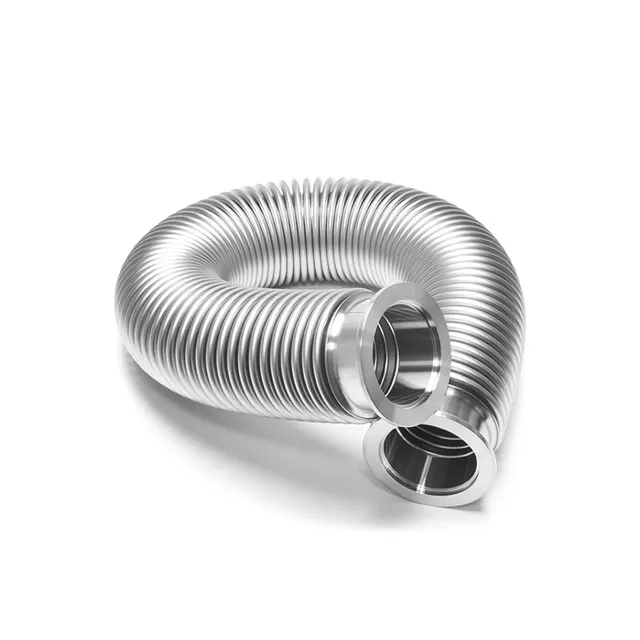
In modern manufacturing environments, maintaining a clean production floor is not simply a matter of aesthetics — it is a direct driver of product quality, equipment longevity, and operational efficiency. industrial vacuum equipment has emerged as one of the most reliable and systematic solutions for achieving and sustaining high cleanliness standards across a wide range of industrial settings. From removing fine particulate matter to extracting hazardous dust and process byproducts, industrial vacuum equipment addresses contamination at the source rather than allowing it to migrate and accumulate throughout a facility.
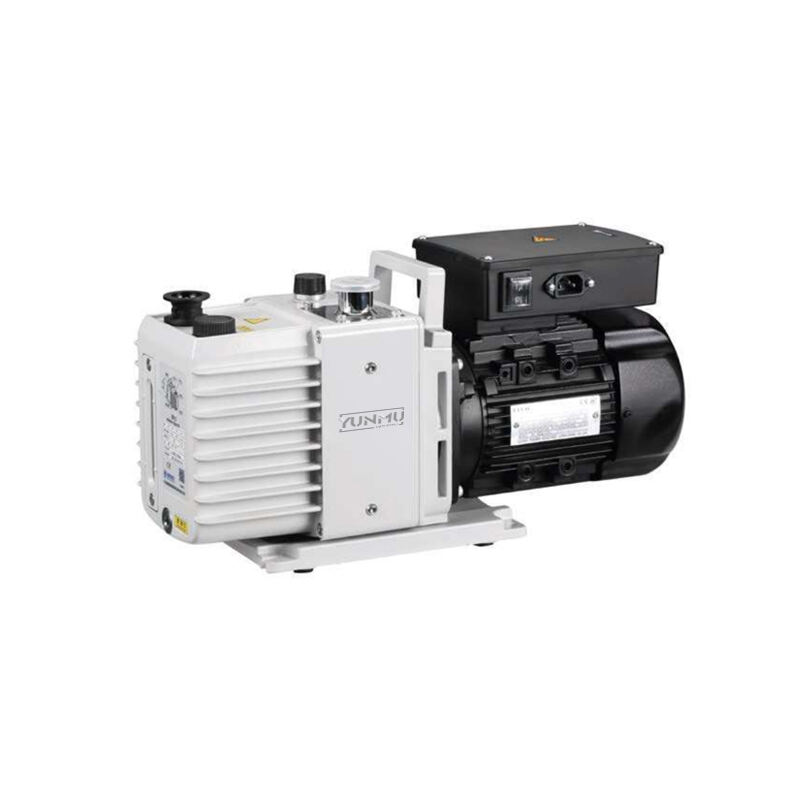
Understanding how industrial vacuum equipment improves production cleanliness requires looking beyond the basic concept of suction. These systems are engineered to integrate with production workflows, capture contaminants at the point of generation, and maintain consistent air and surface quality throughout continuous operations. For B2B decision-makers evaluating cleanliness strategies, the case for deploying industrial vacuum equipment is grounded in measurable operational outcomes rather than theoretical benefits.
The Role of Industrial Vacuum Equipment in Contamination Control
Capturing Contaminants at the Source
One of the most significant ways industrial vacuum equipment improves production cleanliness is through source capture — the practice of extracting dust, debris, and process waste at the exact point where it is generated. Unlike passive cleaning methods that address contamination after it has already spread, source capture systems integrated into machining stations, conveyor lines, or assembly areas prevent particles from becoming airborne in the first place.
When contaminants are allowed to disperse freely, they settle on sensitive components, clog machinery, and compromise product surfaces. Industrial vacuum equipment with properly designed intake hoods and extraction arms can remove up to the vast majority of generated particles before they reach the surrounding environment. This dramatically reduces the burden on secondary cleaning processes and lowers the risk of contamination-related defects.
Source capture also protects workers from prolonged exposure to fine particulates, which is particularly important in industries handling metal shavings, chemical powders, or composite materials. The cleanliness benefit therefore extends beyond the product itself to the entire production environment.
Continuous Operation Without Production Interruption
Traditional cleaning approaches often require production lines to pause while manual cleaning is performed. Industrial vacuum equipment, by contrast, is designed to operate continuously alongside active production processes. This means cleanliness is maintained in real time rather than being addressed in scheduled intervals that allow contamination to accumulate.
Continuous extraction systems connected to central industrial vacuum equipment networks can serve multiple workstations simultaneously, ensuring that no single point in the production chain becomes a contamination bottleneck. This is especially valuable in high-throughput environments where downtime for cleaning carries significant cost implications.
The ability to maintain cleanliness without interrupting production is one of the clearest operational advantages that industrial vacuum equipment offers over conventional cleaning methods. It transforms cleanliness from a reactive maintenance task into a proactive, integrated process function.
How Industrial Vacuum Equipment Addresses Specific Cleanliness Challenges
Managing Fine Dust and Airborne Particles
Fine dust is among the most persistent cleanliness challenges in industrial production. Particles below a certain micron threshold are invisible to the naked eye yet capable of causing significant damage to precision components, electronic assemblies, and optical surfaces. Industrial vacuum equipment equipped with high-efficiency filtration systems is specifically designed to capture these ultra-fine particles rather than simply relocating them.
Advanced filtration stages within industrial vacuum equipment — including multi-layer filter media and fine particulate separators — ensure that captured dust is retained within the system rather than being exhausted back into the production environment. This closed-loop approach to dust management is essential for industries with strict cleanliness specifications, such as semiconductor fabrication, pharmaceutical manufacturing, and precision engineering.
Regular maintenance of filtration components within industrial vacuum equipment is equally important. A well-maintained system sustains its capture efficiency over time, whereas a neglected system can become a source of secondary contamination. Establishing maintenance schedules aligned with production intensity is a key part of maximizing the cleanliness benefits of industrial vacuum equipment.
Handling Wet and Mixed Waste Streams
Production cleanliness challenges are not always limited to dry particulates. Many industrial processes generate mixed waste streams that include coolant fluids, oils, slurries, and wet debris. Industrial vacuum equipment designed for wet and dry extraction can handle these complex waste streams without the risk of clogging or system damage that would affect standard dry-only units.
In metalworking and machining environments, for example, cutting fluids mixed with metal chips create a particularly difficult cleaning challenge. Industrial vacuum equipment with appropriate separator tanks and liquid-handling capacity can extract this mixed waste efficiently, keeping work surfaces clean and preventing fluid accumulation that could lead to slip hazards or corrosion of nearby equipment.
The versatility of industrial vacuum equipment in handling diverse waste types means that a single system can address multiple cleanliness challenges across different production zones, simplifying the overall cleanliness management strategy for facility managers.
Integration of Industrial Vacuum Equipment into Production Workflows
Fixed Installation Versus Mobile Deployment
Industrial vacuum equipment can be deployed in two primary configurations: fixed centralized systems and mobile portable units. Each configuration offers distinct advantages depending on the layout and nature of the production environment. Fixed systems are typically connected via a network of suction pipes to multiple extraction points throughout the facility, providing consistent and hands-free contamination removal at every connected station.
Mobile industrial vacuum equipment, on the other hand, offers flexibility for facilities where production layouts change frequently or where targeted cleaning is needed in areas not served by fixed infrastructure. Mobile units can be repositioned quickly and are well-suited for maintenance tasks, equipment changeovers, and spot cleaning in areas where contamination levels temporarily spike.
Many facilities benefit from a hybrid approach, combining centralized industrial vacuum equipment for continuous extraction at primary workstations with mobile units for supplementary and responsive cleaning. This layered strategy ensures comprehensive cleanliness coverage without over-investing in fixed infrastructure for every corner of the facility.
Automation and Process Integration
Modern industrial vacuum equipment can be integrated with production automation systems, allowing extraction to activate automatically in response to machine cycles, conveyor movements, or sensor-triggered events. This level of integration eliminates the reliance on manual activation and ensures that vacuum extraction occurs precisely when and where it is needed.
Automated industrial vacuum equipment reduces the risk of human error in cleanliness management and ensures consistent performance across all shifts and operators. In facilities operating around the clock, this consistency is critical for maintaining uniform product quality and meeting cleanliness standards that do not vary with shift changes or staffing levels.
Integration with building management systems also allows facility managers to monitor the performance of industrial vacuum equipment remotely, track filter saturation levels, and schedule maintenance proactively. This data-driven approach to cleanliness management represents a significant advancement over traditional reactive cleaning practices.
Cleanliness Standards and Compliance Benefits
Meeting Industry-Specific Cleanliness Requirements
Many industries operate under strict cleanliness standards defined by regulatory bodies, customer specifications, or internal quality frameworks. Industrial vacuum equipment plays a direct role in helping facilities meet these standards consistently. In food processing, for example, the removal of product residues and allergen-carrying dust is a regulatory requirement, and industrial vacuum equipment provides the systematic extraction capability needed to comply with hygiene standards.
In pharmaceutical manufacturing, cleanroom environments demand extremely low particle counts, and industrial vacuum equipment with validated filtration performance is an essential tool for maintaining these conditions. Similarly, in electronics assembly, the presence of conductive particles can cause short circuits and product failures, making industrial vacuum equipment a quality-critical investment rather than simply a housekeeping tool.
By deploying industrial vacuum equipment that is matched to the specific cleanliness requirements of the industry, manufacturers can demonstrate compliance more reliably during audits and inspections, reducing the risk of non-conformance findings and the associated costs of remediation.
Reducing Rework, Scrap, and Quality Failures
Contamination is a leading cause of rework and scrap in precision manufacturing. When particles contaminate surfaces during coating, welding, bonding, or assembly operations, the resulting defects often require costly rework or result in parts being scrapped entirely. Industrial vacuum equipment reduces the incidence of these contamination-driven quality failures by maintaining cleaner conditions at every stage of the production process.
The financial impact of reduced rework and scrap is one of the most compelling business cases for investing in industrial vacuum equipment. Even a modest reduction in contamination-related defects can translate into significant cost savings over the course of a production year, particularly in high-value manufacturing sectors where individual part costs are substantial.
Beyond direct cost savings, improved cleanliness supported by industrial vacuum equipment also contributes to more predictable production yields, which simplifies capacity planning and reduces the pressure on quality control teams to manage a high volume of non-conforming parts.
Selecting the Right Industrial Vacuum Equipment for Cleanliness Goals
Matching Equipment Capacity to Production Scale
Selecting industrial vacuum equipment that is appropriately sized for the production environment is essential for achieving the desired cleanliness outcomes. Undersized equipment will struggle to maintain adequate extraction rates during peak production, allowing contamination to accumulate despite the system being in operation. Oversized equipment, while capable, may represent an unnecessary capital investment and higher operating costs.
Key parameters to evaluate when sizing industrial vacuum equipment include the volume of waste generated per unit time, the number of extraction points to be served simultaneously, the distance between extraction points and the central unit, and the physical characteristics of the waste material. Consulting with equipment specialists who can model these parameters against available system configurations is a sound approach to ensuring the right fit.
It is also worth considering future production growth when selecting industrial vacuum equipment. Systems that can be scaled through additional modules or expanded suction networks offer better long-term value than fixed-capacity units that may become inadequate as production volumes increase.
Filtration Performance as a Cleanliness Determinant
The filtration system within industrial vacuum equipment is arguably the most critical determinant of its cleanliness performance. A high-capacity vacuum unit with inadequate filtration will capture waste but fail to retain fine particles, effectively redistributing contamination rather than eliminating it. Specifying the correct filtration grade for the particle sizes present in the production environment is therefore a non-negotiable step in equipment selection.
Industrial vacuum equipment is available with a range of filtration options, from standard multi-stage filters suitable for general industrial dust to high-efficiency particulate filters designed for fine and hazardous dust applications. Understanding the particle size distribution of the contaminants in a specific production environment allows buyers to specify filtration performance with precision rather than defaulting to a generic standard.
Ease of filter maintenance and replacement should also factor into the selection of industrial vacuum equipment. Systems that allow filter changes without exposing operators to captured contaminants, and that provide clear indicators of filter saturation, support consistent cleanliness performance over the full operational life of the equipment.
FAQ
How does industrial vacuum equipment differ from standard commercial vacuum cleaners in a production setting?
Industrial vacuum equipment is engineered for continuous heavy-duty operation, high-volume waste extraction, and integration with production machinery — capabilities that standard commercial vacuum cleaners are not designed to provide. Industrial systems offer significantly greater suction power, larger waste collection capacities, robust filtration for fine and hazardous particles, and the structural durability required for demanding manufacturing environments. They are built to operate alongside active production processes rather than being used only during scheduled cleaning intervals.
Can industrial vacuum equipment handle both dry dust and liquid waste in the same system?
Yes, many configurations of industrial vacuum equipment are designed for wet and dry extraction, allowing them to handle mixed waste streams that include both solid particulates and liquids such as coolants, oils, and slurries. These systems incorporate separator tanks and liquid-tolerant components that prevent damage from fluid ingestion. However, it is important to specify the correct system type for the waste characteristics present in a given production environment, as not all industrial vacuum equipment is rated for wet extraction.
How frequently should industrial vacuum equipment be maintained to sustain cleanliness performance?
Maintenance frequency for industrial vacuum equipment depends on the volume and type of waste being extracted, the operating hours of the system, and the filtration grade in use. In high-intensity production environments, filter checks and waste container emptying may be required daily or even multiple times per shift. Less demanding applications may allow for weekly maintenance cycles. Most modern industrial vacuum equipment includes filter saturation indicators and performance monitoring features that help operators identify when maintenance is needed rather than relying solely on fixed schedules.
What industries benefit most from deploying industrial vacuum equipment for production cleanliness?
Industries with strict cleanliness requirements or high contamination generation rates benefit most from industrial vacuum equipment. These include pharmaceutical manufacturing, food and beverage processing, semiconductor and electronics fabrication, precision metalworking, automotive component production, and composite materials manufacturing. In each of these sectors, contamination directly affects product quality, regulatory compliance, and operational efficiency, making industrial vacuum equipment a strategically important investment rather than a peripheral facility management tool.
Table of Contents
- The Role of Industrial Vacuum Equipment in Contamination Control
- How Industrial Vacuum Equipment Addresses Specific Cleanliness Challenges
- Integration of Industrial Vacuum Equipment into Production Workflows
- Cleanliness Standards and Compliance Benefits
- Selecting the Right Industrial Vacuum Equipment for Cleanliness Goals
-
FAQ
- How does industrial vacuum equipment differ from standard commercial vacuum cleaners in a production setting?
- Can industrial vacuum equipment handle both dry dust and liquid waste in the same system?
- How frequently should industrial vacuum equipment be maintained to sustain cleanliness performance?
- What industries benefit most from deploying industrial vacuum equipment for production cleanliness?