 EN
EN

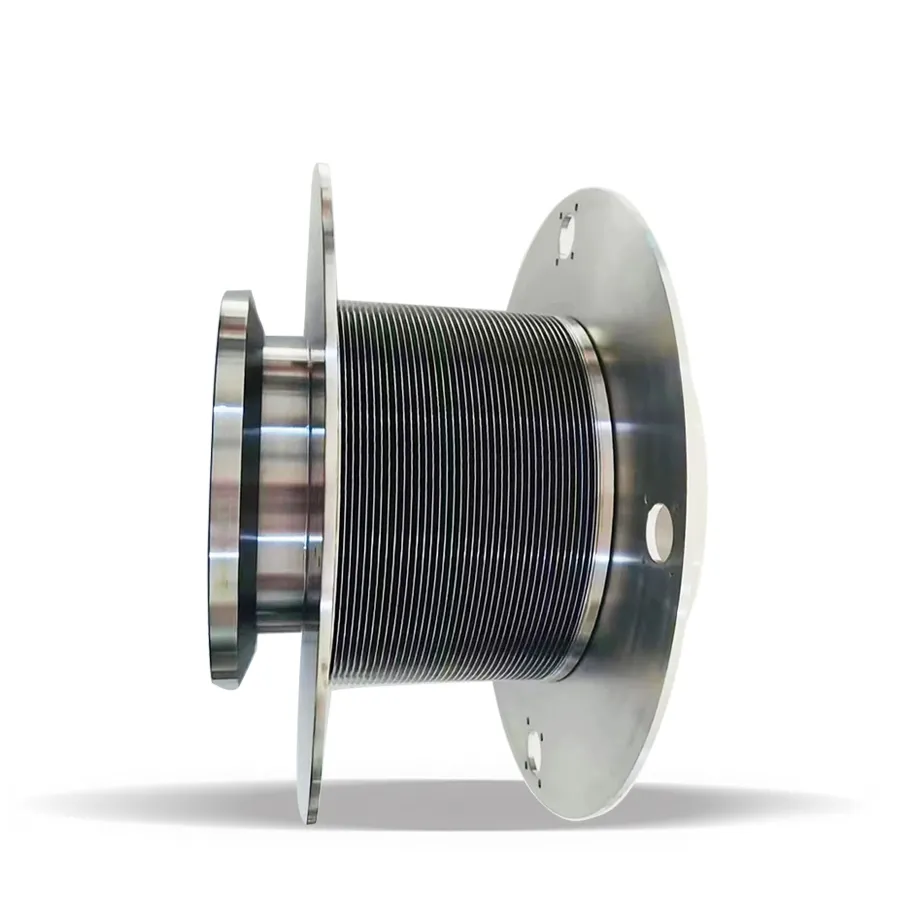
Across the global manufacturing landscape, vacuum technology has emerged as one of the most consequential forces reshaping how precision components are designed, processed, and assembled. From semiconductor fabrication to aerospace part finishing, the ability to create and control low-pressure environments has unlocked process capabilities that were simply not achievable under atmospheric conditions. As manufacturing tolerances tighten and product complexity increases, the role of vacuum technology in sustaining quality and throughput has grown from a niche advantage into a fundamental operational requirement.
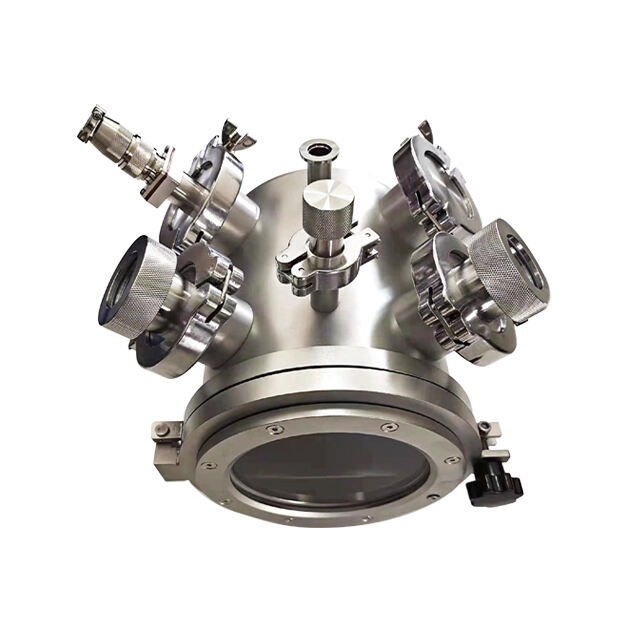
Understanding how vacuum technology is transforming precision manufacturing lines requires looking beyond the equipment itself and examining the process-level changes it enables. It is not simply about removing air from a chamber. It is about creating a controlled environment where contamination is eliminated, material behavior becomes predictable, and process repeatability reaches levels that conventional open-air manufacturing cannot match. This article explores the mechanisms, applications, and strategic implications of vacuum technology across modern precision manufacturing environments.
The Mechanism Behind Vacuum Technology in Manufacturing
How Low-Pressure Environments Change Process Physics
At its core, vacuum technology works by reducing the density of gas molecules within a defined space, which fundamentally alters how materials interact with their environment. In a standard atmospheric setting, oxygen, moisture, and airborne particulates are constant variables that introduce unpredictability into sensitive processes. When vacuum technology removes these variables, the physics of heating, bonding, coating, and forming all shift in measurable and controllable ways.
For example, in vacuum heat treatment, the absence of oxygen prevents surface oxidation, allowing metals to be processed at high temperatures without forming scale or discoloration. This preserves dimensional accuracy and surface integrity in ways that atmospheric furnaces cannot reliably achieve. The result is a finished component that meets tighter geometric tolerances and requires less post-processing, which directly reduces cycle time and scrap rates on precision manufacturing lines.
Similarly, in vacuum brazing and diffusion bonding, the controlled environment ensures that joint interfaces are free from contamination, producing bonds with consistent mechanical properties. This level of process control is what makes vacuum technology indispensable in industries where joint failure is not an acceptable outcome, such as medical device manufacturing or high-performance fluid systems.
Vacuum Levels and Their Process Relevance
Not all vacuum environments are equivalent, and understanding the distinction between rough vacuum, medium vacuum, high vacuum, and ultra-high vacuum is essential for matching vacuum technology to the right manufacturing application. Rough vacuum, typically achieved with rotary vane pumps, is sufficient for many material handling and forming operations. High and ultra-high vacuum levels, achieved through turbomolecular or ion pumps, are required for thin-film deposition, electron beam processing, and semiconductor lithography.
Precision manufacturing lines are increasingly designed with modular vacuum zones, where different stages of production operate at different pressure levels. This architecture allows manufacturers to apply vacuum technology selectively and efficiently, avoiding the energy cost of maintaining deep vacuum across an entire line while still capturing the process benefits where they matter most. The engineering of these multi-zone vacuum systems represents one of the more sophisticated aspects of modern production line design.
Choosing the correct vacuum level for a given process is not a trivial decision. Under-specifying the vacuum can result in residual contamination that compromises product quality, while over-specifying it adds unnecessary capital and operating cost. This is why process engineers working with vacuum technology must have a detailed understanding of both the chemistry and physics of their specific manufacturing steps.
Key Manufacturing Processes Transformed by Vacuum Technology
Thin-Film Deposition and Surface Engineering
One of the most transformative applications of vacuum technology in precision manufacturing is physical vapor deposition, or PVD, and chemical vapor deposition, or CVD. These processes use vacuum environments to deposit extremely thin, uniform layers of material onto substrate surfaces, enabling functional coatings that enhance hardness, wear resistance, optical properties, or electrical conductivity. Without vacuum technology, the mean free path of vapor molecules would be too short to achieve the film uniformity and adhesion quality that these applications demand.
In cutting tool manufacturing, PVD coatings applied through vacuum technology have extended tool life by factors of three to ten compared to uncoated equivalents. In optical component production, vacuum-deposited anti-reflective coatings achieve transmission efficiencies that are critical for laser systems, imaging devices, and photovoltaic panels. These are not incremental improvements. They represent step-change performance gains that are only possible because vacuum technology creates the controlled deposition environment required.
The precision of thin-film deposition also depends on the stability and repeatability of the vacuum environment over time. Modern vacuum technology systems used in production environments are engineered with real-time pressure monitoring, automated leak detection, and closed-loop control systems that maintain process conditions within narrow tolerances across thousands of production cycles. This level of process stability is what allows manufacturers to commit to tight coating specifications on high-value components.
Vacuum Forming and Composite Processing
In the production of complex-geometry components from thermoplastic and composite materials, vacuum technology plays a central role in both forming and consolidation processes. Vacuum forming uses differential pressure to draw heated thermoplastic sheets over molds with high dimensional fidelity, enabling the production of intricate shapes that would be difficult or impossible to achieve through conventional pressing or injection molding at comparable cost.
In composite manufacturing, vacuum bagging and vacuum-assisted resin transfer molding use vacuum technology to consolidate fiber reinforcements and matrix materials under controlled pressure, eliminating voids and ensuring uniform resin distribution throughout the part. The mechanical properties of the resulting composite are directly dependent on the quality of the vacuum applied during cure. Parts manufactured with well-controlled vacuum technology consistently outperform those produced with inadequate vacuum in fatigue life, interlaminar shear strength, and dimensional stability.
Aerospace and defense manufacturers have long relied on vacuum technology for composite processing, but the technique is now spreading into automotive, sporting goods, and industrial equipment sectors as the cost of vacuum infrastructure has decreased and the performance demands on lightweight structures have increased. This diffusion of vacuum technology into new manufacturing sectors is one of the clearest indicators of its transformative impact.
Vacuum Handling and Assembly Automation
Beyond process chambers, vacuum technology is also transforming how components are handled and assembled on precision manufacturing lines. Vacuum grippers and end-of-arm tooling use controlled suction to pick, place, and orient delicate or irregularly shaped parts without mechanical contact that could cause damage or contamination. This is particularly valuable in electronics assembly, where components are fragile, densely packed, and must be placed with sub-millimeter accuracy.
Robotic systems equipped with vacuum technology-based grippers can handle a far wider range of part geometries than mechanical clamps or magnetic systems, and they can do so at speeds that support high-throughput production. The integration of vacuum technology into automated assembly lines has been a key enabler of the shift toward flexible manufacturing, where a single line can process multiple product variants without extensive retooling.
Vacuum chucks and fixtures are also widely used in precision machining to hold workpieces without the clamping forces that can distort thin-walled or delicate parts. By distributing holding force uniformly across the part surface, vacuum technology allows machinists to achieve tighter tolerances on components that would deflect under conventional mechanical clamping. This application is particularly important in the production of optical elements, thin-section aerospace parts, and precision electronic substrates.
Quality and Repeatability Gains Driven by Vacuum Technology
Contamination Control as a Quality Foundation
One of the most direct ways vacuum technology improves quality on precision manufacturing lines is through contamination control. In atmospheric environments, even cleanroom-grade facilities cannot fully eliminate the influence of airborne particles, moisture, and reactive gases on sensitive processes. Vacuum technology addresses this at the process level by removing the medium through which contamination travels, creating an inherently cleaner process environment than any atmospheric filtration system can provide.
This contamination control benefit is especially significant in semiconductor manufacturing, where a single particle on a wafer surface can render an entire die non-functional. Vacuum technology is not just a supporting element in semiconductor fabrication. It is the foundational infrastructure around which the entire process architecture is built. Every critical step, from lithography to etching to deposition, occurs within a vacuum environment specifically because contamination at the nanometer scale is process-defining.
In less extreme but still demanding applications, such as precision bearing manufacturing or medical implant surface treatment, vacuum technology provides a contamination-controlled environment that supports consistent surface chemistry and dimensional outcomes. Manufacturers who have transitioned critical process steps into vacuum environments consistently report reductions in defect rates and improvements in first-pass yield, which translate directly into lower cost of quality and higher customer satisfaction.
Process Repeatability and Statistical Control
Precision manufacturing is fundamentally about repeatability. A process that produces an excellent result once but cannot reproduce it reliably has limited industrial value. Vacuum technology contributes to repeatability by reducing the number of uncontrolled variables in a process environment. When pressure, temperature, and gas composition are all tightly controlled within a vacuum system, the process inputs are more consistent, and the outputs follow accordingly.
Modern vacuum technology systems are equipped with sophisticated instrumentation that enables statistical process control at the chamber level. Pressure transducers, residual gas analyzers, and temperature sensors feed data into process control systems that can detect drift before it affects product quality. This real-time monitoring capability transforms vacuum technology from a passive environmental control into an active quality management tool.
For manufacturers operating under quality management systems such as ISO 9001 or AS9100, the traceability and documentation capabilities of modern vacuum technology systems also support compliance requirements. Process parameters are logged automatically, providing an auditable record of the conditions under which each batch was produced. This documentation infrastructure is increasingly expected by customers in regulated industries and represents a tangible operational benefit of investing in well-engineered vacuum technology.
Strategic Implications for Precision Manufacturing Operations
Capital Investment and Return Considerations
Integrating vacuum technology into a precision manufacturing line represents a meaningful capital investment, and the decision requires careful analysis of process requirements, production volumes, and quality targets. The cost of vacuum chambers, pumping systems, instrumentation, and supporting infrastructure can be substantial, particularly for high-vacuum or ultra-high-vacuum applications. However, the return on this investment is typically realized through multiple value streams simultaneously.
Reduced scrap and rework rates, extended tooling life, elimination of post-process cleaning steps, and the ability to produce components that command premium pricing are all financial benefits that accrue from well-implemented vacuum technology. Manufacturers who evaluate the investment purely on equipment cost often underestimate the total value delivered. A more complete analysis considers the cost of quality failures avoided, the revenue enabled by new product capabilities, and the competitive differentiation that vacuum technology provides.
The total cost of ownership of vacuum technology systems also depends heavily on maintenance practices and system design. Systems engineered for reliability, with accessible components, predictive maintenance capabilities, and robust sealing systems, deliver lower lifetime operating costs than lower-specification alternatives. This is an important consideration when evaluating vacuum technology suppliers and system configurations for long-term production use.
Integration with Industry 4.0 and Smart Manufacturing
Vacuum technology is increasingly being integrated into broader Industry 4.0 architectures, where process data from vacuum systems feeds into manufacturing execution systems, digital twins, and predictive analytics platforms. This integration allows manufacturers to correlate vacuum process parameters with downstream quality outcomes, identify process signatures that predict defects before they occur, and optimize vacuum system performance across an entire production network.
The connectivity of modern vacuum technology systems also supports remote monitoring and diagnostics, which reduces the need for on-site technical intervention and enables faster response to process anomalies. For manufacturers operating multiple facilities or running continuous production schedules, this remote visibility into vacuum system performance is a significant operational advantage that reduces downtime risk and supports proactive maintenance planning.
As digital manufacturing capabilities continue to mature, the data generated by vacuum technology systems will become an increasingly valuable asset. Process engineers who understand how to interpret and act on vacuum system data will be better positioned to drive continuous improvement on precision manufacturing lines, making investment in vacuum technology not just a process decision but a data strategy decision as well.
FAQ
What types of precision manufacturing processes benefit most from vacuum technology?
Processes that involve surface treatment, thin-film deposition, high-temperature material processing, composite consolidation, and contamination-sensitive assembly benefit most from vacuum technology. These include PVD and CVD coating, vacuum heat treatment, vacuum brazing, composite curing, and precision component handling in electronics and semiconductor manufacturing. The common thread is that all of these processes require a controlled environment where atmospheric gases, moisture, or particles would otherwise compromise quality or repeatability.
How does vacuum technology improve dimensional accuracy in machined components?
Vacuum technology improves dimensional accuracy primarily through vacuum fixturing, where workpieces are held by distributed suction rather than mechanical clamping. This eliminates the localized clamping forces that can deflect thin-walled or delicate parts during machining, allowing the cutting tool to operate on a part that is in its true geometric state. The result is machined dimensions that more closely match design intent, particularly for components with tight tolerances or complex geometries that are susceptible to clamping-induced distortion.
Is vacuum technology suitable for high-volume production environments?
Yes, vacuum technology is well-suited to high-volume production when systems are properly engineered for throughput. Continuous vacuum furnaces, inline vacuum coating systems, and multi-chamber vacuum processing platforms are all designed to support high production rates while maintaining the process control benefits of a vacuum environment. The key is matching the vacuum system architecture to the production volume and cycle time requirements of the specific manufacturing line, which requires careful process engineering during the system design phase.
What maintenance practices are critical for sustaining vacuum technology performance on a production line?
Sustaining vacuum technology performance requires regular inspection and replacement of sealing components such as O-rings and gaskets, routine pump maintenance including oil changes and filter replacement, periodic leak testing of the entire vacuum circuit, and calibration of pressure measurement instruments. Predictive maintenance approaches, supported by continuous monitoring of pump performance metrics and chamber base pressure trends, allow maintenance teams to address developing issues before they cause unplanned downtime. A well-maintained vacuum technology system will deliver consistent process performance over many years of production use.
Table of Contents
- The Mechanism Behind Vacuum Technology in Manufacturing
- Key Manufacturing Processes Transformed by Vacuum Technology
- Quality and Repeatability Gains Driven by Vacuum Technology
- Strategic Implications for Precision Manufacturing Operations
-
FAQ
- What types of precision manufacturing processes benefit most from vacuum technology?
- How does vacuum technology improve dimensional accuracy in machined components?
- Is vacuum technology suitable for high-volume production environments?
- What maintenance practices are critical for sustaining vacuum technology performance on a production line?