 EN
EN

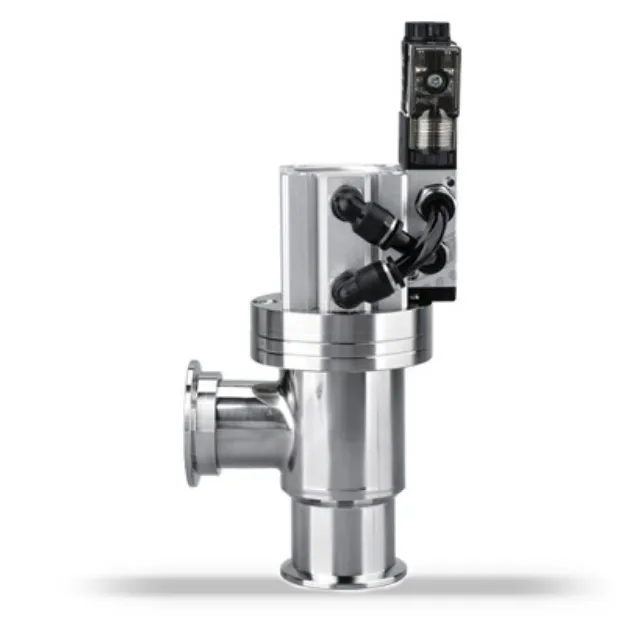
In high-precision industrial and scientific environments, the performance of a vacuum system is only as strong as the individual parts that make it up. vacuum components are the foundational elements that determine whether a system maintains stable pressure, resists contamination, and operates reliably over extended periods. From flanges and fittings to valves and sealing elements, each part plays a specific role in preserving the integrity of the vacuum environment. Understanding how these components contribute to overall system stability is essential for engineers, procurement specialists, and facility managers who depend on consistent vacuum performance.
The relationship between vacuum components and system reliability is not incidental — it is structural. Every connection point, every sealing surface, and every material choice either reinforces or undermines the system's ability to hold vacuum under real operating conditions. When vacuum components are selected carefully and integrated correctly, they reduce leak rates, extend maintenance intervals, and protect sensitive processes from pressure fluctuations. This article explores the specific mechanisms through which well-chosen vacuum components improve stability and reliability across demanding applications.
The Role of Vacuum Components in System Integrity
How Component Quality Affects Pressure Stability
Pressure stability is the most direct measure of a vacuum system's performance, and it is largely determined by the quality of the vacuum components used throughout the assembly. A single poorly machined flange or an improperly seated seal can introduce micro-leaks that gradually degrade the base pressure and introduce variability into the process environment. Over time, these small failures compound, leading to inconsistent results in applications such as thin-film deposition, electron microscopy, or semiconductor fabrication.
High-quality vacuum components are manufactured to tight dimensional tolerances, ensuring that mating surfaces align precisely and that sealing interfaces achieve the contact geometry required for leak-tight performance. This precision is not merely cosmetic — it directly translates into lower outgassing rates, more predictable pump-down curves, and longer intervals between system venting and maintenance cycles. For operators running continuous or semi-continuous processes, this stability has measurable economic value.
Material selection within vacuum components also plays a critical role in pressure stability. Components made from materials with low vapor pressure, such as 304 or 316 stainless steel, contribute far less to the internal gas load than components made from materials that outgas significantly at operating temperatures. Choosing vacuum components with appropriate material specifications is therefore a foundational decision that affects system performance from the first pump-down onward.
Sealing Elements and Their Contribution to Leak Prevention
Among all vacuum components, sealing elements — including gaskets, O-rings, and metal seals — are the most directly responsible for preventing atmospheric gas from entering the system. The choice between elastomeric and metal seals depends on the operating pressure range, temperature requirements, and the chemical environment inside the chamber. In ultra-high vacuum applications, metal gaskets such as copper or aluminum are preferred because they achieve lower leak rates and are compatible with bakeout procedures that drive residual gases from the system walls.
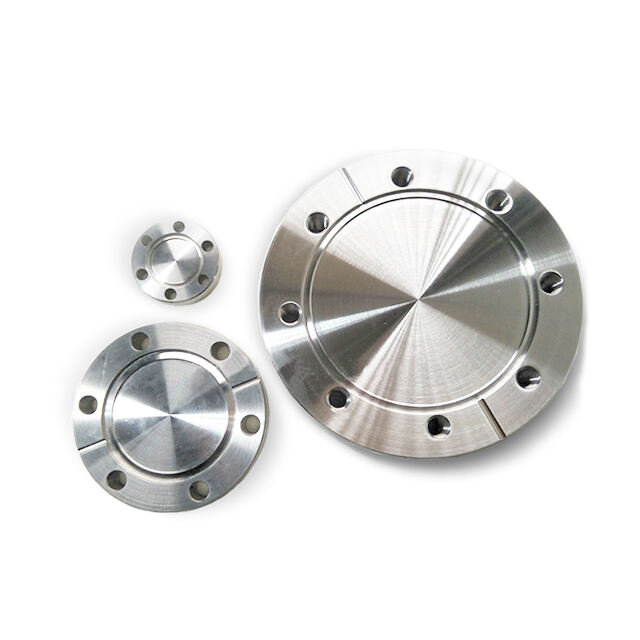
Blank flanges represent a particularly important category of sealing vacuum components. When a port is not in active use, a blank flange terminates the connection and prevents any gas exchange at that interface. A well-manufactured blank flange, such as a CF blank flange with a precisely machined knife-edge, creates a metal-to-metal seal that is capable of maintaining ultra-high vacuum conditions indefinitely when properly installed. This makes blank flanges essential vacuum components for system configuration flexibility without sacrificing integrity.
The reliability of sealing vacuum components also depends on correct installation practices. Even the highest-quality gasket will underperform if the flange faces are scratched, if the bolts are unevenly torqued, or if the mating surfaces are contaminated with particulates or oils. Proper handling and installation procedures are therefore inseparable from the performance of the vacuum components themselves.
Structural Vacuum Components and Mechanical Stability
Flanges and Fittings as the Backbone of System Architecture
The structural vacuum components — flanges, tees, crosses, elbows, and reducers — define the physical architecture of the vacuum system. Their dimensional accuracy and surface finish determine how well the system can be assembled, reconfigured, and maintained without introducing new leak paths or mechanical stress. In systems that undergo thermal cycling, the ability of structural vacuum components to maintain alignment and sealing force across temperature ranges is critical to long-term reliability.
CF (ConFlat) flanges are among the most widely used structural vacuum components in high and ultra-high vacuum systems. Their knife-edge design, combined with a soft metal gasket, produces a seal that is mechanically robust and thermally stable. The non-rotatable variant of the CF blank flange is particularly valued in fixed installations where rotational alignment is not required, as it simplifies assembly and reduces the risk of gasket misalignment during installation.
When structural vacuum components are sourced from a consistent manufacturing standard, the interchangeability of parts becomes a significant operational advantage. Systems can be expanded, modified, or repaired using replacement vacuum components that fit precisely without requiring custom machining or adaptation. This standardization reduces downtime and lowers the total cost of ownership over the system's operational life.
Vibration Resistance and Long-Term Mechanical Reliability
Vacuum systems in industrial environments are often subject to mechanical vibration from pumps, compressors, and adjacent equipment. Vacuum components that are not designed to handle vibration loads can develop fatigue cracks at weld joints, loosen bolted connections, or allow gaskets to shift over time. These mechanical failures are a common source of gradual leak development that is difficult to diagnose without systematic inspection.
Selecting vacuum components with appropriate wall thickness, weld quality, and connection geometry helps mitigate vibration-related degradation. Bellows sections and flexible hose assemblies are specialized vacuum components designed specifically to absorb vibration and thermal expansion, protecting rigid connections from stress concentrations. Incorporating these elements at strategic points in the system layout is a proven method for improving long-term mechanical reliability.
Regular inspection of vacuum components for signs of mechanical wear, corrosion, or deformation is also part of a reliability-focused maintenance strategy. Identifying and replacing compromised vacuum components before they fail prevents unplanned downtime and protects the process equipment and materials inside the chamber from contamination events.
Functional Vacuum Components and Process Control
Valves and Their Impact on System Controllability
Valves are among the most functionally critical vacuum components in any system because they control gas flow, isolate sections of the system, and enable controlled venting and pump-down sequences. The reliability of a vacuum system's operational workflow depends heavily on the performance of its valve vacuum components. A valve that fails to seal completely, operates sluggishly, or develops internal leaks can disrupt process sequences and introduce contamination into sensitive chambers.
Gate valves, angle valves, and butterfly valves each serve different roles within the vacuum system architecture. Gate valves are commonly used as isolation vacuum components between the chamber and the pumping system, providing a full-bore opening that minimizes conductance loss when open and a reliable seal when closed. Angle valves are preferred in compact layouts where space constraints limit the use of inline configurations. Selecting the correct valve type for each application is part of the broader discipline of vacuum components engineering.
The actuation mechanism of valve vacuum components — whether manual, pneumatic, or electromechanical — also affects system reliability. Automated valves enable precise sequencing and can be integrated into process control systems that monitor pressure, temperature, and flow conditions in real time. This integration allows the system to respond dynamically to changing conditions, improving both process stability and safety.
Gauges and Sensors as Diagnostic Vacuum Components
Measurement and monitoring vacuum components, including pressure gauges, residual gas analyzers, and leak detectors, provide the diagnostic visibility that operators need to maintain system stability. Without accurate pressure measurement, it is impossible to verify that the system has reached its target operating condition or to detect the early signs of a developing leak. These vacuum components are therefore not optional accessories — they are integral to reliable system operation.
Different pressure ranges require different gauge technologies. Thermocouple gauges and Pirani gauges are suitable for rough and medium vacuum ranges, while ionization gauges are required for high and ultra-high vacuum measurement. Selecting the appropriate gauge vacuum components for the operating pressure range ensures that the readings are accurate and that the gauges themselves do not introduce contamination or gas loads into the system.
Residual gas analyzers (RGAs) are advanced diagnostic vacuum components that identify the specific gas species present in the system. This capability is invaluable for troubleshooting contamination events, verifying the effectiveness of bakeout procedures, and confirming that the system is free of virtual leaks caused by trapped gas pockets. Incorporating RGA capability into a vacuum system represents a significant investment in long-term reliability and process quality assurance.
Material and Surface Considerations in Vacuum Components
Why Material Choice Determines Long-Term Performance
The materials used in vacuum components directly affect outgassing behavior, chemical compatibility, and mechanical durability. Stainless steel is the dominant material for structural and sealing vacuum components because it combines low outgassing rates, good corrosion resistance, and the mechanical properties needed for reliable flange connections. Electropolished stainless steel surfaces further reduce outgassing by minimizing the surface area available for gas adsorption, which is particularly important in ultra-high vacuum applications.
Aluminum vacuum components offer a weight advantage and are suitable for many medium vacuum applications, but they are less compatible with bakeout temperatures above approximately 150 degrees Celsius and are more susceptible to surface oxidation that can increase outgassing over time. Understanding these material trade-offs is essential when specifying vacuum components for systems that will operate across a wide range of conditions or that require periodic high-temperature bakeout.
Elastomeric vacuum components, such as O-ring sealed fittings and flexible connections, introduce a different set of material considerations. The choice of elastomer — Viton, Buna-N, silicone, or PTFE — affects the permeation rate of atmospheric gases through the seal, the temperature range of reliable operation, and the chemical resistance of the component. For systems targeting pressures below 10^-7 mbar, elastomeric vacuum components are generally avoided in favor of all-metal sealing solutions.
Surface Finish and Cleanliness Standards
The internal surface finish of vacuum components has a direct impact on the system's ability to reach and maintain low base pressures. Rough surfaces have a larger effective area for gas adsorption and are more difficult to clean thoroughly, leading to higher outgassing rates and longer pump-down times. Vacuum components intended for high and ultra-high vacuum service are typically manufactured with internal surface finishes in the range of Ra 0.4 to Ra 0.8 micrometers, achieved through mechanical polishing or electropolishing.
Cleanliness standards for vacuum components are equally important. Contamination introduced during manufacturing, packaging, or installation — including machining oils, fingerprints, and particulate matter — can significantly degrade system performance. Reputable suppliers of vacuum components follow strict cleaning protocols, including solvent degreasing, ultrasonic cleaning, and clean-room packaging, to ensure that components arrive ready for installation without requiring additional preparation by the end user.
Maintaining cleanliness during system assembly and maintenance is the responsibility of the operator. Handling vacuum components with clean gloves, using lint-free wipes, and working in a clean environment are basic practices that preserve the surface quality of the components and protect the system from contamination. These practices are especially critical when installing sealing vacuum components such as gaskets and blank flanges, where even minor surface contamination can compromise the seal.
FAQ
What types of vacuum components are most critical for maintaining system stability?
Sealing components such as flanges, gaskets, and blank flanges are among the most critical vacuum components for system stability because they define the leak integrity of every connection in the system. Valves are equally important for controlling gas flow and isolating sections of the system during operation and maintenance. Pressure gauges and monitoring instruments complete the picture by providing the diagnostic data needed to verify and maintain stable operating conditions.
How does a CF blank flange contribute to vacuum system reliability?
A CF blank flange terminates an unused port with a metal-to-metal seal that is capable of maintaining ultra-high vacuum conditions. By using a knife-edge design that bites into a soft metal gasket, the CF blank flange creates a leak-tight closure that is thermally stable and compatible with bakeout procedures. This makes it one of the most reliable vacuum components for sealing ports that are not in active use, preventing any gas ingress at that interface.
How often should vacuum components be inspected or replaced?
The inspection frequency for vacuum components depends on the operating conditions, the criticality of the application, and the type of component. Elastomeric seals in frequently cycled systems may require inspection every few months, while metal-sealed vacuum components in stable installations can remain in service for years without replacement. A proactive maintenance schedule that includes leak checking, visual inspection of flange faces, and monitoring of pump-down performance is the most reliable approach to managing the service life of vacuum components.
Can vacuum components from different standards be mixed in the same system?
Mixing vacuum components from different flange standards — such as CF, KF, and ISO — is possible using adapter flanges, but it requires careful attention to pressure range compatibility and sealing performance. CF vacuum components are designed for high and ultra-high vacuum, while KF components are optimized for rough and medium vacuum. Using adapters between standards introduces additional connection points that must be sealed reliably, so minimizing the number of standard transitions in a system is generally the preferred approach for maximizing reliability.