 EN
EN

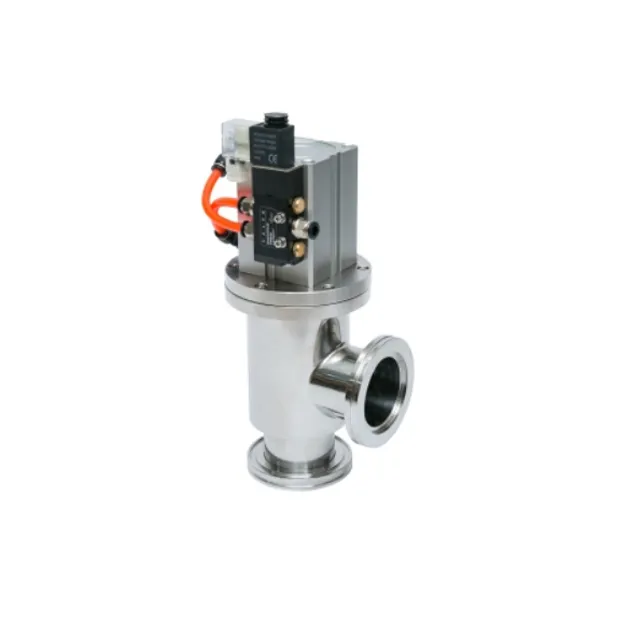
In high-demand industrial vacuum systems, the integrity of every connection point directly determines whether a process runs smoothly or suffers from costly pressure fluctuations and contamination. The iso flange has become a foundational component in vacuum engineering precisely because it addresses these challenges with a standardized, reliable, and versatile design. From semiconductor fabrication to pharmaceutical processing, facilities that depend on stable vacuum conditions have increasingly turned to iso flange solutions to eliminate the weak links in their piping and chamber assemblies.
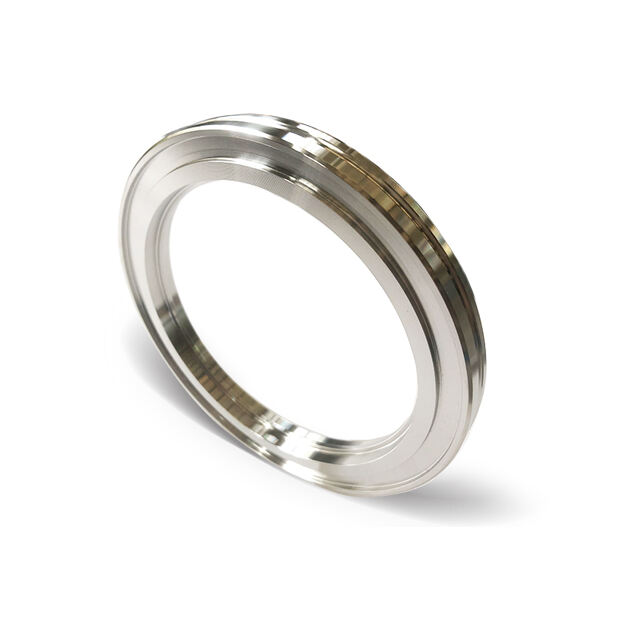
Understanding how an iso flange contributes to vacuum stability requires looking beyond the component itself and examining the system-level effects it produces. When properly selected and installed, an iso flange creates a leak-tight, mechanically robust interface that maintains consistent vacuum levels across a wide range of operating pressures and temperatures. This article explores the specific mechanisms through which iso flange products enhance industrial vacuum stability, the engineering principles behind their performance, and the practical considerations that guide their application in demanding environments.
The Engineering Foundation of ISO Flange Design
Standardization as a Stability Driver
The iso flange standard defines precise dimensional tolerances, sealing surface geometries, and material specifications that allow components from different manufacturers to mate reliably. This standardization is not merely a convenience for procurement teams — it is a direct contributor to vacuum stability. When every iso flange in a system conforms to the same dimensional standard, the sealing surfaces align predictably, the clamping forces distribute evenly, and the risk of misalignment-induced leaks is substantially reduced.
In contrast, non-standardized flange connections often introduce variability at each joint. Even small deviations in surface flatness or bolt-hole positioning can create uneven gasket compression, which leads to micro-leaks that degrade vacuum performance over time. The iso flange eliminates much of this variability by enforcing tight manufacturing tolerances across the entire connection interface.
For industrial operators managing complex vacuum networks with dozens or hundreds of connection points, the cumulative benefit of standardization is significant. Each iso flange joint that performs consistently reduces the overall leak rate of the system, allowing vacuum pumps to operate more efficiently and maintain target pressure levels with less energy expenditure.
Material Selection and Surface Integrity
The materials used in iso flange construction play a critical role in maintaining vacuum stability across varying process conditions. Stainless steel grades commonly used in iso flange products offer excellent resistance to outgassing — the slow release of trapped gases from metal surfaces that can contaminate vacuum environments and raise base pressure. Low outgassing rates are essential in applications such as electron beam processing, thin-film deposition, and analytical instrumentation where even trace gas contamination can compromise results.
The sealing surfaces of a well-manufactured iso flange are precision-machined to achieve the surface roughness values required for effective elastomer or metal gasket sealing. A smooth, flat sealing face ensures that the gasket compresses uniformly when the clamp is tightened, creating a continuous seal around the entire circumference of the flange. Any surface defect — a scratch, a pit, or a machining irregularity — can create a leak path that undermines vacuum stability.
Beyond the base material, the surface treatment of an iso flange also matters. Electropolished stainless steel surfaces reduce the effective surface area available for gas adsorption, which lowers the outgassing contribution of the flange itself. This is particularly valuable in ultra-high vacuum applications where achieving pressures below 10^-9 mbar requires minimizing every possible source of gas load.
How ISO Flange Connections Prevent Vacuum Leaks
The Role of Centering Rings and Gaskets
One of the most important features of the iso flange system is its use of centering rings combined with elastomer or metal O-rings to create the primary vacuum seal. The centering ring serves a dual purpose: it positions the O-ring precisely at the center of the sealing surface, and it prevents the O-ring from being extruded or displaced when the clamp is tightened. This self-centering mechanism is a key reason why iso flange connections achieve consistent sealing performance even when assembled by technicians with varying levels of experience.
The choice of O-ring material directly affects the leak tightness and chemical compatibility of the iso flange seal. Viton O-rings are widely used for their broad chemical resistance and low permeability to common process gases. For applications involving aggressive chemicals or elevated temperatures, specialized elastomers or metal gaskets may be substituted within the same iso flange centering ring format, providing flexibility without requiring a change in flange geometry.
Proper O-ring compression is critical to achieving a leak-free iso flange joint. Under-compression leaves gaps in the seal, while over-compression can damage the O-ring and create extrusion paths. The iso flange clamp system is designed to deliver the correct compression force when properly tightened, reducing the risk of assembly errors that could compromise vacuum stability.
Clamp Systems and Mechanical Stability
The external clamp used with an iso flange provides both the sealing force and the mechanical connection between adjacent components. Unlike bolted flange systems that require careful torque sequencing to achieve even gasket compression, the iso flange clamp applies force uniformly around the entire flange circumference in a single tightening operation. This simplicity reduces assembly time and minimizes the risk of uneven sealing that can result from improper bolt torque patterns.
Mechanical stability at the iso flange joint also depends on the clamp's ability to resist vibration and thermal cycling without loosening. In industrial environments where vacuum systems are subject to pump vibration, thermal expansion, and occasional mechanical shock, a clamp that maintains consistent clamping force over time is essential for sustained vacuum stability. High-quality iso flange clamps are designed with this requirement in mind, using materials and geometries that resist relaxation under cyclic loading.
For larger diameter iso flange connections, multi-segment clamps or bolted clamp rings may be used to ensure adequate clamping force distribution. These configurations maintain the fundamental sealing principle of the iso flange system while accommodating the greater circumference and higher forces involved in larger bore applications.
ISO Flange Performance Across Vacuum Pressure Ranges
Rough and Medium Vacuum Applications
In rough vacuum applications operating between atmospheric pressure and approximately 1 mbar, the iso flange provides a robust and easily serviceable connection that can withstand frequent assembly and disassembly cycles. Processes such as vacuum packaging, drying, and degassing often require regular access to vacuum chambers, and the quick-release clamp design of the iso flange system makes this practical without sacrificing seal integrity.
The iso flange's tolerance for repeated assembly is particularly valuable in production environments where maintenance schedules are tight and downtime must be minimized. A well-maintained iso flange connection can be disassembled, inspected, and reassembled in minutes, with the centering ring and O-ring system ensuring that the seal is correctly positioned every time. This reliability translates directly into more consistent vacuum stability across production shifts.
Even in rough vacuum service, the iso flange's standardized geometry provides an advantage over custom or non-standard connections by ensuring that replacement parts are readily available and interchangeable. This reduces the risk of extended downtime due to unavailable components and supports a more predictable maintenance program.
High and Ultra-High Vacuum Applications
As vacuum requirements move into the high vacuum range (below 10^-3 mbar) and ultra-high vacuum range (below 10^-7 mbar), the demands on every system component increase dramatically. The iso flange remains a viable and widely used connection standard in these pressure ranges, provided that appropriate gasket materials, surface finishes, and assembly practices are employed.
For high vacuum service, metal gaskets — typically aluminum or copper — may replace elastomer O-rings in the iso flange centering ring to achieve lower permeation rates and higher temperature compatibility. Metal-sealed iso flange connections can maintain leak rates well below the thresholds required for high vacuum stability, making them suitable for demanding applications in research, aerospace testing, and advanced manufacturing.
In ultra-high vacuum systems, the iso flange is often used in conjunction with baked-out stainless steel components to drive outgassing rates to the lowest possible levels. The ability to bake an iso flange assembly at elevated temperatures without compromising the flange geometry or sealing surface is an important advantage in achieving and maintaining ultra-high vacuum conditions. Proper bakeout procedures, combined with the inherently low outgassing characteristics of electropolished iso flange surfaces, allow systems to reach and sustain the extreme vacuum levels required for particle physics research, space simulation, and advanced semiconductor processes.
Practical Considerations for ISO Flange Selection and Installation
Matching Flange Size to System Requirements
Selecting the correct iso flange size for a given application involves balancing conductance requirements, space constraints, and mechanical load considerations. The nominal bore of the iso flange determines the conductance of the connection — the ease with which gas molecules can flow through the joint. In vacuum systems where pumping speed must be preserved, using an iso flange with a bore that matches or exceeds the connected component's port diameter prevents unnecessary conductance restrictions that would degrade vacuum stability.
Oversizing an iso flange connection is generally preferable to undersizing, as a larger bore imposes no penalty on vacuum performance while providing additional conductance margin. However, larger iso flange sizes also impose greater mechanical loads on connected components, so structural considerations must be evaluated when selecting flange dimensions for heavy or cantilevered assemblies.
The iso flange standard covers a range of nominal sizes from small instrumentation ports to large chamber openings, giving system designers the flexibility to apply consistent connection technology throughout a vacuum network regardless of scale. This uniformity simplifies training, spare parts management, and system documentation.
Installation Best Practices for Long-Term Stability
The long-term vacuum stability of an iso flange connection depends heavily on correct installation practices. Before assembly, both flange sealing surfaces should be inspected for scratches, contamination, or corrosion that could compromise the seal. Cleaning with appropriate solvents removes surface contamination that could outgas into the vacuum system or prevent proper O-ring seating.
The O-ring should be inspected for cuts, deformation, or chemical degradation before each assembly. A damaged O-ring will not provide a reliable seal regardless of how carefully the iso flange clamp is tightened. Maintaining a stock of replacement O-rings in the correct size and material for each iso flange in the system is a basic but important aspect of vacuum system maintenance.
When tightening the iso flange clamp, applying force gradually and evenly ensures that the O-ring compresses uniformly without rolling or displacing. Over-tightening should be avoided, as it can damage both the O-ring and the centering ring, reducing the service life of these consumable components. Following the manufacturer's recommended assembly procedure for each iso flange size and clamp type is the most reliable way to achieve consistent, long-term vacuum stability.
FAQ
What makes an iso flange better than other flange types for vacuum applications?
The iso flange offers a combination of standardized dimensions, quick-release clamp assembly, and a self-centering O-ring seal that makes it particularly well-suited for vacuum applications. Its design minimizes assembly errors, supports frequent disassembly without seal degradation, and accommodates a wide range of gasket materials for different pressure and chemical compatibility requirements. These characteristics make the iso flange a more practical and reliable choice than many custom or non-standard flange designs for industrial vacuum systems.
Can an iso flange be used in ultra-high vacuum systems?
Yes, an iso flange can be used in ultra-high vacuum systems when equipped with metal gaskets, electropolished sealing surfaces, and proper bakeout procedures. While elastomer-sealed iso flange connections are generally limited to high vacuum service due to permeation and outgassing constraints, metal-sealed configurations can achieve the leak rates and outgassing levels required for ultra-high vacuum operation. The specific requirements of the application should guide gasket material selection and surface finish specifications.
How often should iso flange O-rings be replaced in a production vacuum system?
The replacement interval for iso flange O-rings depends on the number of assembly cycles, the process chemicals involved, and the operating temperature. In systems that are frequently disassembled for maintenance or product changeover, O-rings should be inspected at every reassembly and replaced whenever any sign of deformation, cracking, or chemical attack is observed. For systems that remain assembled for extended periods, periodic inspection during scheduled maintenance shutdowns is recommended. Establishing a documented replacement schedule based on actual service conditions is the most effective approach to maintaining iso flange seal integrity.
What is the difference between an iso flange and a KF flange?
The iso flange and the KF (Klein Flansch) flange are both standardized vacuum connection systems that use external clamps and centering ring seals, but they differ in size range and application scope. KF flanges are typically used for smaller bore connections up to approximately 50 mm nominal diameter, while the iso flange standard covers larger bore sizes from around 63 mm upward. For large-diameter vacuum connections where higher conductance and greater mechanical strength are required, the iso flange is the appropriate choice. Both systems share the same fundamental sealing principle, making them complementary rather than competing technologies within a comprehensive vacuum system design.