 EN
EN

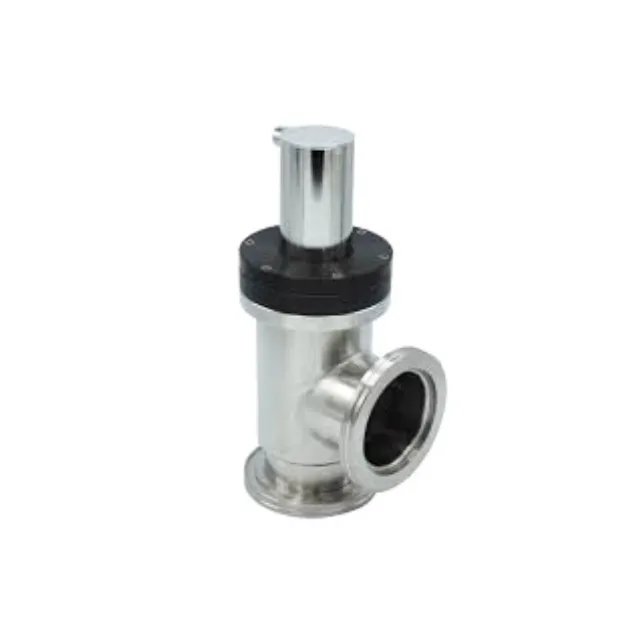
Selecting the right vacuum fittings is one of the most critical decisions engineers face when designing systems that must perform reliably across different industries. Whether the application involves semiconductor fabrication, food processing, pharmaceutical production, or industrial automation, vacuum fittings must bridge equipment from different manufacturers, standards, and operating environments without compromise. The challenge is not simply finding vacuum fittings that work in one setting — it is finding vacuum fittings that maintain sealing integrity, chemical resistance, and dimensional consistency across very different demands.
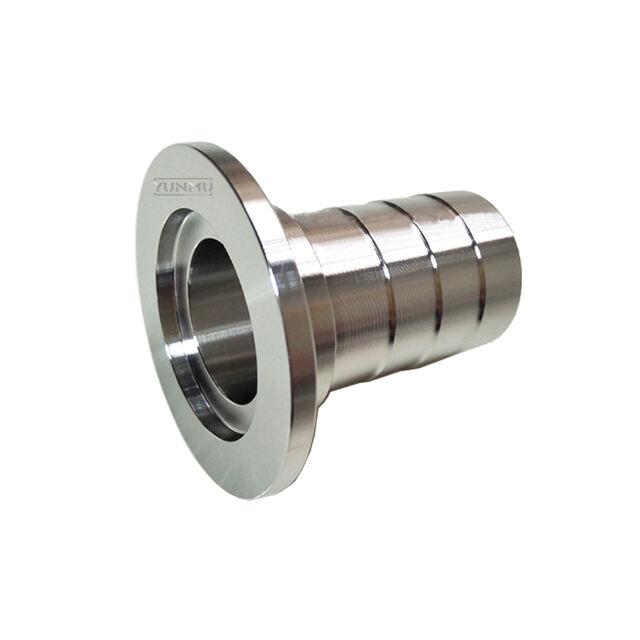
Not all vacuum fittings are created with universal compatibility in mind. Some are optimized for high-vacuum applications in clean environments, while others are designed to handle corrosive gases or high-temperature cycling in heavy industrial settings. Understanding which vacuum fittings deliver better compatibility across industries requires looking closely at standardization, material construction, pressure range suitability, and design flexibility. This article examines the key selection criteria that distinguish broadly compatible vacuum fittings from those limited to narrow use cases.
Standardization as the Foundation of Compatibility
Why Standard Formats Matter for Vacuum Fittings
The most important factor enabling vacuum fittings to work across industries is adherence to recognized international standards. Standards such as the KF (Klein Flansch) series, ISO, and CF (ConFlat) define exact dimensional tolerances, flange sizes, and sealing geometry. When vacuum fittings conform to these standards, they can connect equipment from completely different manufacturers and sectors without custom machining or adapters. This interoperability is what makes standardized vacuum fittings so valuable in multi-industry procurement environments.
KF-type vacuum fittings, in particular, have become one of the most widely adopted formats across research, industrial, and process engineering sectors. Their quick-connect design and centering ring mechanism allow vacuum fittings to be assembled and disassembled rapidly, supporting maintenance-intensive environments. Industries from analytical instrumentation to chemical vapor deposition rely on KF vacuum fittings precisely because the standard is so broadly adopted that sourcing compatible components is straightforward worldwide.
Cross-Standard Adapters and Their Role
In many real-world installations, a facility may operate equipment built around different vacuum fittings standards simultaneously. Cross-standard adapter vacuum fittings solve this problem by providing a dimensionally correct transition between, for example, KF flanges and ISO flanges. These adapter vacuum fittings must maintain the same sealing quality as a direct connection while accommodating the geometric differences between standards. Choosing high-quality adapter vacuum fittings ensures that cross-standard connections do not become the weak point in an otherwise well-engineered system.
Material Selection and Its Impact Across Industries
Stainless Steel Vacuum Fittings for Broad Application
Stainless steel remains the dominant construction material for vacuum fittings intended to span multiple industries. Its combination of corrosion resistance, outgassing characteristics, and mechanical strength makes stainless steel vacuum fittings suitable for everything from high-vacuum research chambers to food-grade processing lines. The low outgassing rate of electropolished stainless steel vacuum fittings is especially important in semiconductor and analytical applications where even trace contamination affects results. At the same time, stainless steel vacuum fittings are durable enough for the rougher handling found in manufacturing and industrial automation environments.
When selecting stainless steel vacuum fittings, the grade of steel matters considerably. Grade 304 stainless is common for general-purpose vacuum fittings, while grade 316L offers superior resistance to chlorides and is preferred for pharmaceutical or marine applications. Choosing the correct stainless steel grade for your vacuum fittings ensures long service life without corrosion-driven seal failures that could compromise both system integrity and product quality.
Elastomer and Seal Material Compatibility
The sealing element within vacuum fittings is just as important as the fitting body itself. O-ring and gasket materials such as Viton, Buna-N, EPDM, and PTFE each carry different chemical resistance and temperature tolerance profiles. Viton seals in vacuum fittings are widely used because they resist a broad range of solvents and aggressive gases, making them a practical default choice for multi-industry use. PTFE-based seals in vacuum fittings offer near-universal chemical inertness, making them the preferred choice when aggressive media or ultra-clean conditions are required.
Mismatching seal materials to the process environment is one of the most common causes of premature vacuum fittings failure. A seal that performs well in a dry vacuum line may degrade rapidly when exposed to solvent vapors or steam. Reviewing the chemical compatibility of the seal material before specifying vacuum fittings for a new application avoids costly downtime and helps maintain cross-industry reliability.
Design Features That Enhance Cross-Industry Flexibility
Pressure Range Coverage in Vacuum Fittings
Broadly compatible vacuum fittings must accommodate the pressure ranges found across different industrial contexts. Rough vacuum applications, such as vacuum packaging or pneumatic conveying, operate at relatively low vacuum levels where vacuum fittings face primarily mechanical and leak-tightness demands. High-vacuum and ultra-high-vacuum applications in research and semiconductor manufacturing impose far stricter requirements on vacuum fittings, including extremely low leak rates, minimal outgassing, and precise flange flatness. Vacuum fittings designed to function reliably at both ends of this spectrum offer the greatest compatibility across industries.
Modular and Configurable Vacuum Fittings Designs
Modular vacuum fittings systems allow engineers to build custom configurations using standardized components. Tees, elbows, reducers, and crosses in vacuum fittings formats enable system designers to route vacuum lines around physical constraints without resorting to custom fabrication. This modularity is particularly valuable in multi-industry environments where the same vacuum fittings inventory must serve diverse equipment layouts. A well-curated stock of modular vacuum fittings reduces procurement lead times and ensures that maintenance teams can quickly replace or reconfigure vacuum lines without waiting for specialized parts.
The availability of reducing vacuum fittings is another practical compatibility factor. When connecting equipment with different port sizes, reducing vacuum fittings allow a smooth transition without sacrificing conductance or sealing performance. Systems that incorporate multiple generations of equipment — each with potentially different vacuum fittings standards or port dimensions — benefit enormously from a comprehensive range of reducing and adaptive vacuum fittings.
FAQ
What makes KF-type vacuum fittings suitable for multiple industries?
KF-type vacuum fittings follow a globally recognized dimensional standard that ensures interoperability between equipment from different manufacturers. Their quick-connect clamping system allows fast assembly and disassembly, which supports both research and production environments. The wide availability of KF vacuum fittings in multiple sizes and materials means they can be sourced and replaced easily across many different industrial sectors.
How do I choose the right seal material for cross-industry vacuum fittings use?
The right seal material for vacuum fittings depends on the chemical environment, temperature range, and vacuum level of the application. Viton is a reliable general-purpose choice for vacuum fittings used across multiple industries because of its broad chemical resistance. For highly aggressive chemicals or ultra-clean applications, PTFE seals in vacuum fittings provide superior inertness. Always review the specific process media before finalizing the seal specification for your vacuum fittings.
Can the same vacuum fittings work in both rough vacuum and high-vacuum systems?
Some vacuum fittings, particularly those manufactured to tight dimensional tolerances with high-quality seals, can perform reliably across both rough vacuum and high-vacuum ranges. However, ultra-high-vacuum applications typically require metal-sealed vacuum fittings such as CF flanges, which are not interchangeable with elastomer-sealed vacuum fittings used in rougher vacuum service. For cross-industry compatibility, specifying vacuum fittings rated to at least high-vacuum performance provides a useful margin of safety and flexibility.