 EN
EN

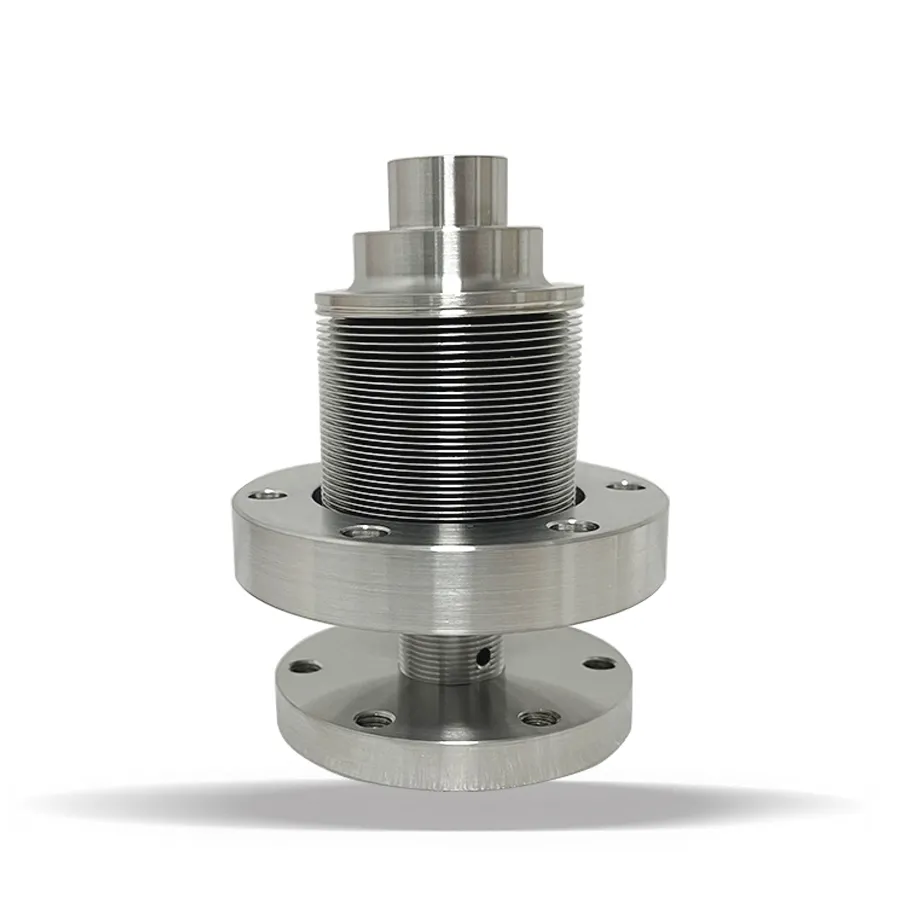
In industrial and scientific settings where reliability is non-negotiable, the choice of vacuum fittings can determine whether a system performs flawlessly or fails under pressure. Stainless steel has emerged as the dominant material for vacuum fittings used in demanding applications, and this preference is not arbitrary. It is rooted in a combination of mechanical, chemical, and operational advantages that other materials simply cannot match when conditions become extreme.
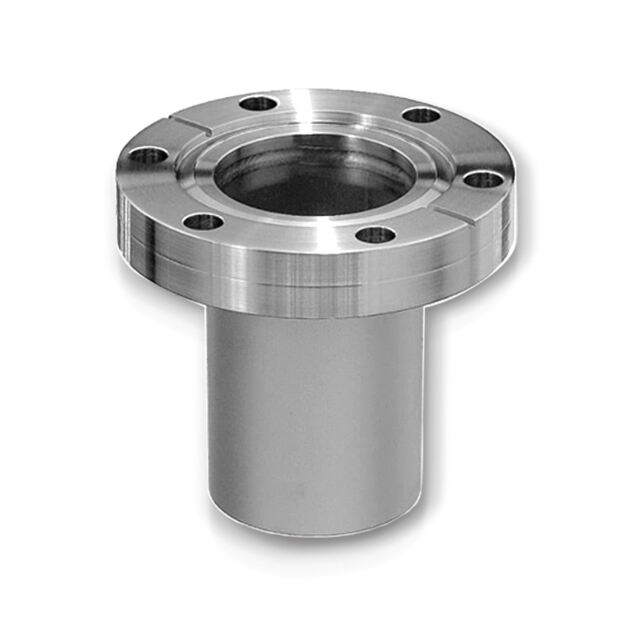
Harsh environments place extraordinary stress on every component within a vacuum system. Elevated temperatures, corrosive media, high-pressure differentials, and repeated thermal cycling all conspire to degrade inferior materials over time. Stainless steel vacuum fittings are engineered to withstand precisely these conditions, offering a level of durability and consistency that makes them the preferred choice across industries ranging from semiconductor fabrication and aerospace to pharmaceutical processing and high-energy physics research.
The Material Advantage of Stainless Steel in Vacuum Systems
Corrosion Resistance Under Aggressive Conditions
One of the most compelling reasons stainless steel dominates the vacuum fittings market is its exceptional resistance to corrosion. The chromium content in stainless steel — typically between 10.5% and 30% — forms a passive oxide layer on the surface that acts as a self-repairing barrier against oxidation and chemical attack. This property is critical in environments where vacuum fittings are exposed to reactive gases, acidic vapors, or moisture-laden atmospheres.
In semiconductor manufacturing, for example, process gases such as chlorine, fluorine compounds, and hydrogen are routinely used. Vacuum fittings made from lesser materials would corrode rapidly under such exposure, introducing contamination into the process stream and compromising product quality. Stainless steel maintains its structural and surface integrity even after prolonged contact with these aggressive media, ensuring that the vacuum system remains clean and leak-free.
Beyond chemical resistance, stainless steel vacuum fittings also resist pitting and crevice corrosion, which are common failure modes in fittings exposed to chloride-rich environments such as coastal industrial facilities or marine research platforms. This broad-spectrum corrosion resistance translates directly into longer service life and reduced maintenance costs.
Mechanical Strength and Dimensional Stability
Vacuum fittings must maintain precise dimensional tolerances to achieve and sustain leak-tight seals. Stainless steel offers a high strength-to-weight ratio and excellent dimensional stability across a wide temperature range, which is essential when fittings are subjected to thermal cycling or mechanical vibration. Unlike softer metals or polymers, stainless steel does not creep, deform, or relax under sustained load, preserving the integrity of flange faces and sealing surfaces over time.
In ultra-high vacuum (UHV) applications, even microscopic deformation of a fitting can result in a leak that renders the entire system unusable. The rigidity of stainless steel ensures that vacuum fittings retain their geometry through thousands of assembly and disassembly cycles, which is a practical necessity in research environments where systems are frequently reconfigured.
The tensile strength of austenitic stainless steel grades commonly used in vacuum fittings — such as 304L and 316L — provides the mechanical backbone needed to withstand the forces generated by bolted flange connections without yielding or galling, further extending the operational lifespan of the components.
Performance in Extreme Temperature Environments
High-Temperature Stability and Bakeout Compatibility
A defining requirement for vacuum fittings used in UHV systems is the ability to withstand bakeout procedures. Baking a vacuum system at temperatures between 150°C and 450°C drives adsorbed gases and moisture from internal surfaces, enabling the system to reach pressures in the range of 10⁻¹⁰ torr or lower. Stainless steel vacuum fittings are fully compatible with these bakeout temperatures, maintaining their mechanical properties and sealing performance throughout the process.
Materials such as aluminum or certain polymers cannot survive repeated bakeout cycles without degrading, outgassing, or losing dimensional accuracy. Stainless steel, by contrast, has a low outgassing rate and does not release significant quantities of volatile compounds during bakeout, which is critical for maintaining the cleanliness of the vacuum environment. This makes stainless steel vacuum fittings indispensable in particle accelerators, electron microscopes, and surface science instruments.
The thermal expansion coefficient of stainless steel is well-characterized and consistent, allowing engineers to design systems with predictable behavior during temperature excursions. This predictability reduces the risk of seal failure caused by differential thermal expansion between the fitting and the gasket or mating flange.
Cryogenic Performance for Low-Temperature Applications
At the opposite end of the temperature spectrum, stainless steel vacuum fittings also perform reliably at cryogenic temperatures. Austenitic stainless steels retain their toughness and ductility at temperatures as low as -269°C, making them suitable for use in liquid helium and liquid nitrogen systems. This is a significant advantage over ferritic or martensitic steels, which can become brittle at low temperatures.
Cryogenic vacuum systems are used in superconducting magnet assemblies, space simulation chambers, and cryopump installations. In all of these applications, vacuum fittings must seal reliably despite the thermal contraction that occurs as the system cools. The ductility of stainless steel allows it to accommodate these dimensional changes without cracking or losing its sealing capability.
The combination of high-temperature and low-temperature performance in a single material makes stainless steel vacuum fittings uniquely versatile, capable of serving in systems that cycle between extremes as part of their normal operation.
Low Outgassing and Cleanliness Standards
Surface Finish and Outgassing Rate
The internal cleanliness of vacuum fittings directly affects the ultimate pressure achievable in a vacuum system. Stainless steel can be electropolished to a mirror-like finish that minimizes surface area, reduces the adsorption of gas molecules, and facilitates cleaning with standard solvents and ultrasonic methods. Electropolished vacuum fittings exhibit outgassing rates that are orders of magnitude lower than those of unpolished or coated alternatives.
In industries such as semiconductor lithography, thin-film deposition, and analytical instrumentation, even trace levels of contamination can ruin a process or invalidate a measurement. Stainless steel vacuum fittings that have been properly cleaned and passivated introduce negligible contamination into the system, supporting the stringent cleanliness requirements of these applications.
The non-porous nature of stainless steel also prevents the absorption and subsequent release of process gases, a problem that plagues porous or composite materials. This characteristic ensures that vacuum fittings do not act as hidden reservoirs of contamination that slowly degrade system performance over time.
Compatibility with Cleaning and Sterilization Protocols
In pharmaceutical and biotechnology applications, vacuum fittings must withstand aggressive cleaning-in-place (CIP) and sterilization-in-place (SIP) protocols that involve caustic chemicals, steam, and high temperatures. Stainless steel is the material of choice for these environments because it resists the chemical attack of cleaning agents while maintaining its surface finish and dimensional integrity through repeated sterilization cycles.
Regulatory frameworks governing pharmaceutical manufacturing, such as those established by the FDA and EMA, effectively mandate the use of stainless steel for components that contact process streams or are exposed to sterilization conditions. Vacuum fittings used in lyophilization (freeze-drying) equipment, vacuum transfer systems, and sterile filling lines must meet these standards, and stainless steel is the only practical material that satisfies all of them simultaneously.
The ability to validate cleaning procedures for stainless steel vacuum fittings using established protocols further simplifies regulatory compliance, reducing the documentation burden on manufacturers and operators.
Long-Term Reliability and Total Cost of Ownership
Durability and Reduced Maintenance Frequency
The initial cost of stainless steel vacuum fittings is higher than that of alternatives made from aluminum, brass, or plastic. However, when evaluated over the full operational life of a system, stainless steel consistently delivers a lower total cost of ownership. Its resistance to corrosion, wear, and thermal degradation means that vacuum fittings require replacement far less frequently, reducing both material costs and the labor associated with system downtime and maintenance.
In continuous-process industries such as chemical production or semiconductor fabrication, unplanned downtime caused by fitting failure can cost tens of thousands of dollars per hour. The reliability of stainless steel vacuum fittings provides a measurable economic benefit that justifies the premium over less durable alternatives. Maintenance teams can schedule replacements based on planned intervals rather than reacting to unexpected failures.
The mechanical robustness of stainless steel also means that vacuum fittings can be reused across multiple system configurations without degradation, which is particularly valuable in research environments where apparatus is frequently modified or rebuilt.
Standardization and Interoperability
Stainless steel vacuum fittings are manufactured to internationally recognized standards such as ISO, CF (ConFlat), KF (Klein Flange), and ISO-K, which ensures interoperability between components from different sources and simplifies system design. This standardization is only practical because stainless steel provides the consistent material properties needed to meet tight dimensional and surface finish tolerances across production batches.
For engineers designing complex vacuum systems, the availability of a comprehensive range of standardized stainless steel vacuum fittings — including nipples, tees, crosses, elbows, and reducers — in a single material simplifies procurement, inventory management, and system documentation. The confidence that any stainless steel CF half nipple or KF flange will mate correctly with any other compliant component reduces design risk and accelerates project timelines.
This ecosystem of standardized vacuum fittings also supports global supply chains, allowing operators to source replacement components quickly regardless of their location, which is a practical advantage for multinational industrial operations.
FAQ
Why is stainless steel preferred over aluminum for vacuum fittings in high-temperature applications?
Stainless steel retains its mechanical strength and dimensional stability at temperatures well above the limits of aluminum, which softens and loses its sealing capability at elevated temperatures. For bakeout procedures and high-temperature process environments, stainless steel vacuum fittings are the only reliable choice. Aluminum vacuum fittings are sometimes used in lower-temperature, lower-pressure applications where weight is a priority, but they cannot match the performance of stainless steel under harsh conditions.
What grades of stainless steel are most commonly used for vacuum fittings?
The most widely used grades for vacuum fittings are 304L and 316L austenitic stainless steels. The 'L' designation indicates a low carbon content, which reduces the risk of sensitization and intergranular corrosion during welding. Grade 316L offers superior resistance to chloride-induced corrosion compared to 304L, making it the preferred choice for vacuum fittings used in marine, chemical, or pharmaceutical environments where chloride exposure is a concern.
How does surface finish affect the performance of stainless steel vacuum fittings?
Surface finish has a direct impact on the outgassing rate and cleanliness of vacuum fittings. Electropolished surfaces have a lower surface area and fewer microscopic crevices where gas molecules can adsorb, resulting in faster pump-down times and lower ultimate pressures. For UHV applications, electropolished stainless steel vacuum fittings are standard practice. Mechanically polished finishes are acceptable for high-vacuum applications where the most stringent outgassing requirements do not apply.
Can stainless steel vacuum fittings be used in both UHV and cryogenic systems?
Yes. Austenitic stainless steel grades used in vacuum fittings maintain their toughness and ductility from cryogenic temperatures down to -269°C all the way up to the bakeout temperatures used in UHV systems. This broad operational range makes stainless steel vacuum fittings suitable for systems that must function across extreme temperature conditions, including superconducting magnet assemblies, space simulation chambers, and research instruments that combine cryogenic cooling with UHV requirements.
Table of Contents
- The Material Advantage of Stainless Steel in Vacuum Systems
- Performance in Extreme Temperature Environments
- Low Outgassing and Cleanliness Standards
- Long-Term Reliability and Total Cost of Ownership
-
FAQ
- Why is stainless steel preferred over aluminum for vacuum fittings in high-temperature applications?
- What grades of stainless steel are most commonly used for vacuum fittings?
- How does surface finish affect the performance of stainless steel vacuum fittings?
- Can stainless steel vacuum fittings be used in both UHV and cryogenic systems?