 EN
EN
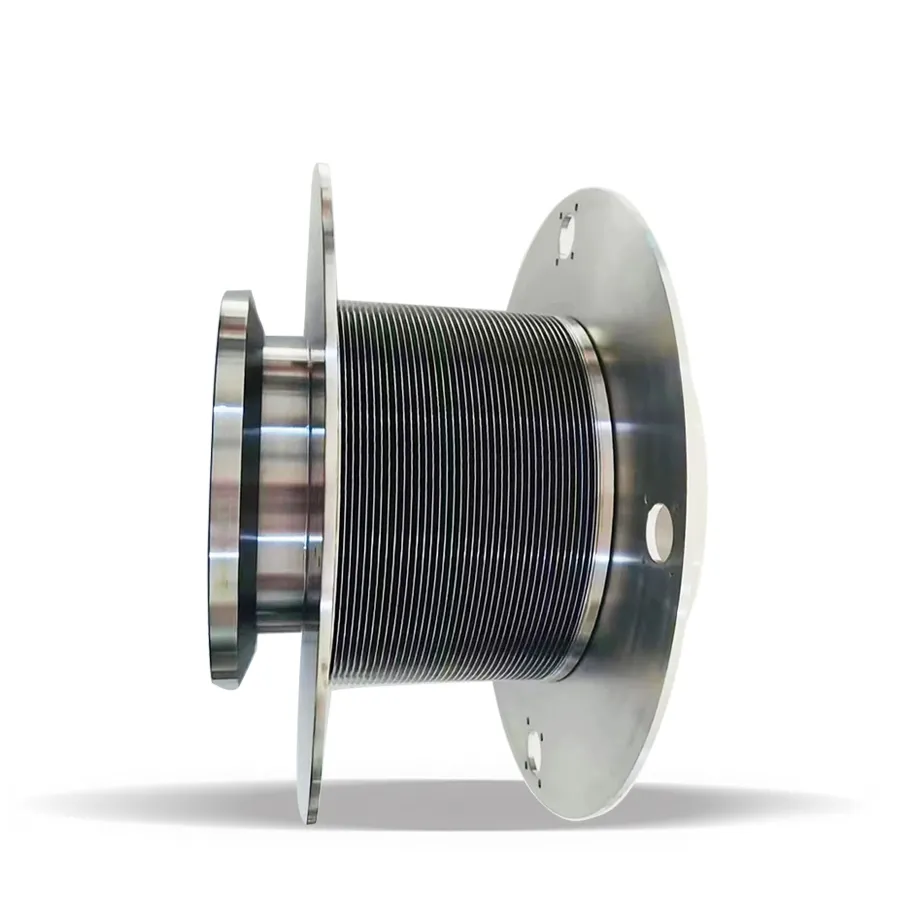
Across manufacturing, research, and industrial processing environments, operational challenges tend to compound over time. Equipment that was selected for general use often reveals its limitations as production demands shift, process tolerances tighten, or maintenance cycles become more disruptive than anticipated. custom vacuum systems have emerged as a practical answer to this pattern, offering configurations that align precisely with the conditions a facility actually operates under rather than approximating them with off-the-shelf hardware.
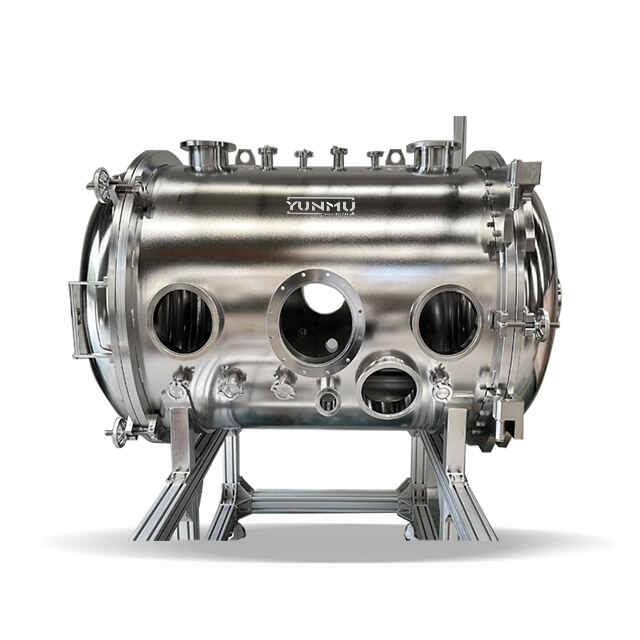
The question of whether custom vacuum systems can genuinely reduce long-term operational challenges deserves a direct answer: yes, they can — but the degree to which they do depends on how well the system is specified, integrated, and maintained. This article examines the specific mechanisms through which tailored vacuum solutions address persistent operational problems, and what decision-makers should understand before committing to a custom approach.
Why Standard Vacuum Equipment Creates Long-Term Friction
The Gap Between Generic Design and Real Process Demands
Standard vacuum equipment is engineered to serve a broad range of applications. That breadth is commercially sensible for manufacturers, but it creates an inherent mismatch for facilities with specific process requirements. When a system is not sized or configured for the actual load it will carry, it operates outside its efficiency band more often than within it.
Over months and years, this mismatch translates into measurable costs. Energy consumption rises because the system cycles more frequently or runs at higher capacity than necessary. Component wear accelerates when pumps, valves, and seals are subjected to conditions they were not optimized for. Downtime increases as maintenance intervals shorten and unplanned failures become more common.
Custom vacuum systems address this at the design stage. By engineering the system around the actual process parameters — chamber volume, required vacuum depth, cycle frequency, gas load, and temperature range — the resulting equipment operates closer to its design point throughout its service life. That alignment is the foundation of long-term operational stability.
Maintenance Complexity Introduced by Workarounds
When standard equipment does not fully meet process requirements, facilities often compensate with workarounds: additional filtration stages, bypass configurations, supplementary pumping capacity, or modified control logic. Each workaround adds complexity to the system and introduces new potential failure points.
Technicians must understand not only the base equipment but also the modifications layered on top of it. Documentation becomes fragmented. Spare parts inventories grow. Training requirements expand. Over time, the cumulative burden of maintaining a patched system can exceed the cost of having specified the right equipment from the beginning.
Custom vacuum systems eliminate many of these workarounds by incorporating the necessary capabilities into the original design. The result is a cleaner system architecture that is easier to document, easier to train technicians on, and easier to maintain consistently over its operational life.
How Custom Vacuum Systems Address Specific Operational Challenges
Matching System Capacity to Process Load
One of the most direct ways custom vacuum systems reduce long-term challenges is through accurate capacity matching. An oversized system wastes energy and subjects components to unnecessary thermal and mechanical cycling. An undersized system struggles to maintain target vacuum levels, compromising process quality and forcing the equipment to run at or beyond its rated limits.
A properly specified custom vacuum system is sized based on detailed process analysis: the volume to be evacuated, the acceptable pump-down time, the leak rate of the connected process, and the gas species being handled. This analysis produces a system that operates efficiently under real conditions rather than theoretical averages.
The long-term benefit is significant. Equipment running within its design envelope experiences lower wear rates, longer service intervals, and more predictable performance. Facilities that have transitioned from standard to custom vacuum systems frequently report reductions in both scheduled maintenance frequency and unplanned downtime.
Integrating Process-Specific Materials and Sealing
Many industrial processes involve chemically aggressive gases, high temperatures, particulate contamination, or moisture that standard vacuum equipment is not designed to handle reliably. Elastomer seals that are adequate for clean, dry applications degrade rapidly when exposed to solvents, acids, or elevated temperatures. Standard internal surfaces may corrode or outgas under conditions that a custom design would address with appropriate material selection.
Custom vacuum systems allow engineers to specify wetted materials, seal compounds, surface treatments, and internal coatings that are compatible with the actual process environment. This is not a minor detail — it is often the primary driver of long-term reliability in chemically demanding applications.
When the materials throughout the system are matched to the process, seal replacement intervals extend, contamination events decrease, and the system maintains its performance characteristics over a much longer service life. The operational challenge of managing chemical compatibility is addressed at the design stage rather than managed reactively through frequent component replacement.
Operational Efficiency Gains Over the System Lifecycle
Energy Consumption and Running Costs
Energy is a significant and ongoing operational cost for any vacuum-dependent process. Custom vacuum systems can be designed with variable-speed drives, optimized pump staging, and intelligent control logic that reduces energy consumption during partial-load conditions. Standard systems typically operate at fixed capacity regardless of actual demand, resulting in energy waste during periods of lower process activity.
Over a system lifecycle of ten to twenty years, the cumulative energy savings from a well-designed custom vacuum system can be substantial. In energy-intensive industries, this factor alone can justify the higher initial investment in custom engineering. The operational challenge of managing energy costs is addressed through design rather than through operational discipline.
Additionally, custom vacuum systems can be integrated with facility energy management systems, allowing vacuum operation to be coordinated with broader production scheduling and utility cost optimization strategies. This level of integration is rarely achievable with standard equipment without significant additional engineering effort.
Reducing Unplanned Downtime Through Design Reliability
Unplanned downtime is one of the most disruptive and costly operational challenges in any production environment. When vacuum system failures halt a process line, the costs extend beyond the repair itself to include lost production, scrap, requalification, and schedule disruption. Custom vacuum systems can be designed with redundancy, condition monitoring, and predictive maintenance features that significantly reduce the frequency and impact of unplanned failures.
Redundant pumping capacity, for example, allows the system to continue operating at reduced capacity while a failed component is serviced, rather than shutting down entirely. Integrated sensors can monitor pump temperature, vibration, and performance parameters in real time, providing early warning of developing faults before they become failures.
These design features are most effectively incorporated when the system is engineered from the ground up for the specific application. Retrofitting redundancy or monitoring capability onto standard equipment is possible but typically more expensive and less elegant than building it in from the start. Custom vacuum systems make these reliability investments accessible in a coherent, well-integrated form.
Decision Criteria for Choosing a Custom Approach
When the Process Justifies Custom Engineering
Not every application requires custom vacuum systems. For straightforward, low-criticality processes with standard operating conditions, off-the-shelf equipment may be entirely adequate. The decision to invest in custom engineering is most clearly justified when one or more of the following conditions apply: the process involves unusual gas species, temperatures, or pressures; the required vacuum level is at the boundary of standard equipment capability; the process is highly sensitive to vacuum stability or contamination; or the system will operate continuously in a demanding environment where reliability is critical.
It is also worth considering the total cost of ownership rather than the initial purchase price. Custom vacuum systems typically carry a higher upfront cost than standard alternatives, but when energy savings, reduced maintenance, extended service life, and avoided downtime are factored in, the long-term economics often favor the custom approach for demanding applications.
Decision-makers should conduct a structured analysis that includes process characterization, failure mode review of current equipment, and a lifecycle cost comparison. This analysis provides the factual basis for a defensible investment decision rather than relying on general assumptions about custom versus standard equipment.
Specifying Custom Vacuum Systems Effectively
The quality of a custom vacuum system is directly proportional to the quality of the specification it is built from. Vague or incomplete specifications result in systems that are custom in name but not in practice — they may differ from standard equipment in minor ways without addressing the actual operational challenges the facility faces.
Effective specification of custom vacuum systems requires detailed process documentation: operating pressure range, acceptable pump-down time, gas load and composition, cycle frequency, ambient conditions, and integration requirements with other process equipment. It also requires clarity about maintenance philosophy — whether the facility prefers modular components for easy field replacement, or integrated designs optimized for performance at the expense of serviceability.
Engaging with experienced vacuum system engineers early in the specification process is essential. Their input can identify design options that the facility's own team may not be aware of, and can flag potential issues before they are locked into the design. The specification process itself is an opportunity to resolve operational challenges proactively rather than discovering them after installation.
Long-Term Support and System Evolution
Serviceability and Spare Parts Planning
One concern sometimes raised about custom vacuum systems is the availability of spare parts and service support over the long term. This is a legitimate consideration, and it should be addressed explicitly during the procurement process. A well-designed custom system will use standard commercial components wherever possible, reserving custom fabrication for elements that genuinely require it. This approach minimizes the spare parts challenge while still delivering the performance benefits of a tailored design.
Facilities should request a detailed spare parts list and stocking recommendation as part of the system delivery package. Critical wear items — seals, filters, pump components — should be stocked on-site in quantities sufficient to support planned maintenance intervals. For components with longer lead times, a consignment or forward-stocking arrangement with the supplier may be appropriate.
Custom vacuum systems that are well-documented and supported by a responsive supplier can be maintained effectively over service lives of fifteen years or more. The key is to treat serviceability as a design requirement from the outset, not as an afterthought.
Adapting Custom Vacuum Systems to Evolving Process Requirements
Production processes evolve. New products, new materials, regulatory changes, and capacity expansions all create pressure on existing vacuum infrastructure. One advantage of custom vacuum systems is that they can be designed with future adaptability in mind — modular architectures, oversized utility connections, and control systems with spare I/O capacity all make it easier to modify the system as requirements change.
This adaptability reduces the risk that a significant capital investment becomes obsolete before the end of its physical service life. A system that can be reconfigured or expanded to meet new requirements delivers value over a longer period than one that must be replaced entirely when process conditions change.
Planning for adaptability requires foresight during the specification phase. Facilities that anticipate likely future changes and communicate them to the system designer can often incorporate the necessary flexibility at modest incremental cost during initial construction, avoiding much larger retrofit costs later.
FAQ
What types of industries benefit most from custom vacuum systems?
Industries with demanding or unusual process conditions benefit most. These include semiconductor fabrication, pharmaceutical manufacturing, aerospace component processing, advanced materials research, food packaging, and chemical processing. Any application involving aggressive gases, extreme temperatures, high cleanliness requirements, or continuous high-duty-cycle operation is a strong candidate for custom vacuum systems rather than standard alternatives.
How do custom vacuum systems differ from modified standard systems?
A modified standard system starts with a commercial product and adds or changes components to better fit the application. A true custom vacuum system is engineered from the process requirements outward, with every major design decision driven by the specific application. The result is typically a more coherent, reliable, and efficient system, though it requires more upfront engineering investment and a longer lead time than a modified standard product.
Can custom vacuum systems be integrated with existing facility infrastructure?
Yes, and this is one of the practical advantages of the custom approach. Custom vacuum systems can be designed to interface with existing utility supplies, control systems, process equipment, and physical space constraints. Standard equipment may require the facility to adapt its infrastructure to the equipment; custom systems can be designed so the equipment adapts to the facility. This reduces installation complexity and the risk of integration problems after commissioning.
What is the typical lead time for custom vacuum systems compared to standard equipment?
Lead times for custom vacuum systems vary depending on complexity, but they are generally longer than for standard equipment — typically ranging from several weeks to several months for more complex configurations. This lead time should be factored into project planning. However, the operational benefits over the system's service life typically outweigh the inconvenience of a longer procurement cycle, particularly for critical or high-utilization applications.
Table of Contents
- Why Standard Vacuum Equipment Creates Long-Term Friction
- How Custom Vacuum Systems Address Specific Operational Challenges
- Operational Efficiency Gains Over the System Lifecycle
- Decision Criteria for Choosing a Custom Approach
- Long-Term Support and System Evolution
-
FAQ
- What types of industries benefit most from custom vacuum systems?
- How do custom vacuum systems differ from modified standard systems?
- Can custom vacuum systems be integrated with existing facility infrastructure?
- What is the typical lead time for custom vacuum systems compared to standard equipment?