 EN
EN

In today's advanced manufacturing landscape, standard off-the-shelf equipment often falls short when processes demand precision, repeatability, and environmental control that generic solutions simply cannot deliver. custom vacuum systems have emerged as a critical enabler for manufacturers operating in sectors where tolerances are tight, materials are sensitive, and process integrity is non-negotiable. From aerospace component fabrication to semiconductor processing and medical device production, the ability to engineer a vacuum environment tailored to exact operational requirements is no longer a luxury — it is a fundamental production necessity.
Understanding how custom vacuum systems support specialized manufacturing needs requires looking beyond the basic function of pressure reduction. It means examining how engineered vacuum environments interact with specific materials, process chemistries, thermal conditions, and throughput demands. When a manufacturer invests in a purpose-built vacuum solution, every component — from chamber geometry and sealing mechanisms to pumping configurations and control logic — is designed to serve the unique demands of that application. This article explores the mechanisms, benefits, and decision logic behind adopting custom vacuum systems in specialized industrial contexts.
The Core Mechanism: How Custom Vacuum Systems Are Engineered for Specific Processes
Matching Chamber Design to Process Requirements
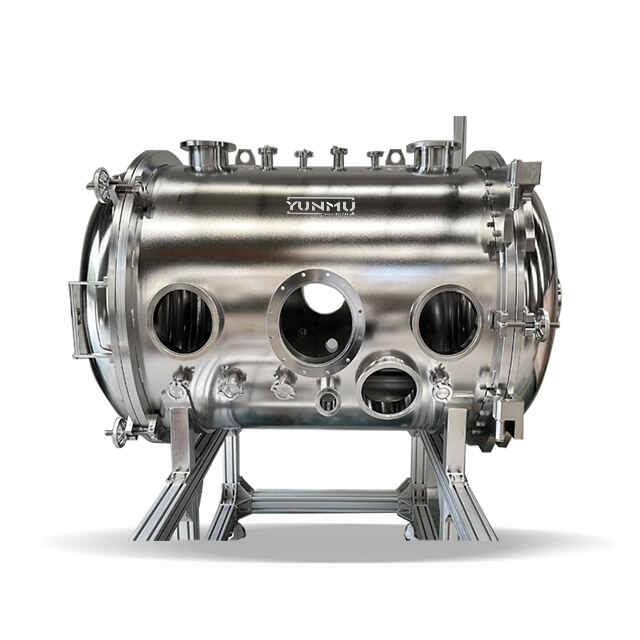
The foundation of any effective vacuum solution is the chamber itself. In custom vacuum systems, chamber geometry is not arbitrary — it is derived directly from the physical dimensions of the workpiece, the nature of the process, and the required vacuum level. A flat-panel display manufacturer requires a chamber with precise internal clearances and uniform pressure distribution, while a composite materials degassing operation may need a deep cylindrical vessel with specific port placements for resin injection and outgassing management.
Engineers designing custom vacuum systems evaluate factors such as internal volume, wall thickness, material compatibility, and thermal conductivity before finalizing chamber specifications. Stainless steel, aluminum, and specialty alloys each offer different outgassing rates, corrosion resistance profiles, and structural integrity under cyclic pressure loading. Selecting the right material for the chamber body is one of the earliest and most consequential decisions in the customization process.
Port configuration is another area where customization delivers measurable process advantages. Custom vacuum systems can be designed with precisely positioned feedthroughs for electrical connections, gas inlets, optical access windows, and mechanical actuators — all integrated without compromising the vacuum integrity of the system. This level of design specificity is simply not achievable with standard catalog equipment.
Pumping System Configuration and Vacuum Level Targeting
Different manufacturing processes operate at vastly different vacuum levels, and custom vacuum systems are engineered to reach and maintain the exact pressure range required. Rough vacuum applications such as vacuum forming or packaging may only require pressures in the range of a few hundred millibars, while thin-film deposition, electron beam welding, or mass spectrometry demand high or ultra-high vacuum conditions measured in micropascals.
Custom vacuum systems address this by combining pumping technologies in staged configurations. A typical high-vacuum system might pair a rotary vane or scroll pump as a backing stage with a turbomolecular or diffusion pump to achieve the final target pressure. The selection and sizing of each pump stage in custom vacuum systems is driven by the required base pressure, the gas load generated by the process, and the acceptable pump-down time for production cycle efficiency.
Control systems integrated into custom vacuum systems allow operators to program pressure setpoints, ramp rates, and hold times that align precisely with process recipes. This programmable control is especially valuable in batch manufacturing environments where multiple product types share the same vacuum platform but require different process parameters.
Industry-Specific Applications Where Custom Vacuum Systems Deliver Critical Value
Semiconductor and Electronics Manufacturing
The semiconductor industry represents one of the most demanding environments for vacuum technology. Processes such as physical vapor deposition, chemical vapor deposition, ion implantation, and etching all depend on controlled low-pressure environments to achieve the film quality, uniformity, and contamination control that modern chip architectures require. Custom vacuum systems in this sector are designed with ultra-clean internal surfaces, low-outgassing materials, and contamination management features that standard systems cannot provide.
Wafer handling within custom vacuum systems requires precise mechanical integration, including load-lock chambers that allow wafers to enter and exit the process environment without breaking the main chamber vacuum. This design feature, which must be engineered specifically for the wafer size, handling robot, and throughput rate of each facility, illustrates why customization is inseparable from performance in semiconductor manufacturing.
Electronics manufacturers working with printed circuit boards, sensors, and optical components also rely on custom vacuum systems for conformal coating, soldering, and encapsulation processes. The ability to control atmosphere composition, temperature, and pressure simultaneously within a single custom-engineered platform reduces process steps and improves yield consistency.
Aerospace, Defense, and Advanced Materials Processing
Aerospace manufacturing involves materials and joining processes that are highly sensitive to atmospheric contamination. Titanium and nickel superalloy components used in turbine engines, structural airframes, and propulsion systems must be processed in vacuum environments to prevent oxidation, nitrogen absorption, and hydrogen embrittlement. Custom vacuum systems for aerospace applications are typically designed with large working volumes, high-temperature capability, and robust thermal uniformity to support vacuum brazing, sintering, and heat treatment operations.
Composite material fabrication for aerospace structures relies on custom vacuum systems to perform resin infusion, autoclave-free consolidation, and void elimination in fiber-reinforced laminates. The geometry of the vacuum bag, the placement of breather layers, and the pressure differential applied during cure are all process variables that custom vacuum systems are engineered to control with high repeatability across production batches.
Defense and research applications often push the boundaries of what vacuum technology must achieve. Custom vacuum systems supporting particle accelerators, space simulation chambers, and directed energy research must maintain extreme vacuum levels over extended periods while accommodating complex internal fixtures, high-power electrical feedthroughs, and cryogenic cooling systems. These requirements make customization not just preferable but technically mandatory.
Engineering Flexibility: How Customization Addresses Process Evolution
Modular Design for Scalability and Upgrades
One of the most strategically important advantages of custom vacuum systems is their ability to evolve alongside the manufacturing processes they support. When a production line scales up, introduces new product variants, or adopts updated process chemistry, a modular custom vacuum system can be reconfigured, expanded, or upgraded without requiring a complete replacement. This design philosophy protects the capital investment and reduces the operational disruption associated with equipment transitions.
Modular custom vacuum systems are built with standardized interface points — flanges, electrical connectors, and control bus architectures — that allow new pumping stages, process modules, or monitoring instruments to be added as requirements change. Manufacturers who anticipate process evolution benefit significantly from specifying this modularity at the initial design stage, as retrofitting non-modular systems is typically costly and technically constrained.
The control architecture of custom vacuum systems also benefits from modular thinking. Programmable logic controllers and supervisory control systems can be configured to manage additional process zones, integrate with factory automation networks, or support remote monitoring and diagnostics. This connectivity is increasingly important as manufacturers adopt Industry 4.0 frameworks that require real-time process data from every production asset.
Material and Seal Compatibility for Aggressive Process Environments
Many specialized manufacturing processes involve corrosive gases, reactive plasmas, high-temperature cycles, or UV radiation that would rapidly degrade standard vacuum equipment. Custom vacuum systems address these challenges through deliberate material selection and sealing system design. Internal surfaces may be electropolished, coated with inert materials, or fabricated from specialty alloys to resist chemical attack and minimize contamination of the process environment.
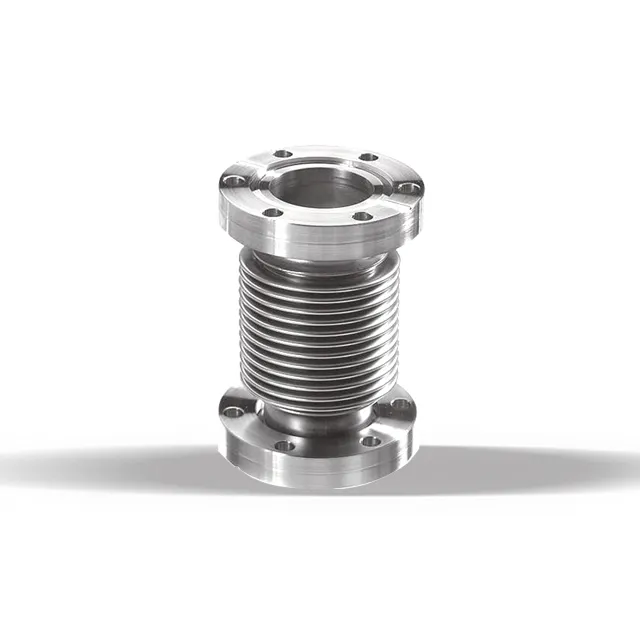
Sealing systems in custom vacuum systems are selected based on the specific chemical and thermal exposure of the application. Elastomeric O-rings suitable for moderate vacuum and temperature may be replaced with metal gaskets, PTFE seals, or welded bellows assemblies in applications involving aggressive chemistries or extreme temperatures. The correct seal selection directly affects leak rate, outgassing contribution, and maintenance interval — all of which have measurable impact on process quality and operating cost.
Viewport and feedthrough materials in custom vacuum systems are similarly application-specific. Optical access windows may be fabricated from borosilicate glass, sapphire, or zinc selenide depending on the wavelength range required for in-situ process monitoring. Electrical feedthroughs must be rated for the voltage, current, and signal frequency of the instruments they support while maintaining the vacuum integrity of the system boundary.
Operational and Economic Justification for Custom Vacuum Systems
Process Yield, Quality Consistency, and Scrap Reduction
The business case for custom vacuum systems in specialized manufacturing is most clearly expressed through process yield and quality metrics. When a vacuum environment is precisely matched to the requirements of a process, the variability that causes defects, rework, and scrap is systematically reduced. Manufacturers who transition from adapted standard equipment to purpose-built custom vacuum systems frequently report measurable improvements in first-pass yield, dimensional consistency, and surface quality.
In high-value manufacturing sectors such as medical devices, aerospace components, and precision optics, the cost of a single defective part can far exceed the incremental investment required to specify a custom vacuum solution. Custom vacuum systems reduce the probability of process excursions by eliminating the compromises inherent in adapting standard equipment to non-standard applications. Every design decision — from chamber surface finish to pump-down curve — is made with the specific process outcome in mind.
Consistency across production batches is another quality dimension where custom vacuum systems outperform generic alternatives. Because the system is designed to achieve and maintain a specific process environment, batch-to-batch variation is minimized. This consistency is particularly valuable for manufacturers supplying regulated industries where process validation and traceability are mandatory requirements.
Total Cost of Ownership and Long-Term Reliability
Evaluating custom vacuum systems purely on initial acquisition cost misses the more significant economic picture. Total cost of ownership analysis must account for maintenance frequency, consumable usage, energy consumption, downtime risk, and the cost of process failures attributable to equipment limitations. Custom vacuum systems, when properly specified and maintained, typically deliver lower total cost of ownership than standard systems operating outside their intended design envelope.
Maintenance planning for custom vacuum systems benefits from the fact that every component is selected and documented for the specific application. Spare parts inventories can be rationalized, preventive maintenance intervals can be calibrated to actual operating conditions, and service procedures can be developed with full knowledge of the system's design intent. This contrasts with the uncertainty that often accompanies maintenance of standard equipment adapted to non-standard use.
Energy efficiency is an increasingly important consideration in the economic evaluation of custom vacuum systems. Pumping systems sized precisely for the required gas load and vacuum level consume less energy than oversized standard systems running at partial capacity. Variable-speed drive technology integrated into custom vacuum systems allows pumping power to track actual process demand, reducing energy consumption during idle periods and extending pump service life.
FAQ
What types of manufacturing processes benefit most from custom vacuum systems?
Processes that involve sensitive materials, precise atmospheric control, or extreme vacuum levels benefit most from custom vacuum systems. These include semiconductor deposition, aerospace component heat treatment, medical device sterilization, composite material consolidation, optical coating, and electron beam welding. Any application where standard equipment cannot reliably achieve the required vacuum level, process uniformity, or material compatibility is a strong candidate for a custom solution.
How long does it typically take to design and commission a custom vacuum system?
The timeline for custom vacuum systems varies significantly based on complexity, size, and the specificity of process requirements. Simple custom chambers with standard pumping configurations may be designed, fabricated, and commissioned within eight to sixteen weeks. Complex multi-zone systems with integrated process controls, specialty materials, and high-vacuum capability can require six months to over a year from initial specification to full production readiness. Early and detailed engagement between the manufacturer and the vacuum system designer is the most effective way to compress this timeline.
Can existing standard vacuum equipment be upgraded to function as custom vacuum systems?
In some cases, standard vacuum equipment can be modified with custom chambers, upgraded pumping stages, or enhanced control systems to better serve specialized applications. However, the extent to which such upgrades can replicate the performance of purpose-built custom vacuum systems depends on the structural and design constraints of the original equipment. For applications with demanding requirements, a ground-up custom design typically delivers superior results compared to retrofitting standard platforms.
What information is needed to specify custom vacuum systems for a new application?
Specifying custom vacuum systems effectively requires detailed process information including the required vacuum level and acceptable pressure variation, the physical dimensions and weight of the workpiece or process load, the process temperature range, the chemical environment inside the chamber, the required cycle time and throughput, and any integration requirements with existing automation or facility systems. The more precisely this information is defined at the outset, the more accurately the custom vacuum system can be engineered to meet production objectives.
Table of Contents
- The Core Mechanism: How Custom Vacuum Systems Are Engineered for Specific Processes
- Industry-Specific Applications Where Custom Vacuum Systems Deliver Critical Value
- Engineering Flexibility: How Customization Addresses Process Evolution
- Operational and Economic Justification for Custom Vacuum Systems
-
FAQ
- What types of manufacturing processes benefit most from custom vacuum systems?
- How long does it typically take to design and commission a custom vacuum system?
- Can existing standard vacuum equipment be upgraded to function as custom vacuum systems?
- What information is needed to specify custom vacuum systems for a new application?