 EN
EN

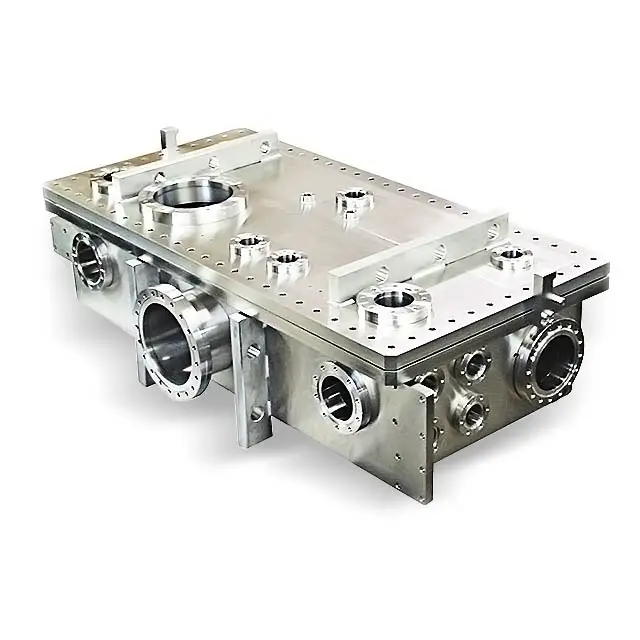
The vacuum chamber represents one of the most critical components in modern industrial and scientific applications, serving as the foundation for processes ranging from semiconductor manufacturing to space simulation testing. Understanding the design features that distinguish high-quality vacuum chambers from basic models is essential for professionals seeking optimal performance and reliability. A well-engineered vacuum chamber must balance structural integrity, material selection, sealing efficiency, and operational flexibility to meet demanding application requirements. These sophisticated systems require careful consideration of multiple design elements that work together to create and maintain the ultra-low pressure environments necessary for advanced manufacturing and research processes.
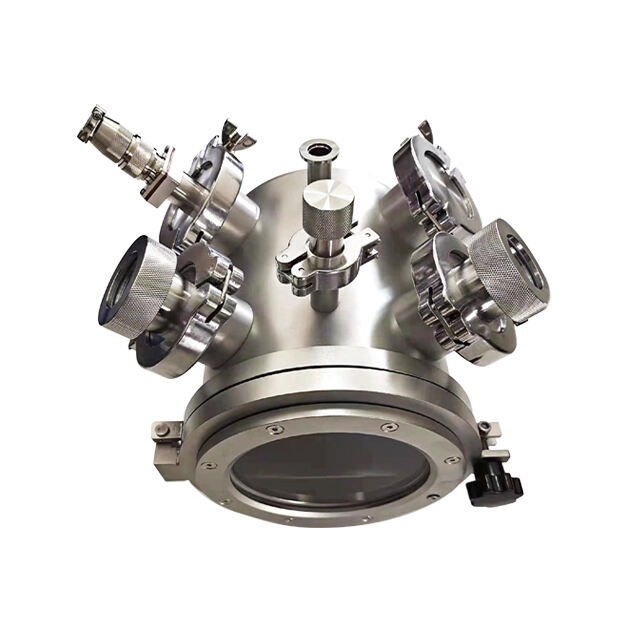
Essential Structural Design Elements
Wall Thickness and Material Composition
The wall thickness of a vacuum chamber directly impacts its ability to withstand atmospheric pressure differentials and maintain structural integrity over extended operating periods. High-quality vacuum chambers typically feature walls ranging from 6mm to 25mm in thickness, depending on the chamber size and intended vacuum level. Premium stainless steel grades, particularly 304L and 316L, provide excellent corrosion resistance and maintain their mechanical properties under vacuum conditions. The material composition must account for outgassing characteristics, with low-carbon stainless steel formulations minimizing contamination in ultra-high vacuum applications.
Advanced vacuum chamber designs incorporate stress analysis calculations to optimize wall thickness distribution, reducing material costs while maintaining safety factors. The grain structure and surface finish of the steel significantly influence pumping performance, with electropolished surfaces reducing virtual leak sources and improving ultimate vacuum levels. Temperature stability considerations also drive material selection, as thermal expansion coefficients must be compatible with attached components and sealing systems.
Chamber Geometry and Configuration
The geometric configuration of a vacuum chamber profoundly affects pumping efficiency and pressure uniformity throughout the internal volume. Cylindrical designs offer superior strength-to-weight ratios and uniform stress distribution, making them ideal for high-vacuum applications requiring minimal deflection. Rectangular chambers provide better access for process equipment installation but require additional reinforcement to prevent wall distortion under vacuum loads. The aspect ratio between chamber dimensions influences pumping speed requirements and determines optimal port placement for vacuum pumps and instrumentation.
Corner radii and internal surface smoothness play crucial roles in eliminating virtual leaks and reducing particle generation during pump-down cycles. Well-designed chambers incorporate smooth transitions between surfaces to minimize turbulence and ensure efficient gas flow patterns toward vacuum ports. The internal volume optimization balances process space requirements with pumping system capabilities, ensuring rapid evacuation times and stable operating pressures.
Advanced Sealing Technologies and Port Systems
O-Ring Groove Design and Compatibility
The precision of O-ring groove machining determines the long-term sealing performance and maintenance requirements of a vacuum chamber system. High-quality chambers feature groove dimensions manufactured to tight tolerances, typically within ±0.025mm, ensuring proper O-ring compression and preventing extrusion failures. The groove surface finish must be carefully controlled to prevent O-ring damage during installation and provide consistent sealing force distribution. Advanced groove designs incorporate anti-extrusion features and optimized cross-sectional profiles that accommodate thermal expansion without compromising seal integrity.
Material compatibility between O-rings and process environments requires careful selection of elastomer compounds that maintain flexibility and chemical resistance under vacuum conditions. Viton, EPDM, and specialized fluoropolymer O-rings offer different performance characteristics for temperature, chemical exposure, and outgassing requirements. The groove design must accommodate the specific compression characteristics of the selected O-ring material while providing adequate sealing force margins for pressure cycling and aging effects.
Flange Standards and Connection Interfaces
Standardized flange connections ensure compatibility with a wide range of vacuum components and simplify system integration for end users. High-quality vacuum chambers incorporate internationally recognized standards such as ISO-KF, ISO-LF, and CF flanges that provide reliable, repeatable connections with excellent vacuum performance. The flange face finish and flatness specifications directly impact sealing reliability, with surface roughness values typically controlled to Ra 0.8 micrometers or better for metal-sealed connections.
Port positioning and sizing require careful planning to optimize pumping efficiency while providing adequate access for process equipment and instrumentation. Multiple port configurations allow for redundant pumping paths and flexible system configurations that can adapt to changing process requirements. The mechanical design of flange connections must withstand repeated assembly cycles while maintaining precise alignment and sealing performance throughout the vacuum chamber operational lifetime.
Pumping System Integration and Performance Optimization
Conductance Calculations and Flow Dynamics
The effective pumping speed of a vacuum chamber system depends on the conductance characteristics of connecting pipework and internal geometry features. High-quality vacuum chambers incorporate optimized port designs that minimize pressure drops between the chamber volume and attached pumping systems. Conductance calculations must account for molecular flow conditions in the high-vacuum regime, where gas behavior differs significantly from viscous flow patterns observed at higher pressures.
Internal baffles and flow guides can be strategically positioned to direct gas molecules toward pumping ports while minimizing interference with process operations. The pumping port diameter and length ratios significantly influence conductance values, with larger diameter connections providing higher effective pumping speeds for equivalent pump specifications. Advanced computational fluid dynamics modeling helps optimize internal geometries for specific applications and vacuum level requirements.
Outgassing Control and Surface Treatments
Surface preparation and treatment processes directly influence the ultimate vacuum performance achievable in a vacuum chamber system. Electropolishing removes surface contaminants and creates a smooth, passive oxide layer that minimizes outgassing and reduces virtual leak sources. The surface roughness reduction achieved through electropolishing also improves cleaning effectiveness and reduces particle generation during operation. High-quality vacuum chambers often undergo specialized cleaning procedures and vacuum furnace treatments to remove residual manufacturing contaminants.
Vacuum bake-out capabilities enable in-situ conditioning of chamber surfaces to achieve ultra-high vacuum levels below 10^-9 Torr. The chamber design must accommodate thermal expansion during bake-out cycles while maintaining seal integrity and structural alignment. Temperature-controlled bake-out procedures activate surface desorption processes that remove water vapor and hydrocarbon contaminants, significantly improving ultimate vacuum performance and reducing pump-down times for subsequent cycles.
Quality Assurance and Testing Protocols
Leak Detection and Validation Procedures
Comprehensive leak testing protocols ensure that each vacuum chamber meets specified performance standards before delivery to customers. Helium mass spectrometer leak detection provides sensitivity levels down to 10^-10 mbar·L/s, enabling detection of minute seal defects that could compromise vacuum performance. The testing procedures must evaluate both gross leaks that prevent initial pump-down and fine leaks that limit ultimate vacuum levels in sensitive applications.
Pressure rise rate testing validates the overall system integrity by measuring pressure increase over time after pump isolation. High-quality vacuum chambers typically demonstrate pressure rise rates below 10^-6 mbar·L/s when properly conditioned and sealed. The testing protocols must account for temperature effects and outgassing contributions to provide accurate assessments of true leak rates versus virtual leaks from surface desorption processes.
Documentation and Traceability Standards
Material certifications and manufacturing documentation provide essential traceability for vacuum chamber components used in critical applications. Test certificates documenting chemical composition, mechanical properties, and surface finish measurements ensure compliance with application-specific requirements. The documentation package must include dimensional inspection reports, weld quality records, and performance test results that validate design specifications and manufacturing quality.
Quality management systems following ISO 9001 standards ensure consistent manufacturing processes and continuous improvement in vacuum chamber design and production methods. Serialized tracking systems enable component-level traceability throughout the manufacturing process, facilitating quality investigations and warranty support when required. The documentation standards must align with customer quality requirements and regulatory compliance needs for specific industry applications.
Application-Specific Design Considerations
Process Integration and Accessibility Features
The internal configuration of a vacuum chamber must accommodate specific process equipment while maintaining optimal vacuum performance and operator accessibility. Feedthrough ports for electrical, optical, and mechanical connections require specialized sealing technologies that maintain vacuum integrity while enabling process control and monitoring capabilities. The port spacing and orientation must consider cable routing, maintenance access, and potential interference between different system components.
Viewport installations provide visual access for process monitoring and alignment procedures, with optical-quality windows that maintain clarity under vacuum conditions. The window mounting systems must accommodate thermal expansion differences between glass and metal components while providing reliable long-term sealing performance. Anti-reflection coatings and specialized glass compositions optimize optical transmission characteristics for specific wavelength ranges and measurement requirements.
Contamination Control and Cleanliness Protocols
Particle generation and contamination control represent critical concerns for vacuum chambers used in semiconductor manufacturing and precision coating applications. The internal surface finish and joint design must minimize particle sources while enabling effective cleaning procedures between process runs. Smooth surface transitions and crevice-free construction prevent particle accumulation and facilitate thorough cleaning validation.
Cleanroom assembly procedures and contamination control protocols ensure that vacuum chamber systems meet stringent cleanliness requirements for sensitive applications. The packaging and shipping methods must protect cleaned surfaces from environmental contamination during transportation and storage. Clean assembly documentation provides verification of cleanliness levels and handling procedures throughout the manufacturing and delivery process.
FAQ
What wall thickness is required for high-vacuum applications
The required wall thickness for a vacuum chamber depends on the chamber size, target vacuum level, and safety requirements. Typically, chambers designed for high-vacuum applications (10^-6 to 10^-9 Torr) require wall thicknesses ranging from 8mm to 20mm for stainless steel construction. Larger diameter chambers require proportionally thicker walls to resist atmospheric pressure loads and prevent deflection that could compromise seal integrity. The wall thickness calculation must include safety factors and account for potential stress concentrations around port connections and structural discontinuities.
How do surface treatments affect vacuum performance
Surface treatments significantly impact the ultimate vacuum level achievable in a vacuum chamber system through their effects on outgassing rates and virtual leak sources. Electropolishing reduces surface roughness and removes contaminants, typically improving ultimate vacuum performance by 1-2 orders of magnitude compared to standard machined surfaces. Vacuum furnace treatments and specialized cleaning procedures further reduce outgassing by removing absorbed moisture and hydrocarbon contaminants from the chamber walls. The surface treatment selection must balance performance requirements with cost considerations for specific application needs.
What flange standards provide the best sealing performance
CF (Conflat) flanges provide the highest sealing performance for ultra-high vacuum applications, utilizing metal gaskets that can achieve leak rates below 10^-12 mbar·L/s when properly installed. ISO-KF flanges offer good performance for high-vacuum applications with the advantage of quick-connect functionality and lower cost compared to CF systems. ISO-LF flanges provide intermediate performance levels suitable for applications requiring better vacuum performance than KF but not requiring the complexity of CF connections. The flange selection should match the target vacuum level and consider factors such as bake-out temperature requirements and connection frequency.
How important is chamber geometry for pumping efficiency
Chamber geometry plays a crucial role in pumping efficiency by affecting gas flow patterns and conductance between the chamber volume and pumping ports. Cylindrical chambers generally provide better pumping efficiency due to uniform pressure distribution and optimized flow paths toward vacuum ports. The length-to-diameter ratio influences pumping speed requirements, with shorter chambers typically achieving faster pump-down times for equivalent pumping capacity. Internal obstacles and complex geometries can create pumping shadows and reduce effective pumping speed, requiring careful design optimization to maintain efficient evacuation performance throughout the chamber volume.