
 EN
EN
Thermal expansion presents one of the most significant challenges in modern piping systems, where temperature fluctuations can cause materials to expand and contract dramatically. Metal bellows serve as sophisticated engineering solutions that accommodate these dimensional changes while maintaining system integrity and preventing catastrophic failures. These flexible components absorb thermal stress through their corrugated design, enabling piping networks to operate safely across wide temperature ranges without compromising structural stability.
Industrial facilities worldwide rely on metal bellows to protect expensive equipment and maintain operational continuity. When temperatures rise or fall, rigid piping systems experience substantial stress that can lead to joint failures, pipe ruptures, and costly downtime. The corrugated structure of metal bellows allows controlled movement in multiple directions, effectively neutralizing the forces generated by thermal expansion and contraction.
Understanding Thermal Expansion in Industrial Piping
Physics of Material Expansion
Thermal expansion occurs when materials increase their dimensions as temperature rises, following the fundamental principle that heated atoms vibrate more vigorously and require additional space. Different materials exhibit varying coefficients of expansion, with steel expanding approximately 12 micrometers per meter per degree Celsius. This seemingly small change becomes significant in long pipeline runs, where a 100-meter steel pipe can expand over 6 centimeters during a 50-degree temperature increase.
The expansion forces generated in constrained piping systems can exceed the yield strength of materials, causing permanent deformation or failure. Metal bellows provide controlled flexibility that prevents these destructive forces from building up, allowing the system to accommodate dimensional changes without structural compromise. Understanding these expansion characteristics enables engineers to properly size and position metal bellows for optimal performance.
Critical Temperature Ranges
Industrial applications typically involve extreme temperature variations that challenge conventional piping designs. Steam systems may operate between ambient temperature and 540 degrees Celsius, while cryogenic applications can reach minus 196 degrees Celsius. Metal bellows must withstand these temperature extremes while maintaining their flexibility and sealing capabilities throughout countless thermal cycles.
Temperature cycling creates fatigue stress in metal components, making material selection and design optimization crucial for long-term reliability. High-grade stainless steels and specialized alloys used in metal bellows construction resist thermal fatigue while preserving their elastic properties across wide temperature ranges. Proper material selection ensures that metal bellows continue performing effectively even after thousands of thermal cycles.
Metal Bellows Design Principles
Corrugated Structure Mechanics
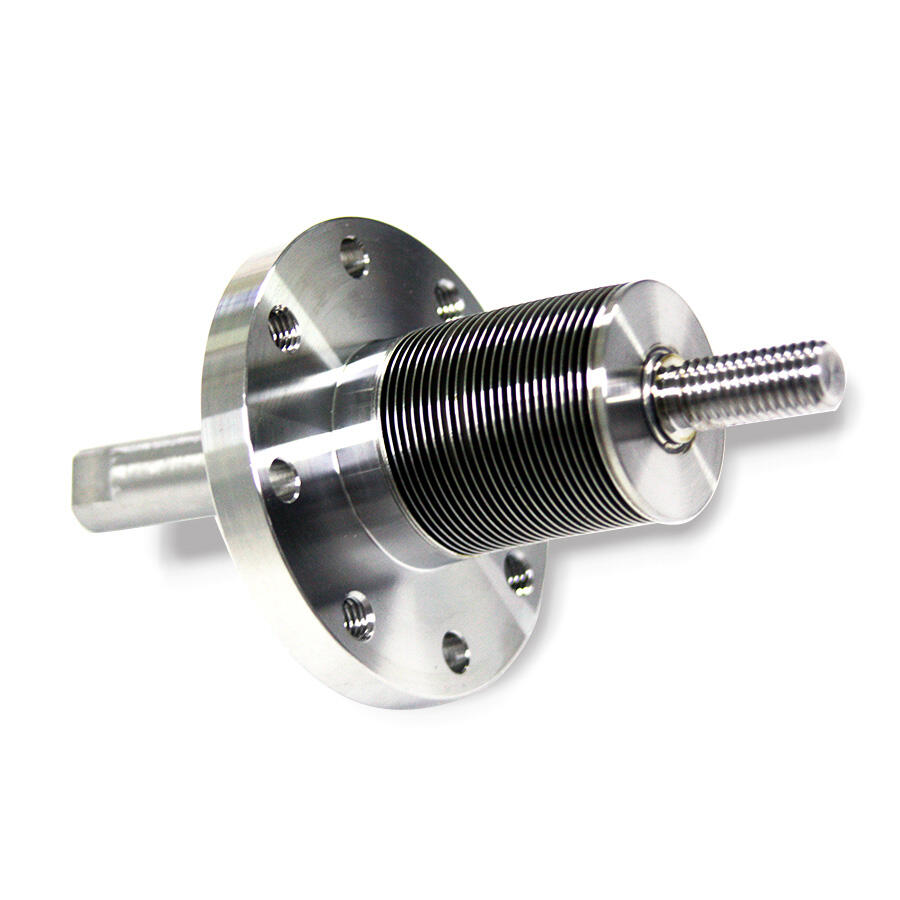
The distinctive corrugated profile of metal bellows creates a spring-like structure that compresses and extends under load while distributing stress evenly across the material. Each convolution acts as an individual spring element, with the total flexibility determined by the number of convolutions and their geometric proportions. This design principle allows metal bellows to absorb substantial axial movement while maintaining pressure containment.
Manufacturing precision directly impacts the performance characteristics of metal bellows, with wall thickness variations and geometric irregularities affecting stress distribution patterns. Advanced forming techniques ensure uniform corrugation profiles that maximize fatigue life while providing predictable spring rates. The relationship between corrugation depth, pitch, and wall thickness determines the bellows' ability to handle specific displacement requirements.
Material Selection Criteria
Stainless steel grades 321, 347, and Inconel alloys represent the most common materials for high-temperature metal bellows applications due to their excellent corrosion resistance and thermal stability. These materials maintain their mechanical properties across extreme temperature ranges while resisting oxidation and creep deformation. Material selection must consider the specific operating environment, including temperature, pressure, and chemical exposure conditions.
Specialized alloys such as Hastelloy and Monel provide superior performance in highly corrosive environments where standard stainless steels would fail prematurely. Metal bellows constructed from these premium materials command higher initial costs but deliver extended service life in challenging applications. The total cost of ownership often favors premium materials when considering maintenance, replacement, and downtime costs.
Thermal Stress Management Strategies
Axial Movement Accommodation
Axial thermal expansion represents the primary challenge in straight pipeline runs, where metal bellows must compress or extend to accommodate length changes. Proper installation requires careful calculation of expected thermal movements based on operating temperature ranges and pipe materials. Metal bellows positioned at strategic locations throughout the system prevent excessive stress accumulation while maintaining pressure boundaries.
Pre-compression installation techniques optimize metal bellows performance by positioning them at their neutral length under average operating conditions. This approach maximizes available movement in both compression and extension directions while preventing over-compression during maximum thermal expansion. Installation guidelines specify minimum and maximum compression limits to prevent damage during operation.
Lateral and Angular Deflection
Complex piping geometries require metal bellows capable of accommodating lateral displacement and angular rotation in addition to axial movement. Multi-directional capabilities allow single bellows assemblies to handle thermal expansion in systems with bends, offsets, and elevation changes. Specialized designs incorporate reinforcing rings and tie rods to control unwanted movements while preserving required flexibility.
Angular deflection capacity enables metal bellows to accommodate thermal expansion in systems where perfect axial alignment cannot be maintained. The corrugated structure naturally provides limited angular capability, with enhanced designs offering increased deflection angles through modified corrugation profiles. Proper support structures prevent excessive lateral forces that could damage the bellows assembly.
Installation and Application Guidelines
Positioning and Anchoring
Strategic placement of metal bellows requires comprehensive analysis of thermal expansion patterns throughout the entire piping system. Anchor points must be positioned to direct thermal movements toward the bellows assemblies while preventing interference with adjacent equipment. Fixed anchors create controlled expansion zones that channel thermal forces into the flexible elements.
Proper anchoring prevents unwanted lateral forces and moments from reaching metal bellows installations, ensuring that they experience only the intended axial loads. Guide structures maintain alignment while allowing free axial movement, preventing buckling or excessive bending stresses. Installation drawings must clearly indicate anchor locations and movement directions to ensure proper field installation.
Pressure Rating Considerations
Metal bellows pressure ratings depend on corrugation geometry, material properties, and operating temperature conditions. Higher pressures require thicker walls or reinforcing elements that may reduce flexibility, creating design trade-offs between pressure capability and thermal movement accommodation. Pressure testing procedures verify the integrity of metal bellows assemblies before system startup.
Temperature effects on pressure ratings require careful consideration, as material strength decreases at elevated temperatures while thermal expansion increases internal stresses. Design codes specify derating factors for high-temperature applications to maintain adequate safety margins. Metal bellows specifications must clearly indicate both pressure and temperature limitations to prevent operational failures.
Performance Optimization Techniques
Cycle Life Enhancement
Fatigue life prediction models help engineers optimize metal bellows designs for specific thermal cycling patterns, considering factors such as displacement amplitude, frequency, and temperature range. Finite element analysis reveals stress concentration points that can be modified through geometric optimization or material selection. Understanding fatigue mechanisms enables design modifications that significantly extend operational life.
Stress reduction techniques include radius optimization at corrugation transitions, where sharp corners create stress concentrations that initiate fatigue cracks. Controlled forming processes ensure smooth radius transitions that distribute stresses more evenly across the material. Surface finishing treatments can further enhance fatigue resistance by eliminating microscopic defects that serve as crack initiation sites.
Environmental Protection
External covers and shrouds protect metal bellows from mechanical damage while allowing thermal expansion movement to occur freely. Weather protection prevents corrosion from moisture accumulation and shields against ultraviolet degradation of external components. Insulation systems must accommodate bellows movement without creating binding or excessive forces.
Drainage provisions prevent liquid accumulation around metal bellows installations, which could freeze and restrict movement in cold weather applications. Proper drainage design ensures that thermal movements remain unimpeded while protecting against corrosion from standing water. Regular inspection protocols identify potential problems before they affect system performance.
Maintenance and Monitoring Practices
Inspection Procedures
Visual inspection techniques identify early signs of metal bellows deterioration, including surface cracking, corrosion, and deformation patterns. Regular inspection schedules should align with thermal cycling patterns and operating severity to detect problems before catastrophic failures occur. Documentation of inspection findings helps establish predictive maintenance intervals based on actual operating conditions.
Non-destructive testing methods such as dye penetrant inspection and magnetic particle testing reveal surface defects that may not be visible during routine inspections. Ultrasonic thickness measurements monitor wall thinning due to corrosion or erosion effects. Advanced inspection techniques enable condition-based maintenance strategies that optimize replacement timing.
Predictive Maintenance Strategies
Thermal monitoring systems track temperature patterns and cycling frequencies to assess cumulative fatigue damage in metal bellows applications. Data logging equipment records actual operating conditions that can be compared against design assumptions to validate performance predictions. Historical data analysis identifies trends that indicate approaching end-of-life conditions.
Replacement scheduling based on thermal cycle counts provides more accurate life prediction than calendar-based maintenance intervals. Metal bellows manufacturers often provide fatigue curves that relate cycle life to displacement amplitude and temperature conditions. Proper record keeping enables optimized replacement timing that maximizes service life while preventing unexpected failures.
FAQ
What factors determine metal bellows selection for thermal expansion applications
Metal bellows selection depends on several critical factors including expected thermal displacement, operating pressure and temperature ranges, corrosive environment conditions, and required cycle life. The corrugation geometry must provide adequate flexibility while maintaining structural integrity under maximum operating conditions. Material compatibility with process fluids and environmental conditions ensures long-term reliability and prevents premature failure due to corrosion or chemical attack.
How do installation practices affect metal bellows thermal performance
Proper installation significantly impacts metal bellows performance through correct positioning, anchoring, and pre-compression settings. Misaligned installations create unwanted lateral forces that reduce fatigue life and may cause premature failure. Adequate support structures and proper anchor placement ensure that thermal forces reach the bellows in the intended axial direction while preventing buckling or excessive bending stresses that could damage the corrugated structure.
What maintenance practices extend metal bellows service life in thermal applications
Regular visual inspections identify early signs of deterioration such as surface cracking, corrosion, or deformation patterns that indicate approaching failure. Monitoring thermal cycling patterns and comparing actual operating conditions against design specifications helps predict remaining service life. Protecting metal bellows from mechanical damage through proper covers and ensuring adequate drainage prevents premature deterioration from environmental factors.
How do temperature extremes affect metal bellows material properties
Extreme temperatures significantly impact metal bellows performance through changes in material properties such as yield strength, elastic modulus, and fatigue resistance. High temperatures reduce material strength while increasing thermal expansion stresses, requiring careful selection of high-temperature alloys with appropriate creep resistance. Low-temperature applications may cause embrittlement in some materials, making proper material selection critical for reliable performance across the entire operating temperature range.
Table of Contents
- Understanding Thermal Expansion in Industrial Piping
- Metal Bellows Design Principles
- Thermal Stress Management Strategies
- Installation and Application Guidelines
- Performance Optimization Techniques
- Maintenance and Monitoring Practices
-
FAQ
- What factors determine metal bellows selection for thermal expansion applications
- How do installation practices affect metal bellows thermal performance
- What maintenance practices extend metal bellows service life in thermal applications
- How do temperature extremes affect metal bellows material properties