 EN
EN

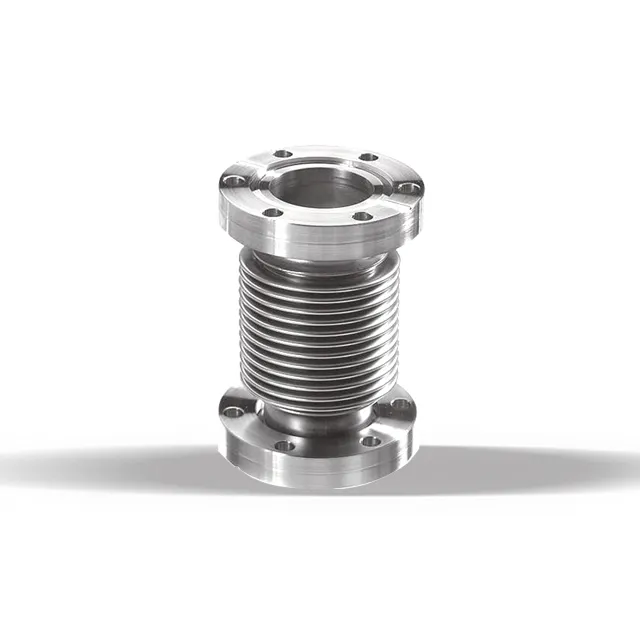
In high-vacuum and ultra-high-vacuum environments, the integrity of every connection point determines whether a system performs reliably or fails under pressure. vacuum fittings are the mechanical foundation of any leak-tight assembly, bridging chambers, pumps, gauges, and process components into a unified, sealed network. When even a single connection allows atmospheric gas to infiltrate, the consequences range from contaminated processes to complete system shutdown. Understanding how vacuum fittings contribute to leak-tight performance is therefore essential for engineers, procurement specialists, and facility managers working in semiconductor fabrication, surface science, particle physics, and industrial coating applications.
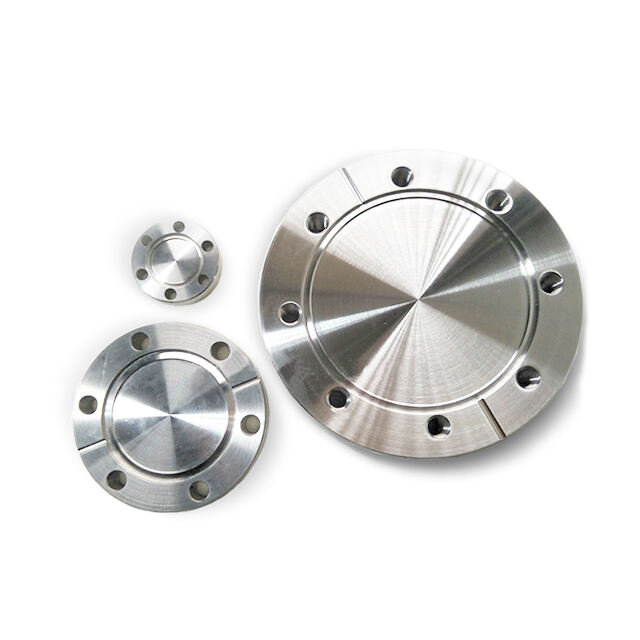
The relationship between vacuum fittings and system leak tightness is not incidental — it is structural. Every flange face, every sealing surface, and every bolt pattern on a set of vacuum fittings directly influences the achievable base pressure and the long-term stability of the vacuum environment. Choosing the right vacuum fittings, installing them correctly, and maintaining them over time are the three pillars that separate a system that holds vacuum reliably from one that demands constant troubleshooting. This article examines the mechanisms by which vacuum fittings improve leak-tight performance, the design principles behind their effectiveness, and the practical considerations that guide their selection and use.
The Mechanical Role of Vacuum Fittings in Sealing Performance
How Flange Geometry Creates a Reliable Seal
The geometry of vacuum fittings is engineered specifically to generate and maintain a controlled sealing force across a gasket or knife-edge interface. In ConFlat-style vacuum fittings, for example, the raised knife-edge on each flange face bites into a soft metal gasket — typically oxygen-free high-conductivity copper — as the bolts are tightened. This cold-welding action creates a metal-to-metal seal that is essentially impermeable to gas molecules at pressures well into the ultra-high-vacuum range.
The precision of this geometry is what distinguishes vacuum fittings from standard pipe fittings or hydraulic connectors. The knife-edge profile must be sharp enough to deform the gasket material without fracturing it, and the flange faces must be flat and parallel to ensure uniform compression around the entire circumference. Any deviation in flatness, surface finish, or knife-edge sharpness will produce a leak path that no amount of additional bolt torque can reliably close.
This is why vacuum fittings are manufactured to tight dimensional tolerances and why their sealing surfaces are protected from contamination and mechanical damage during storage and handling. The geometry is the seal, and preserving that geometry is the first requirement of leak-tight performance.
Material Selection and Its Impact on Outgassing
Leak tightness in a vacuum system is not only about preventing gas from entering through a physical gap. It also involves controlling the release of gas molecules from the surfaces of the vacuum fittings themselves — a phenomenon known as outgassing. Materials that absorb moisture, contain volatile compounds, or have high permeability to atmospheric gases will continuously release gas into the vacuum environment even when no physical leak exists.
High-quality vacuum fittings are manufactured from materials selected for low outgassing rates. Austenitic stainless steel, particularly grades 304 and 316L, is the dominant material for vacuum fittings because it combines mechanical strength, corrosion resistance, and a relatively low outgassing rate when properly electropolished or passivated. The smooth, dense surface produced by electropolishing reduces the effective surface area available for gas adsorption, which directly improves the achievable base pressure of the system.
Gasket materials used with vacuum fittings are similarly selected for low outgassing. Copper, aluminum, and Viton elastomers each have different outgassing profiles and are matched to the pressure range and bakeout temperature requirements of the application. Selecting vacuum fittings with compatible gasket materials is therefore a direct contributor to leak-tight system performance.
Design Features That Enhance Leak Tightness
Bolt Circle Uniformity and Clamping Force Distribution
The bolt circle of a vacuum fitting flange is designed to distribute clamping force as evenly as possible around the sealing interface. Uneven clamping force is one of the most common causes of leaks in vacuum fittings, because it allows one section of the gasket to be under-compressed while another section is over-stressed. Both conditions create leak paths — the under-compressed region allows gas to pass, while the over-stressed region can crack the gasket or damage the knife-edge.
Standardized vacuum fittings follow bolt tightening sequences that alternate across the bolt circle in a star pattern, progressively increasing torque in multiple passes. This approach ensures that the gasket deforms uniformly and that the knife-edge engages the full circumference of the sealing surface simultaneously. The result is a seal that is both leak-tight and mechanically stable under thermal cycling and vibration.
The number of bolts in the bolt circle scales with flange diameter in vacuum fittings, ensuring that the clamping force per unit length of the sealing circumference remains within the range required to deform the gasket material without exceeding the yield strength of the flange body. This scaling principle is one reason why vacuum fittings in standardized series — such as CF, ISO-KF, and ISO-LF — can be reliably assembled by technicians without requiring custom torque calculations for each connection.
Surface Finish Standards and Their Sealing Implications
The sealing surfaces of vacuum fittings are held to surface finish specifications that directly determine the quality of the seal. A rough or scratched sealing surface will prevent the gasket from conforming fully to the flange face, leaving microscopic channels through which gas can flow. For metal-sealed vacuum fittings operating in the ultra-high-vacuum range, sealing surface roughness is typically specified at Ra 0.8 micrometers or better, with some applications requiring Ra 0.4 micrometers or finer.
Electropolishing, mechanical polishing, and precision machining are the primary methods used to achieve these surface finish requirements on vacuum fittings. Each method has different cost and performance implications, and the choice depends on the pressure range, bakeout temperature, and service life requirements of the application. What is consistent across all high-performance vacuum fittings is that the sealing surface finish is treated as a critical dimension, not an aesthetic consideration.
Damage to the sealing surface — from scratches, corrosion, or improper handling — is the leading cause of leak failures in vacuum fittings that were previously performing correctly. Protecting sealing surfaces during installation, maintenance, and storage is therefore a direct operational requirement for maintaining leak-tight performance over the service life of the system.
How Vacuum Fittings Prevent Common Leak Failure Modes
Addressing Thermal Expansion and Contraction
Vacuum systems frequently operate across wide temperature ranges, either because the process requires elevated temperatures or because the system undergoes bakeout cycles to reduce outgassing. Thermal expansion and contraction create differential movement between the flange bodies and the gasket material, which can open leak paths if the vacuum fittings are not designed to accommodate this movement.
Metal-sealed vacuum fittings handle thermal cycling well because the cold-welded metal gasket deforms plastically during initial assembly and does not spring back when the temperature changes. This means the seal remains intact through multiple thermal cycles without requiring re-torquing. Elastomer-sealed vacuum fittings, by contrast, rely on the elastic recovery of the O-ring material to maintain sealing force, which means they are more sensitive to temperature extremes and may require inspection after severe thermal cycling.
Understanding the thermal behavior of vacuum fittings in a specific application allows engineers to select the sealing technology that will maintain leak tightness across the full operating temperature range. This is particularly important in systems that undergo regular bakeout at temperatures above 150 degrees Celsius, where elastomer O-rings may degrade and metal gaskets are the preferred choice for vacuum fittings.
Preventing Leak Paths from Vibration and Mechanical Stress
Mechanical vibration from pumps, compressors, and process equipment can gradually loosen the bolt connections on vacuum fittings, reducing clamping force and eventually opening a leak path. This failure mode is particularly insidious because it develops slowly and may not be detected until the system pressure rises noticeably above its baseline.
Vacuum fittings designed for vibration-prone environments incorporate features such as lock washers, thread-locking compounds compatible with vacuum service, and flange clamps that maintain clamping force without relying solely on bolt friction. Bellows-style flexible vacuum fittings are used to isolate sensitive components from vibration sources, preventing the transmission of mechanical stress to rigid flange connections elsewhere in the system.
Regular inspection of bolt torque on vacuum fittings in high-vibration environments is a standard maintenance practice in well-managed vacuum facilities. Combining proper initial installation torque with periodic verification ensures that the clamping force on each set of vacuum fittings remains within the range required for leak-tight performance throughout the service interval.
Selecting Vacuum Fittings for Optimal Leak Tight Results
Matching Fitting Type to Pressure Range
Not all vacuum fittings are suitable for all pressure ranges, and selecting the wrong fitting type is a common source of leak problems in vacuum systems. ISO-KF vacuum fittings, which use a centering ring and elastomer O-ring, are well suited for rough vacuum and medium vacuum applications down to approximately 10 to the minus 8 millibar. For pressures below this threshold, the permeation rate of gas through the elastomer O-ring becomes significant, and metal-sealed vacuum fittings such as the CF series are required.
CF vacuum fittings use a copper or aluminum gasket compressed between two knife-edge flanges, achieving leak rates below 10 to the minus 11 millibar liters per second — the standard threshold for ultra-high-vacuum service. This performance level is necessary for applications such as electron microscopy, synchrotron beamlines, and thin-film deposition systems where even trace amounts of residual gas would compromise the process or measurement.
Selecting vacuum fittings that are rated for a pressure range somewhat below the target operating pressure provides a safety margin that accounts for real-world variations in installation quality, gasket condition, and surface finish. This conservative approach to fitting selection is a standard practice in vacuum engineering and contributes directly to the long-term leak-tight reliability of the system.
The Role of Blank Flanges in System Integrity
Blank flanges are a specialized category of vacuum fittings used to seal unused ports on vacuum chambers, manifolds, and tees. A blank flange that is not properly sealed is effectively an open leak path, and even a single improperly installed blank flange can prevent a system from reaching its target base pressure. The design requirements for blank flanges are identical to those for any other vacuum fittings — precise sealing surface geometry, appropriate material selection, and correct gasket compatibility.
Non-rotatable blank flanges are particularly useful in applications where the bolt holes must align with a fixed bolt circle without the ability to rotate the flange body. This constraint is common in systems where multiple ports are clustered closely together and where rotating a blank flange to achieve bolt alignment would interfere with adjacent components. Using the correct type of blank flange for each port configuration ensures that the sealing force is applied correctly and that the connection meets the same leak-tight standard as every other set of vacuum fittings in the system.
Maintaining a stock of correctly sized and typed blank flanges — including both rotatable and non-rotatable variants — is a practical requirement for any facility that regularly reconfigures its vacuum systems. Having the right blank flange available when a port needs to be sealed prevents the use of improvised solutions that compromise the leak-tight integrity of the vacuum fittings network.
Installation and Maintenance Practices That Protect Leak Tight Performance
Proper Cleaning and Handling of Vacuum Fittings
Contamination of sealing surfaces is one of the most preventable causes of leak failures in vacuum fittings. Fingerprints, machining oils, cleaning solvent residues, and particulate contamination can all interfere with the formation of a proper seal, either by preventing full contact between the gasket and the sealing surface or by introducing outgassing sources that degrade the achievable base pressure.
Vacuum fittings should be cleaned with appropriate solvents — typically acetone or isopropanol — using lint-free wipes, and handled with clean gloves to prevent recontamination. Sealing surfaces should be inspected visually and, where possible, with a magnifying glass before assembly to confirm that no scratches, pits, or contamination are present. New gaskets should be used for each assembly of metal-sealed vacuum fittings, as a used copper gasket that has already been cold-welded cannot reliably re-seal to the same leak-tight standard.
These handling and cleaning practices are not optional refinements — they are the operational procedures that determine whether the precision engineering built into vacuum fittings is actually realized in the assembled system. Skipping these steps is the most common reason why high-quality vacuum fittings fail to deliver the leak-tight performance they are designed to provide.
Leak Testing Methods for Vacuum Fittings
After assembly, vacuum fittings should be leak tested before the system is put into service. Helium mass spectrometer leak testing is the standard method for verifying the integrity of vacuum fittings in high-vacuum and ultra-high-vacuum systems. A helium leak detector can identify leak rates as low as 10 to the minus 12 millibar liters per second, which is well below the threshold detectable by pressure rise testing or visual inspection.
The leak testing procedure involves pressurizing the system with helium or spraying helium around the exterior of each set of vacuum fittings while the interior is connected to the leak detector. Any helium that passes through a leak path is detected and quantified, allowing the technician to identify and address specific problem connections before they cause process failures or system downtime.
Documenting leak test results for each set of vacuum fittings creates a baseline record that can be compared against future measurements to identify gradual degradation of sealing performance. This practice is particularly valuable in systems that undergo regular maintenance cycles, where tracking the leak rate history of individual vacuum fittings can predict when a gasket replacement or flange inspection will be needed before a failure occurs.
FAQ
What is the difference between CF and ISO-KF vacuum fittings in terms of leak tightness?
CF vacuum fittings use a metal gasket compressed between knife-edge flanges to achieve ultra-high-vacuum performance, with leak rates below 10 to the minus 11 millibar liters per second. ISO-KF vacuum fittings use an elastomer O-ring and centering ring, which is suitable for rough and medium vacuum but allows higher permeation rates at very low pressures. The choice between these vacuum fittings depends on the target operating pressure and whether the system requires bakeout at elevated temperatures.
How often should gaskets be replaced in vacuum fittings?
Metal gaskets used in CF vacuum fittings should be replaced every time the flange connection is disassembled, as the cold-welding process permanently deforms the gasket and it cannot reliably re-seal. Elastomer O-rings used in ISO-KF and ISO-LF vacuum fittings can sometimes be reused if they show no signs of deformation, cracking, or contamination, but replacement at each disassembly is the conservative and recommended practice for maintaining leak-tight performance.
Can vacuum fittings be used in corrosive process environments?
Standard stainless steel vacuum fittings offer good resistance to many process gases and cleaning agents, but highly corrosive environments may require vacuum fittings made from or coated with more resistant materials such as electropolished 316L stainless steel, aluminum, or specialty alloys. The gasket material must also be compatible with the process chemistry, as some gases will degrade elastomer O-rings or react with copper gaskets. Consulting the material compatibility data for each component of the vacuum fittings assembly is essential before deploying them in corrosive service.
What causes a vacuum fitting to develop a leak after previously performing correctly?
The most common causes of leak development in previously tight vacuum fittings include thermal cycling that fatigues the gasket material, vibration-induced bolt loosening, mechanical damage to the sealing surface from accidental contact, and corrosion of the flange face or gasket. In elastomer-sealed vacuum fittings, O-ring degradation from exposure to process gases or elevated temperatures is also a frequent cause. Systematic leak testing and visual inspection of vacuum fittings during scheduled maintenance intervals are the most effective ways to identify and address these failure modes before they cause system downtime.