
 EN
EN
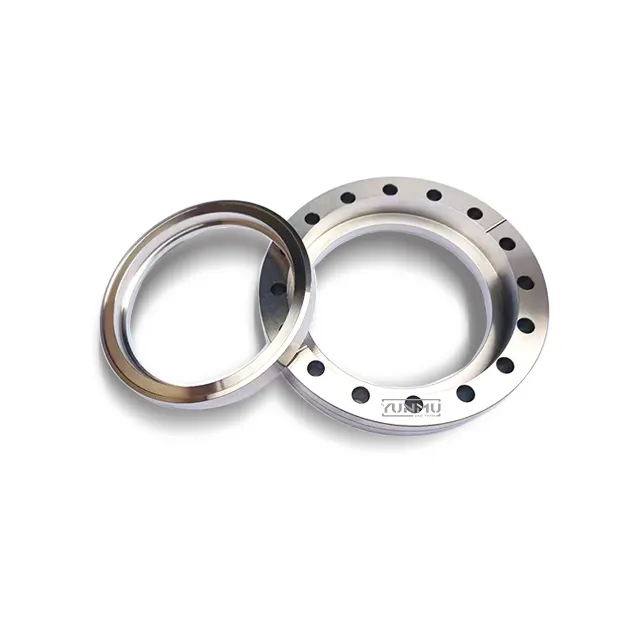
High-vacuum systems require components that can maintain exceptional sealing integrity while withstanding extreme operational conditions. Among the most critical elements in these systems is the cf flange, a specialized connection method that has revolutionized vacuum technology across numerous industries. These flanges provide unmatched performance in ultra-high vacuum applications where traditional sealing methods fail to deliver the required reliability and durability.
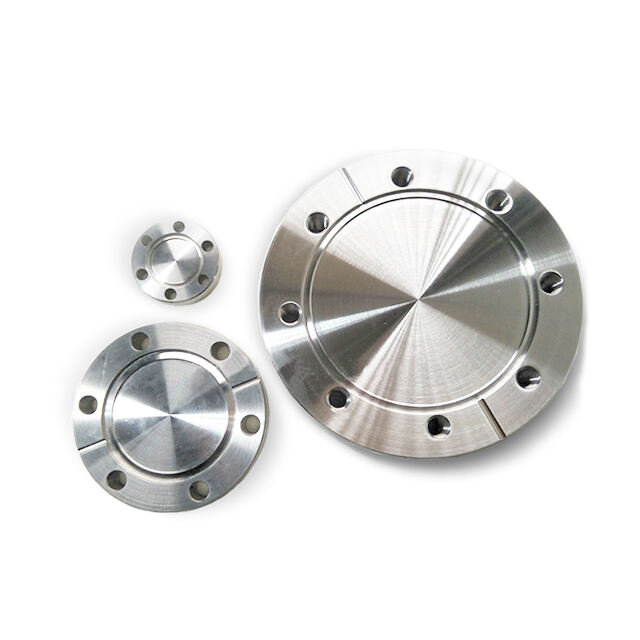
The cf flange design incorporates advanced engineering principles that address the unique challenges presented by high-vacuum environments. Unlike conventional flange systems that rely solely on gasket compression, the cf flange utilizes a knife-edge sealing mechanism combined with copper gaskets to achieve leak rates as low as 10^-12 mbar·l/s. This exceptional sealing capability makes cf flange systems indispensable in applications such as semiconductor manufacturing, particle accelerators, and analytical instrumentation where vacuum integrity directly impacts operational success.
The superior performance characteristics of cf flange technology stem from decades of research and development in vacuum science. Engineers have continuously refined the design parameters to optimize sealing effectiveness while maintaining ease of installation and maintenance. Modern cf flange systems incorporate precision-machined surfaces, standardized dimensions, and material specifications that ensure consistent performance across different manufacturers and applications.
Enhanced Sealing Performance
Knife-Edge Technology
The fundamental advantage of cf flange systems lies in their innovative knife-edge sealing mechanism. This design features precisely machined knife edges on each flange face that penetrate into a soft copper gasket when the connection is assembled. The sharp edges create multiple sealing points that effectively prevent gas molecules from escaping, even under the most demanding vacuum conditions. The cf flange knife-edge geometry is carefully controlled to ensure optimal penetration depth without damaging the gasket beyond reuse limits.
Manufacturing tolerances for cf flange knife edges are maintained within micrometers to guarantee consistent sealing performance. The edge angle, typically 90 degrees, and the edge radius, usually less than 0.05 mm, are critical parameters that determine sealing effectiveness. Quality cf flange manufacturers employ advanced machining techniques and rigorous inspection procedures to maintain these tight tolerances throughout production runs.
Copper Gasket Advantages
Copper gaskets used in cf flange systems offer exceptional advantages over alternative sealing materials. The inherent ductility of copper allows the gasket to conform perfectly to the knife-edge profile, creating an intimate metal-to-metal seal that remains stable across wide temperature ranges. Unlike elastomeric seals that can outgas volatile compounds, copper gaskets maintain their integrity in ultra-high vacuum environments without contributing contamination to the system.
The thermal properties of copper gaskets make cf flange systems particularly suitable for applications involving temperature cycling or elevated operating temperatures. Copper maintains its sealing properties from cryogenic temperatures up to 450°C, enabling cf flange use in diverse thermal environments. Additionally, copper gaskets can withstand multiple bake-out cycles without degradation, supporting the stringent cleaning and conditioning procedures required in high-vacuum applications.
Superior Material Construction
Stainless Steel Benefits
Most cf flange bodies are constructed from high-quality stainless steel alloys that provide exceptional corrosion resistance and mechanical strength. The most commonly used material, 304 stainless steel, offers excellent compatibility with vacuum environments while maintaining cost-effectiveness for standard applications. For more demanding conditions, 316L stainless steel cf flange variants provide enhanced chemical resistance and reduced magnetic permeability.
The austenitic structure of stainless steel used in cf flange construction ensures dimensional stability across temperature variations. This stability is crucial for maintaining seal integrity during thermal cycling operations common in vacuum systems. Surface treatments such as electropolishing further enhance the performance of stainless steel cf flange components by reducing surface roughness and eliminating potential contamination sources.
Precision Manufacturing Standards
Manufacturing precision is paramount in cf flange production, with dimensional tolerances measured in fractions of millimeters. The bolt hole patterns, flange thickness, and knife-edge geometry must conform to strict international standards to ensure interchangeability between different manufacturers. This standardization allows users to source cf flange components from multiple suppliers while maintaining system integrity.
Advanced quality control procedures during cf flange manufacturing include coordinate measuring machine verification, surface finish analysis, and leak testing of sample units. These comprehensive testing protocols ensure that each cf flange meets the demanding requirements of high-vacuum applications. Traceability documentation accompanies each cf flange shipment, providing users with confidence in component quality and performance characteristics.
Operational Reliability
Leak Rate Performance
The leak rate performance of cf flange systems significantly exceeds that of alternative connection methods, making them the preferred choice for ultra-high vacuum applications. Properly assembled cf flange connections routinely achieve leak rates below 10^-11 mbar·l/s, with many installations demonstrating even lower values. This exceptional leak-tight performance enables vacuum systems to reach and maintain base pressures in the 10^-10 to 10^-12 mbar range.
Long-term stability of cf flange leak rates has been demonstrated in numerous industrial applications spanning decades of operation. Unlike elastomeric seals that may experience permeation or degradation over time, properly installed cf flange connections maintain their sealing integrity throughout extended service life. Regular leak checking protocols confirm the continued performance of cf flange systems in critical applications.
Temperature Cycling Resistance
Temperature cycling capabilities of cf flange systems far exceed those of conventional sealing technologies. The metal-to-metal sealing principle combined with matched thermal expansion coefficients ensures seal integrity across temperature ranges from -269°C to +450°C. This wide operating range makes cf flange systems suitable for applications involving liquid nitrogen cooling, high-temperature processing, or frequent thermal cycling operations.
Repeated thermal cycling tests on cf flange assemblies demonstrate minimal impact on sealing performance even after thousands of temperature cycles. The robust construction and material selection of cf flange components resist thermal stress cracking and dimensional changes that could compromise seal integrity. This reliability is essential in automated systems where unattended operation through multiple thermal cycles is required.
Installation and Maintenance Benefits
Simplified Assembly Process
The assembly process for cf flange connections is straightforward and repeatable, requiring only basic tools and standard procedures. Unlike complex sealing systems that demand specialized installation techniques, cf flange assembly follows a simple sequence of gasket placement, flange alignment, and bolt tightening to specified torque values. This simplicity reduces installation time and minimizes the potential for assembly errors that could compromise system performance.
Standardized bolt patterns and uniform tightening sequences ensure consistent cf flange installation results across different technicians and installation sites. Torque specifications for cf flange assemblies are well-established and documented, providing clear guidance for achieving optimal sealing performance. The forgiving nature of the knife-edge sealing mechanism accommodates minor variations in assembly technique while maintaining leak-tight connections.
Maintenance Requirements
Maintenance requirements for cf flange systems are minimal compared to alternative sealing technologies. Routine maintenance primarily involves periodic leak checking and occasional gasket replacement based on operational cycles or visual inspection. The robust construction of cf flange components typically provides decades of service life with minimal intervention, reducing overall system maintenance costs and operational disruptions.
When maintenance is required, cf flange disassembly and reassembly procedures are straightforward and well-documented. Gasket replacement can be accomplished using standard hand tools without requiring specialized equipment or extensive training. The availability of replacement gaskets and standardized cf flange components ensures minimal downtime during maintenance operations.
Cost-Effectiveness Analysis
Initial Investment Considerations
While the initial cost of cf flange components may exceed that of basic sealing alternatives, the total cost of ownership analysis consistently favors cf flange systems for high-vacuum applications. The superior performance and reliability of cf flange connections reduce system downtime, maintenance costs, and component replacement frequency. These operational savings typically offset the higher initial investment within the first years of operation.
The standardization of cf flange components across the vacuum industry provides cost benefits through competitive sourcing and component interchangeability. Multiple suppliers offer compatible cf flange products, ensuring competitive pricing and supply chain flexibility. Volume discounts and long-term supply agreements further enhance the cost-effectiveness of cf flange procurement for large-scale installations.
Long-Term Value Proposition
The long-term value proposition of cf flange systems becomes apparent through extended operational experience. The exceptional durability and reliability of cf flange connections translate to reduced maintenance costs, improved system availability, and enhanced process repeatability. These benefits are particularly valuable in production environments where vacuum system downtime directly impacts productivity and profitability.
Equipment resale value is often higher for systems incorporating cf flange technology due to their reputation for reliability and performance. The widespread acceptance of cf flange standards in the vacuum industry ensures that equipment featuring these connections maintains broader market appeal. This factor contributes to improved return on investment for organizations utilizing cf flange technology in their vacuum systems.
FAQ
What makes cf flange connections superior to other vacuum sealing methods
The cf flange design combines knife-edge technology with copper gaskets to create an exceptionally reliable metal-to-metal seal capable of achieving leak rates below 10^-11 mbar·l/s. This performance level significantly exceeds elastomeric seals and other connection methods, making cf flange systems essential for ultra-high vacuum applications. The robust construction and standardized dimensions ensure consistent performance and component interchangeability across different manufacturers.
How often should copper gaskets in cf flange systems be replaced
Copper gaskets in cf flange systems can typically be reused multiple times before replacement becomes necessary. The frequency depends on operating conditions, but gaskets often last through 10-20 assembly cycles under normal conditions. Visual inspection for excessive deformation, cracking, or contamination provides the best guidance for replacement timing. In critical applications, preventive replacement may be scheduled based on operational cycles or time intervals.
Can cf flange systems operate effectively at cryogenic temperatures
Yes, cf flange systems perform excellently at cryogenic temperatures down to liquid helium levels (-269°C). The metal-to-metal sealing principle and matched thermal expansion coefficients maintain seal integrity throughout extreme temperature ranges. Copper gaskets retain their ductility at low temperatures, ensuring continued sealing effectiveness. Many cryogenic vacuum systems rely exclusively on cf flange connections for their temperature cycling capabilities and long-term reliability.
Are there size limitations for cf flange availability
The cf flange standard encompasses a wide range of sizes from small research applications to large industrial installations. Standard sizes range from DN16 (approximately 1 inch) to DN250 (approximately 10 inches) and beyond for specialized applications. The comprehensive size range ensures that cf flange technology can accommodate virtually any vacuum system requirement while maintaining the performance advantages of the knife-edge sealing design.