 EN
EN

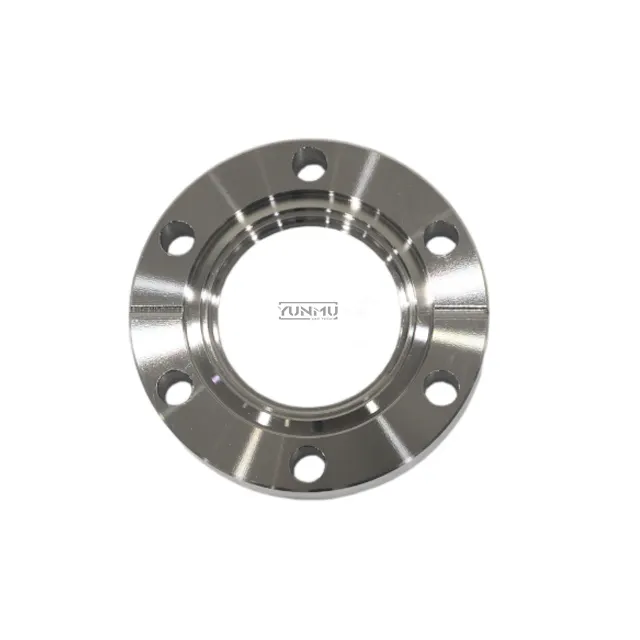
In the demanding world of semiconductor manufacturing and high-tech research equipment, vacuum systems must maintain exceptional integrity under extreme conditions. The cf flange has emerged as the gold standard for ultra-high vacuum applications, delivering unmatched performance where traditional sealing methods fail. These specialized components provide the reliable, leak-tight connections essential for processes requiring pressures as low as 10^-12 torr, making them indispensable in advanced manufacturing and scientific research environments.
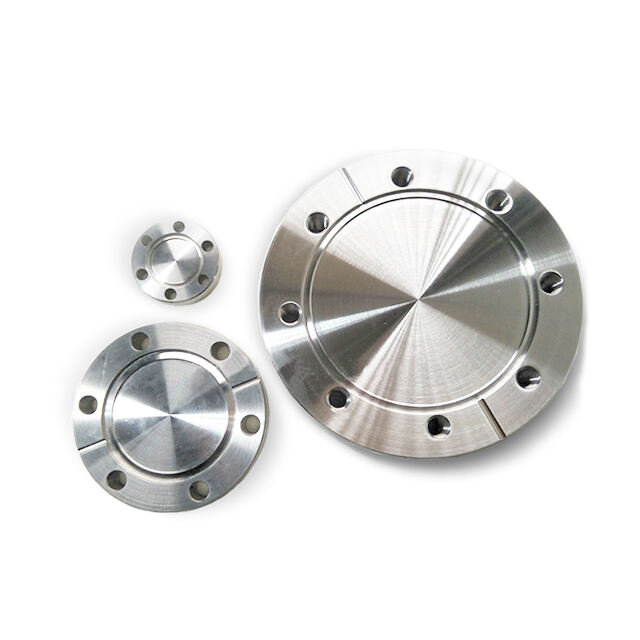
The superior design characteristics of cf flange technology stem from decades of engineering refinement in vacuum science applications. Unlike conventional flanged connections that rely on elastomeric seals, these systems utilize metal-to-metal sealing with copper gaskets, ensuring compatibility with high-temperature bakeout procedures and aggressive chemical environments. This fundamental design approach eliminates outgassing concerns and provides long-term stability under the harsh operating conditions typical of semiconductor fabrication facilities.
Technical Advantages of CF Flange Systems
Ultra-High Vacuum Performance
The exceptional vacuum performance of cf flange assemblies results from their precision-machined sealing surfaces and specialized copper gasket technology. These systems routinely achieve leak rates below 10^-10 torr-L/s, far exceeding the capabilities of traditional O-ring sealed connections. The knife-edge design creates concentrated sealing force that deforms the soft copper gasket, forming an impermeable barrier against atmospheric intrusion even under thermal cycling conditions.
Manufacturing tolerances for cf flange components are held to extremely tight specifications, typically within 0.001 inches for critical sealing surfaces. This precision manufacturing ensures consistent sealing performance across multiple assembly and disassembly cycles, a crucial requirement in research environments where frequent access to vacuum chambers is necessary. The standardized dimensions also guarantee interchangeability between components from different manufacturers, providing flexibility in system design and maintenance.
Material Properties and Chemical Resistance
Stainless steel construction provides cf flange systems with excellent resistance to corrosive process gases commonly used in semiconductor manufacturing. The 316L stainless steel typically specified offers superior resistance to halogen-based chemistries, while maintaining structural integrity at elevated temperatures. Surface finishes are carefully controlled to minimize particle generation and contamination, critical factors in cleanroom environments where even microscopic particles can compromise product yields.
The copper gaskets used in cf flange assemblies are manufactured from high-purity, oxygen-free copper that maintains ductility through multiple thermal cycles. These gaskets are designed as single-use components, ensuring optimal sealing performance with each assembly while eliminating concerns about gasket degradation over time. The soft copper material conforms perfectly to minor surface imperfections, creating reliable seals even on connections that have experienced thermal stress or minor mechanical damage.
Applications in Semiconductor Manufacturing
Process Equipment Integration
Semiconductor fabrication facilities rely heavily on cf flange connections throughout their process equipment infrastructure. Chemical vapor deposition chambers, physical vapor deposition systems, and ion implantation tools all require the ultra-high vacuum capabilities that only cf flange technology can provide. The ability to maintain pristine vacuum conditions during high-temperature processes is essential for achieving the precise material properties required in modern semiconductor devices.
The modular nature of cf flange systems enables flexible equipment configurations that can be readily modified as process requirements evolve. Standard port sizes ranging from 1.33 inches to 13.25 inches accommodate various connection requirements, from small analytical ports to large substrate transfer openings. This standardization reduces inventory complexity while ensuring reliable performance across diverse equipment platforms within the same facility.
Contamination Control Benefits
Contamination control represents one of the most critical aspects of semiconductor manufacturing, where even trace impurities can render entire wafer batches unusable. The all-metal construction of cf flange systems eliminates organic compounds that could outgas into process chambers, maintaining the ultra-clean environment essential for high-yield production. The smooth internal surfaces minimize particle trapping and facilitate thorough cleaning between process runs.
Bakeout procedures commonly used in semiconductor equipment can subject vacuum systems to temperatures exceeding 200°C for extended periods. Traditional elastomeric seals would degrade under these conditions, but cf flange assemblies maintain their sealing integrity throughout these thermal treatments. This capability enables thorough degassing of chamber components, achieving the ultra-low base pressures required for advanced process control.
Research Equipment Applications
Analytical Instrumentation
Research laboratories depend on cf flange technology for analytical instruments that demand exceptional vacuum performance and chemical compatibility. Mass spectrometry systems, surface analysis equipment, and electron microscopes all benefit from the superior vacuum integrity provided by these specialized connections. The stable, contamination-free environment created by cf flange assemblies ensures accurate, reproducible analytical results essential for scientific research.
The precision machining tolerances maintained in cf flange manufacturing support the demanding requirements of scientific instrumentation where measurement accuracy is paramount. Thermal stability during extended analysis periods prevents seal degradation that could introduce measurement artifacts or compromise data quality. The ability to achieve and maintain extreme vacuum conditions enables researchers to explore phenomena that would be impossible under less demanding vacuum environments.
Custom Research Applications
University research facilities and national laboratories frequently develop custom vacuum systems requiring reliable, high-performance connections. The availability of cf flange components in standard sizes simplifies the design process while ensuring compatibility with commercial vacuum hardware. Researchers can focus on their experimental objectives rather than developing specialized sealing solutions, accelerating the pace of scientific discovery.
The long service life of cf flange connections proves particularly valuable in research environments where equipment budgets are limited and systems must operate reliably for many years. The ability to disassemble and reassemble connections without performance degradation supports the iterative design process common in research applications. This reliability factor becomes especially important in long-term experiments where vacuum integrity must be maintained over months or years of continuous operation.
Installation and Maintenance Considerations
Proper Assembly Techniques
Successful cf flange installation requires attention to specific assembly procedures that ensure optimal sealing performance. The knife-edge surfaces must be carefully inspected for damage before each assembly, as even minor nicks or scratches can compromise seal integrity. Proper bolt torque sequences distribute sealing force evenly around the gasket perimeter, preventing uneven compression that could lead to leak paths.
Copper gaskets must be replaced during each disassembly to maintain reliable sealing performance. The deformed gasket material cannot return to its original dimensions, making reuse inadvisable even if the gasket appears undamaged. Fresh gaskets should be handled carefully to prevent contamination or mechanical damage that could affect sealing capability. Proper storage in clean, dry conditions preserves gasket quality until installation.
Maintenance and Troubleshooting
Regular maintenance of cf flange connections involves periodic inspection of sealing surfaces and replacement of damaged components before they compromise system performance. Helium leak detection equipment enables quantitative assessment of seal integrity, providing early warning of developing problems. Preventive maintenance schedules should account for the operating environment and usage patterns to optimize replacement intervals.
When leak problems develop in cf flange connections, systematic troubleshooting procedures help identify the root cause efficiently. Bolt torque verification ensures proper compression force distribution, while surface inspection reveals damage that might require component replacement. Understanding the relationship between assembly procedures and sealing performance enables maintenance personnel to resolve issues quickly and prevent costly downtime in critical systems.
Comparative Performance Analysis
Advantages Over Alternative Sealing Methods
When compared to traditional O-ring sealed flanges, cf flange systems demonstrate superior performance across multiple criteria relevant to high-tech applications. The temperature limitations imposed by elastomeric seals restrict bakeout temperatures and limit process flexibility, while cf flange assemblies maintain integrity at temperatures approaching 450°C. This thermal capability enables thorough system degassing and supports high-temperature process requirements.
Chemical compatibility represents another significant advantage of cf flange technology over conventional sealing methods. Aggressive process gases that would rapidly degrade elastomeric seals have minimal impact on stainless steel and copper components. This chemical resistance extends service life and reduces maintenance requirements in corrosive environments, providing long-term cost advantages despite higher initial component costs.
Long-Term Reliability Factors
The operational lifespan of cf flange connections significantly exceeds that of alternative sealing technologies when properly maintained. While copper gaskets require replacement at each disassembly, the flange bodies and bolting hardware provide decades of reliable service under normal operating conditions. This longevity factor becomes increasingly important as equipment complexity grows and replacement costs escalate.
Total cost of ownership calculations must consider not only initial hardware costs but also maintenance requirements, downtime impact, and replacement frequency. The superior reliability of cf flange systems often justifies their higher initial cost through reduced maintenance intervals and improved equipment availability. In critical applications where downtime costs can reach thousands of dollars per hour, the reliability advantage of cf flange technology provides compelling economic benefits.
Future Developments and Industry Trends
Emerging Applications
As semiconductor device geometries continue shrinking toward atomic scales, the demand for even higher vacuum performance drives ongoing refinements in cf flange technology. Next-generation applications may require leak rates approaching 10^-12 torr-L/s, pushing the boundaries of current sealing capabilities. Research into alternative gasket materials and surface treatments aims to achieve these demanding performance targets while maintaining the reliability characteristics that make cf flange systems indispensable.
The expansion of vacuum technology into new application areas creates additional opportunities for cf flange utilization. Quantum computing research requires ultra-high vacuum environments to maintain coherence in quantum systems, while advanced materials research depends on contamination-free processing conditions. These emerging applications share the same fundamental requirements for reliable, high-performance vacuum connections that have made cf flange technology successful in traditional markets.
Manufacturing Innovations
Advanced manufacturing techniques continue improving the precision and consistency of cf flange components while reducing production costs. Computer-controlled machining centers achieve surface finishes and dimensional tolerances that exceed traditional manufacturing capabilities, resulting in more consistent sealing performance. Quality control systems incorporating automated inspection and measurement ensure that every component meets stringent specifications before shipment to customers.
Material science advances may introduce new alloys and surface treatments that enhance the performance characteristics of cf flange systems. Corrosion-resistant coatings could extend service life in particularly aggressive environments, while improved copper gasket formulations might provide enhanced sealing performance or longer storage life. These incremental improvements maintain the competitive advantages of cf flange technology as alternative sealing methods continue evolving.
FAQ
What makes cf flange connections superior to traditional O-ring flanges for vacuum applications
CF flange systems utilize metal-to-metal sealing with copper gaskets instead of elastomeric O-rings, enabling operation at much higher temperatures and achieving significantly lower leak rates. The all-metal construction eliminates outgassing concerns and provides compatibility with aggressive chemicals that would degrade rubber seals. This design approach supports ultra-high vacuum applications requiring pressures below 10^-10 torr, which is impossible to achieve with traditional O-ring systems.
How often should copper gaskets be replaced in cf flange assemblies
Copper gaskets must be replaced every time a cf flange connection is disassembled, as the deformation process permanently alters the gasket dimensions. Attempting to reuse gaskets will result in poor sealing performance and potential system contamination. Fresh gaskets should be stored in clean, dry conditions and handled carefully during installation to prevent damage that could compromise sealing capability.
What are the typical operating temperature limits for cf flange systems
Standard cf flange assemblies can operate continuously at temperatures up to 450°C, significantly higher than the 150-200°C limits typical of elastomeric seals. This temperature capability enables thorough bakeout procedures essential for achieving ultra-high vacuum conditions. The stainless steel construction maintains structural integrity throughout thermal cycling, while copper gaskets retain their sealing properties even after repeated exposure to elevated temperatures.
Can cf flange components from different manufacturers be used together interchangeably
Yes, cf flange systems are manufactured to standardized dimensions that ensure interchangeability between different suppliers. The precision tolerances maintained across the industry guarantee proper fit and sealing performance when mixing components from various manufacturers. This standardization provides flexibility in sourcing replacement parts and enables system designers to select the most appropriate components for specific applications without compatibility concerns.
Table of Contents
- Technical Advantages of CF Flange Systems
- Applications in Semiconductor Manufacturing
- Research Equipment Applications
- Installation and Maintenance Considerations
- Comparative Performance Analysis
- Future Developments and Industry Trends
-
FAQ
- What makes cf flange connections superior to traditional O-ring flanges for vacuum applications
- How often should copper gaskets be replaced in cf flange assemblies
- What are the typical operating temperature limits for cf flange systems
- Can cf flange components from different manufacturers be used together interchangeably