 EN
EN

Selecting the right industrial vacuum equipment is one of the most consequential purchasing decisions a facility manager or procurement engineer can make. The wrong choice leads to poor process performance, unplanned downtime, and inflated operating costs. The right choice supports efficiency, longevity, and system reliability across demanding industrial environments. Understanding exactly what to compare before committing to a purchase is essential for any serious buyer.
The market for industrial vacuum equipment is broad and technically diverse. Buyers encounter rotary vane pumps, dry screw pumps, liquid ring pumps, scroll pumps, and more — each engineered for specific pressure ranges, gas types, and duty cycles. Without a structured comparison framework, buyers risk over-specifying equipment they do not need or under-specifying industrial vacuum equipment that cannot handle the actual demands of their process. This guide walks through the critical comparison points that should shape every purchase decision.
Performance Specifications That Define Suitability
Ultimate Vacuum Pressure and Pumping Speed
The two most fundamental performance metrics for industrial vacuum equipment are ultimate vacuum pressure and pumping speed. Ultimate vacuum pressure describes the lowest pressure a unit can achieve under ideal conditions, while pumping speed describes how quickly it can evacuate a defined volume. Buyers must map both values against the exact requirements of their application rather than selecting industrial vacuum equipment based on generalized performance claims. A unit with impressive ultimate pressure ratings may still be unsuitable if its pumping speed is insufficient for the process volume or cycle time required.
When evaluating industrial vacuum equipment, buyers should always request performance curves rather than relying on single-point specifications. A performance curve shows how pumping speed changes across the operating pressure range, revealing how industrial vacuum equipment actually behaves under real process conditions. This data helps buyers identify whether a unit will perform consistently at the specific vacuum level their process demands throughout the full operating cycle.
Inlet Flow Capacity and Operating Pressure Range
Inlet flow capacity directly affects how efficiently industrial vacuum equipment handles the gas load from a process. Industrial vacuum equipment with insufficient inlet flow capacity will struggle to maintain stable vacuum levels when process gas loads fluctuate. Buyers should define their worst-case gas load conditions and verify that candidate industrial vacuum equipment can handle those peaks without pressure excursions or thermal stress. Operating pressure range is equally important — some industrial vacuum equipment performs well within a narrow band but becomes inefficient or unreliable outside it.
Technology Type and Process Compatibility
Dry versus Oil-Sealed Vacuum Technology
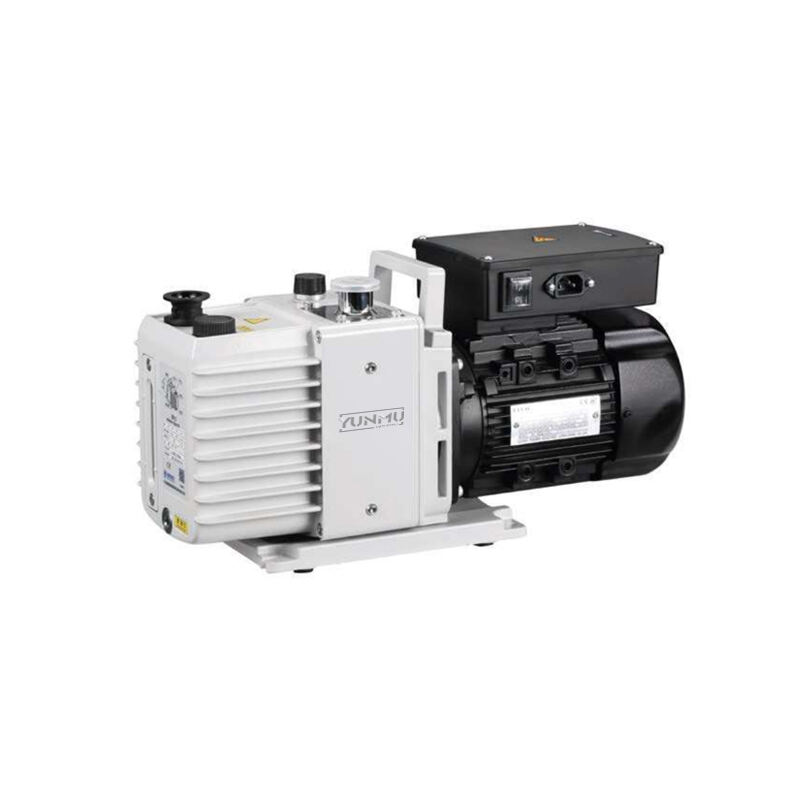
One of the most consequential choices in industrial vacuum equipment selection is whether to use dry or oil-sealed technology. Oil-sealed industrial vacuum equipment, such as rotary vane pumps, provides excellent ultimate pressure, strong pumping speed at low pressures, and proven reliability in many industrial applications. However, oil-sealed industrial vacuum equipment requires regular oil changes, carries contamination risk for sensitive processes, and demands careful management of oil mist emissions. Buyers should evaluate how oil contamination tolerance, maintenance scheduling, and environmental compliance requirements interact with this technology choice.
Dry industrial vacuum equipment eliminates oil from the vacuum path entirely, making it suitable for clean process environments, semiconductor fabrication, pharmaceutical production, and food processing. However, dry industrial vacuum equipment typically costs more upfront and may not achieve the same ultimate pressure levels as oil-sealed alternatives. The correct decision depends on the process gas composition, purity requirements, and total cost of ownership calculation specific to the buyer's application. Buyers who compare industrial vacuum equipment on technology type alone — without accounting for process context — often make avoidable mismatches.
Compatibility with Process Gases and Condensables
Industrial vacuum equipment must be chemically compatible with every gas or vapor it will handle. Corrosive gases, solvents, steam, and particulate-laden streams all impose specific material and design requirements on industrial vacuum equipment. Buyers must disclose the full gas composition to equipment suppliers and verify that wetted materials, shaft seals, and internal coatings are rated for those conditions. Industrial vacuum equipment that handles condensable vapors may also require gas ballast provisions or inlet traps to prevent liquid accumulation inside the pump mechanism.
Total Cost of Ownership and Maintainability
Energy Consumption and Operating Efficiency
Energy consumption is a major long-term cost driver for industrial vacuum equipment, particularly in continuous-duty industrial operations. Buyers should request power consumption data at the actual operating pressure points relevant to their process, not just at maximum rated conditions. Variable-speed drive options on industrial vacuum equipment can significantly reduce energy costs when process demand fluctuates, making them worth the additional capital investment in many scenarios. Comparing industrial vacuum equipment purely on purchase price without accounting for annual energy costs leads to systematically underestimating total cost of ownership.
Industrial vacuum equipment with higher upfront capital costs sometimes delivers substantially lower lifecycle costs due to superior efficiency, longer service intervals, and reduced spare parts consumption. Buyers who frame their comparison around five-year total cost of ownership rather than initial price typically make better purchasing decisions when evaluating industrial vacuum equipment. Requesting detailed maintenance schedules and consumables costs from suppliers allows direct comparison of ongoing operating expenditure across competing industrial vacuum equipment options.
Serviceability, Spare Parts Availability, and Support Infrastructure
Industrial vacuum equipment that is difficult to service or relies on hard-to-source spare parts creates operational risk. Buyers should evaluate the local service infrastructure available for each type of industrial vacuum equipment under consideration, including technician availability, spare parts lead times, and documentation quality. Industrial vacuum equipment with modular designs and widely available consumables reduces maintenance downtime and simplifies the work of in-house maintenance teams. Supplier responsiveness and post-sale technical support should be assessed during the selection process, not after a problem arises.
FAQ
What is the most important specification to check when comparing industrial vacuum equipment?
The most critical specification depends on your process, but ultimate vacuum pressure and pumping speed at your actual operating pressure are always the starting point. For most buyers of industrial vacuum equipment, aligning these two values with real process requirements is more important than any single headline figure.
How does the choice between oil-sealed and dry industrial vacuum equipment affect maintenance costs?
Oil-sealed industrial vacuum equipment typically requires more frequent consumable replacements, including oil and oil filters, but often has lower initial purchase costs. Dry industrial vacuum equipment generally has lower ongoing consumable costs but higher upfront capital investment. The better choice depends on your maintenance capacity, process purity requirements, and total lifecycle budget.
Should buyers always choose industrial vacuum equipment with the lowest ultimate pressure available?
Not necessarily. Over-specifying industrial vacuum equipment to achieve deeper vacuum than your process requires adds unnecessary cost, complexity, and energy consumption. Buyers should match industrial vacuum equipment specifications to the actual process demands rather than defaulting to the highest-performing units available. Precise specification matching produces better long-term value.