 EN
EN

Selecting the right vacuum and pressure relief valve is one of the most consequential decisions a procurement engineer or plant manager will make when specifying fluid control equipment. The wrong choice can lead to system overpressure events, vacuum collapse, costly downtime, or even safety incidents that affect personnel and infrastructure. Because the market offers a wide range of configurations, materials, and performance ratings, buyers must approach the selection process with a structured comparison framework rather than defaulting to the lowest price or the most familiar brand name.
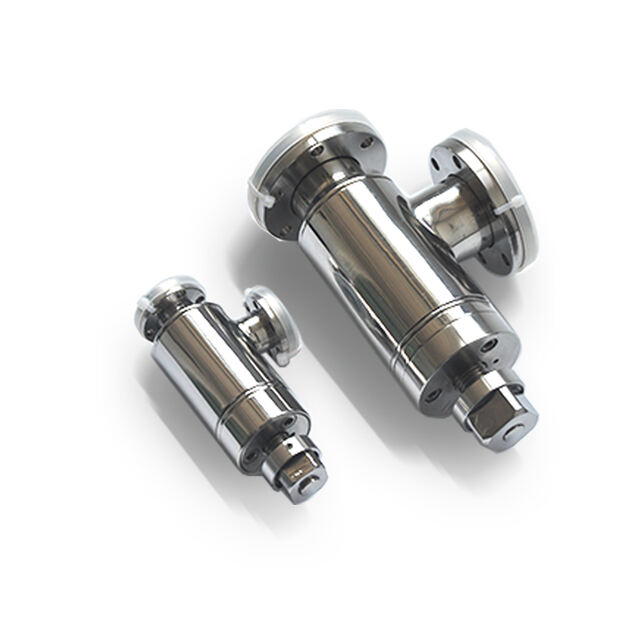
A vacuum and pressure relief valve serves a dual protective function: it opens to release excess pressure when a system exceeds its upper threshold, and it also responds to vacuum conditions that could cause structural damage or process contamination. This dual-action capability makes the valve a critical safety component in industries ranging from chemical processing and pharmaceuticals to food and beverage, oil and gas, and semiconductor manufacturing. Understanding what to compare before committing to a solution ensures that the valve you select will perform reliably across the full range of operating conditions your system demands.
Understanding the Functional Role of a Vacuum and Pressure Relief Valve
Dual-Direction Protection and Why It Matters
Unlike a standard pressure relief valve that only responds to overpressure, a vacuum and pressure relief valve must handle both positive and negative pressure excursions. This dual-direction protection is essential in closed systems where thermal cycling, pump shutdowns, or rapid fluid drainage can create vacuum conditions just as dangerous as overpressure. Buyers should confirm that any candidate valve is genuinely rated for both directions, not simply marketed as a combination device while only being optimized for one mode.
The set points for vacuum relief and pressure relief are often different, and the valve mechanism must respond accurately to each threshold independently. A well-engineered vacuum and pressure relief valve will have clearly documented cracking pressures for both directions, along with reseat pressures that prevent unnecessary leakage once the event has passed. Buyers who overlook this distinction may find that a valve rated for pressure relief performs poorly under vacuum conditions, leaving the system unprotected during low-pressure events.
In practice, the dual-direction requirement also affects the internal geometry of the valve. Some designs use two separate seating elements — one for pressure and one for vacuum — while others use a single flexible element that responds to differential pressure in either direction. Each approach has trade-offs in terms of response speed, leak tightness, and maintenance complexity, all of which should factor into the comparison process.
Identifying the Operating Conditions Your System Requires
Before comparing any specific vacuum and pressure relief valve products, buyers must first define the operating envelope of their system with precision. This includes the maximum allowable working pressure, the minimum vacuum level the system may reach, the operating temperature range, the fluid or gas media being handled, and the flow rate required to relieve pressure or admit air during a relief event. Without these parameters clearly established, any product comparison becomes speculative.
Temperature is a particularly important variable because it affects both the mechanical properties of the valve body and the behavior of the sealing elements. A vacuum and pressure relief valve installed on a high-temperature steam line faces very different material demands than one used in a cryogenic application or a corrosive chemical environment. Buyers should map their operating conditions against the valve manufacturer's rated temperature range and confirm that the rating applies to continuous operation, not just brief excursions.
Flow capacity is another parameter that buyers sometimes underestimate. A vacuum and pressure relief valve must be able to pass sufficient flow to prevent the system pressure from continuing to rise after the valve opens. If the valve's flow coefficient is too low for the application, the valve will open but the system pressure will still exceed safe limits. Sizing calculations based on the actual relief scenario — not just the nominal pipe size — are essential before finalizing a selection.
Key Technical Specifications to Compare Across Products
Pressure and Vacuum Set Point Accuracy
The set point accuracy of a vacuum and pressure relief valve determines how reliably it will activate at the intended threshold. Buyers should compare the tolerance band around the stated set point, which is typically expressed as a percentage of the set pressure. A valve with a wide tolerance band may open too early, causing unnecessary venting, or too late, allowing the system to exceed its safe operating limit before relief occurs.
Factory calibration records and third-party test certifications are useful indicators of set point consistency across a production batch. When comparing vacuum and pressure relief valve options, ask suppliers for documented test data rather than relying solely on catalog specifications. For critical applications, consider valves that allow field adjustment of the set point so that the device can be fine-tuned after installation to match actual system behavior.
Reseat pressure — the pressure at which the valve closes after a relief event — is equally important. A valve that does not reseat cleanly will continue to leak after the overpressure condition has resolved, wasting product, contaminating the environment, or creating a safety hazard. Buyers should compare reseat pressure specifications alongside cracking pressure to get a complete picture of the valve's operational behavior.
Material Compatibility and Construction Quality
The body material, seat material, and sealing element of a vacuum and pressure relief valve must all be chemically compatible with the process media. Common body materials include stainless steel, carbon steel, brass, and various engineering polymers, each suited to different chemical environments and pressure classes. Buyers should cross-reference the material of construction against a chemical compatibility chart for the specific media in their system, including any cleaning agents or secondary fluids that may contact the valve.
Sealing elements deserve particular attention because they are often the first component to degrade in service. Elastomeric seals made from EPDM, PTFE, Viton, or silicone each have distinct compatibility profiles and temperature limits. A vacuum and pressure relief valve with a high-quality metal seat and a chemically resistant soft seal will generally outperform a lower-cost alternative with generic rubber components when used in demanding industrial environments.
Construction quality also encompasses the precision of machined surfaces, the consistency of spring rates, and the robustness of the connection between the valve body and the process piping. All-metal construction is preferred in applications where fire safety standards apply or where elastomeric materials would degrade rapidly. Buyers comparing vacuum and pressure relief valve options should request material certifications and, where possible, inspect sample units before placing large orders.
Regulatory Compliance and Certification Requirements
Industry Standards That Apply to Relief Valve Selection
Depending on the industry and geography, a vacuum and pressure relief valve may need to comply with specific standards such as API 2000 for storage tank venting, ASME Section VIII for pressure vessel applications, PED (Pressure Equipment Directive) for European markets, or ATEX certification for use in explosive atmospheres. Buyers must identify which standards apply to their installation before comparing products, because a valve that lacks the required certification cannot legally or safely be used in that application regardless of its technical performance.
Certification is not merely a paperwork exercise. Standards bodies set minimum requirements for design, testing, materials, and quality management that directly affect the reliability of the vacuum and pressure relief valve in service. A certified valve has been independently verified to meet those requirements, which reduces the buyer's risk and simplifies the approval process with plant safety officers, insurance providers, and regulatory inspectors.
Buyers should also consider whether the supplier maintains a quality management system such as ISO 9001, which provides assurance that the manufacturing process is controlled and consistent. A vacuum and pressure relief valve produced under a certified quality system is more likely to perform as specified across multiple production batches than one manufactured without formal process controls.
Documentation and Traceability
For safety-critical applications, the ability to trace a vacuum and pressure relief valve back to its raw material origins is an important procurement consideration. Material test reports, heat numbers, and dimensional inspection records allow maintenance teams to verify that the valve installed in the field matches the specification that was approved during the design phase. Buyers should ask suppliers what documentation packages are available and whether they are included in the standard offering or priced separately.
Calibration certificates showing the actual tested set point of each individual valve — rather than a generic batch certificate — provide the highest level of assurance. This level of documentation is standard practice for vacuum and pressure relief valve products used in pharmaceutical, semiconductor, and nuclear applications, but it is worth requesting in any high-consequence installation. The cost of comprehensive documentation is small relative to the cost of a relief event caused by an out-of-specification valve.
Lifecycle Cost and Maintenance Considerations
Total Cost of Ownership Beyond the Purchase Price
The purchase price of a vacuum and pressure relief valve is only one component of its total cost of ownership. Buyers who focus exclusively on initial cost often find that lower-priced valves require more frequent replacement, generate higher maintenance labor costs, or cause unplanned downtime that far exceeds the savings achieved at the point of purchase. A structured comparison should include estimated service life, replacement part availability, and the labor time required for inspection and maintenance.
Some vacuum and pressure relief valve designs allow in-line testing without removing the valve from service, which significantly reduces the cost and disruption of periodic verification. Others require complete removal and bench testing, which involves isolation of the process line, potential product loss, and extended maintenance windows. Buyers should evaluate the testability of each candidate valve as part of the comparison, particularly for applications where continuous operation is critical.
Spare parts availability and lead times are also relevant to lifecycle cost. A vacuum and pressure relief valve from a supplier with a well-stocked distribution network and short lead times for replacement seals and springs will have a lower total cost of ownership than an equivalent valve from a supplier with long lead times or limited spare parts support. This is especially important for facilities that operate in remote locations or under tight maintenance schedules.
Installation Requirements and System Integration
The physical installation requirements of a vacuum and pressure relief valve affect both the initial installation cost and the ease of future maintenance. Buyers should compare connection types — flanged, threaded, or sanitary tri-clamp — and confirm that the valve's end connections match the existing piping system without requiring costly adapters or modifications. The valve's orientation requirements also matter: some designs must be installed vertically to function correctly, while others are position-insensitive.
Weight and envelope dimensions are relevant in applications where space is constrained or where the valve will be installed on a thin-walled vessel that cannot support heavy components. A compact, lightweight vacuum and pressure relief valve may be preferable in these situations even if a larger unit would offer marginally better flow capacity. Buyers should obtain dimensional drawings and weight data for each candidate valve and verify fit before finalizing the selection.
Integration with monitoring and control systems is an increasingly important consideration as industrial facilities move toward digital plant management. Some vacuum and pressure relief valve products are available with position indicators, limit switches, or pressure transmitters that allow remote monitoring of valve status. Buyers who anticipate future automation upgrades should consider whether the valve they select today can accommodate these features, either as standard equipment or as field-installable options.
Supplier Evaluation and Long-Term Partnership
Assessing Technical Support and Application Expertise
The quality of technical support available from a vacuum and pressure relief valve supplier can be as important as the product itself, particularly for complex or non-standard applications. Buyers should evaluate whether the supplier's engineering team can assist with sizing calculations, material selection, and compliance documentation, or whether the buyer is expected to handle all of these tasks independently. A supplier with deep application expertise can help buyers avoid specification errors that would only become apparent after installation.
Response time and accessibility of technical support are practical indicators of a supplier's commitment to customer success. Buyers should test the supplier's responsiveness during the evaluation phase by asking specific technical questions and observing how quickly and thoroughly they are answered. A supplier who provides detailed, accurate answers during the sales process is more likely to provide reliable support after the purchase than one who offers only generic catalog information.
References from existing customers in similar industries or applications provide valuable independent validation of a supplier's capabilities. Buyers comparing vacuum and pressure relief valve suppliers should ask for references and follow up with those customers to understand their experience with product performance, delivery reliability, and after-sales support. This due diligence step is often skipped under time pressure but can prevent costly mistakes.
Delivery Reliability and Supply Chain Resilience
For buyers who need to maintain production continuity, the ability of a vacuum and pressure relief valve supplier to deliver on time and in full is a critical selection criterion. Buyers should ask about typical lead times for standard products, lead times for custom configurations, and the supplier's policy for managing supply disruptions. A supplier with multiple manufacturing locations or a robust inventory of finished goods is better positioned to maintain delivery commitments during periods of supply chain stress.
Minimum order quantities and pricing structures for small repeat orders are also relevant for buyers who need to maintain a small stock of replacement valves on site. Some vacuum and pressure relief valve suppliers offer consignment stock programs or blanket order arrangements that allow buyers to secure pricing and availability without committing to large upfront purchases. These commercial arrangements can significantly reduce the risk of production delays caused by valve failures.
FAQ
What is the difference between a pressure relief valve and a vacuum and pressure relief valve?
A standard pressure relief valve only opens to release excess positive pressure from a system. A vacuum and pressure relief valve is designed to respond to both overpressure and vacuum conditions, providing protection in both directions. This dual-action capability is essential in closed systems where vacuum events are as likely as overpressure events, such as storage tanks, process vessels, and piping systems subject to thermal cycling or pump shutdowns.
How do I determine the correct set point for a vacuum and pressure relief valve?
The set point should be based on the maximum allowable working pressure and the minimum allowable vacuum level of the system, as defined by the vessel or piping design specification. The pressure relief set point is typically set at or below the maximum allowable working pressure, while the vacuum relief set point is set at or above the minimum allowable vacuum level. Sizing calculations should also account for the flow rate required to prevent the system from exceeding its limits during a relief event, and these calculations should be performed by a qualified engineer familiar with the specific application.
Can a vacuum and pressure relief valve be used in corrosive chemical environments?
Yes, but the valve must be constructed from materials that are chemically compatible with the specific media in the system. Stainless steel bodies with PTFE or Viton sealing elements are commonly used in corrosive chemical applications, but the correct material selection depends on the specific chemicals, concentrations, temperatures, and pressures involved. Buyers should always verify material compatibility using a chemical resistance chart and consult with the valve supplier's engineering team when handling aggressive or unusual media.
How often should a vacuum and pressure relief valve be inspected and tested?
Inspection and testing frequency depends on the application, the regulatory requirements that apply to the installation, and the criticality of the system being protected. In many industrial applications, annual inspection and testing is a minimum baseline, but some standards and insurance requirements specify more frequent intervals. Valves installed in highly corrosive environments, high-cycle applications, or safety-critical systems may require more frequent verification. Buyers should establish a maintenance schedule based on the manufacturer's recommendations, applicable standards, and the specific operating conditions of their installation.
Table of Contents
- Understanding the Functional Role of a Vacuum and Pressure Relief Valve
- Key Technical Specifications to Compare Across Products
- Regulatory Compliance and Certification Requirements
- Lifecycle Cost and Maintenance Considerations
- Supplier Evaluation and Long-Term Partnership
-
FAQ
- What is the difference between a pressure relief valve and a vacuum and pressure relief valve?
- How do I determine the correct set point for a vacuum and pressure relief valve?
- Can a vacuum and pressure relief valve be used in corrosive chemical environments?
- How often should a vacuum and pressure relief valve be inspected and tested?