
 EN
EN
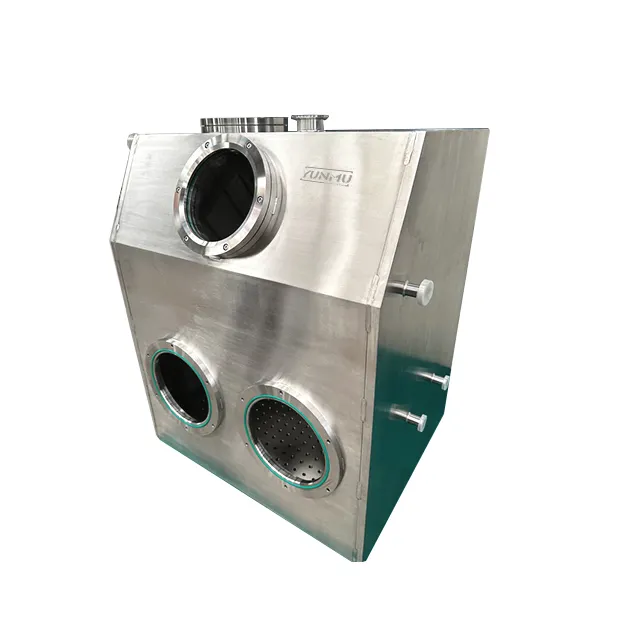
Modern industrial applications demand precise vacuum environments that can maintain consistent pressure levels while withstanding extreme operational conditions. The performance of a vacuum chamber directly impacts the success of critical processes ranging from semiconductor manufacturing to scientific research. Understanding the fundamental design characteristics that separate high-performance systems from standard alternatives enables engineers and procurement specialists to make informed decisions when selecting equipment for their specific applications.
Material Selection and Construction Standards
Stainless Steel Grade Considerations
The foundation of any exceptional vacuum chamber begins with material selection, where stainless steel grades play a pivotal role in determining overall performance characteristics. High-performance systems typically utilize 304 or 316L stainless steel, with the latter offering superior corrosion resistance for applications involving aggressive chemicals or extended exposure to moisture. The low carbon content in these grades minimizes outgassing potential, which directly correlates to achieving and maintaining ultra-high vacuum conditions.
Surface finish quality represents another critical factor in material performance, as rougher surfaces create additional surface area that can trap contaminants and increase outgassing rates. Premium vacuum chambers feature electropolished interior surfaces that not only reduce particle generation but also facilitate thorough cleaning between processes. This attention to surface preparation becomes particularly important in applications where contamination control is paramount, such as pharmaceutical manufacturing or precision coating processes.
Welding Techniques and Joint Integrity
Advanced welding methodologies distinguish professional-grade vacuum chambers from conventional alternatives, with full-penetration TIG welding being the industry standard for critical applications. This technique ensures consistent weld quality throughout the chamber structure while minimizing the introduction of foreign materials that could compromise vacuum integrity. Post-weld heat treatment processes further enhance joint reliability by relieving stress concentrations that might otherwise lead to premature failure under cyclic loading conditions.
Quality control measures during fabrication include helium leak testing of all welded joints, ensuring that leak rates remain well below specified thresholds for the intended application. High-performance chambers often achieve leak rates of 10^-9 mbar·l/s or better, which requires meticulous attention to welding parameters and joint preparation. The geometric design of weld joints also influences long-term reliability, with smooth transitions and adequate fillet radii reducing stress concentrations that could propagate into cracks over time.
Sealing Systems and Vacuum Integrity
O-Ring Groove Design Principles
Precision-engineered sealing systems form the backbone of reliable vacuum performance, where O-ring groove dimensions must be carefully calculated to ensure optimal compression and sealing force distribution. Standard groove designs follow established specifications such as AS568 or ISO 3601, but high-performance applications often require custom groove geometries optimized for specific pressure differentials and temperature ranges. The groove width, depth, and corner radii all influence seal performance, with tighter tolerances generally yielding superior results.
Material compatibility between O-rings and process gases requires careful consideration, as chemical attack can rapidly degrade sealing performance and introduce contamination. Viton fluoroelastomers offer excellent chemical resistance for most applications, while PTFE-encapsulated seals provide even greater chemical inertness at the cost of increased complexity. Some specialized applications utilize metal C-ring seals that can withstand extreme temperatures and provide ultra-low leak rates, though these require more precise groove machining and higher clamping forces.
Flanged Connection Standards
Industry-standard flanged connections such as ISO-KF, ISO-LF, and ConFlat designs each offer distinct advantages depending on vacuum level requirements and operational constraints. ISO-KF connections excel in rough to medium vacuum applications due to their quick-connect convenience and centering ring design that ensures consistent O-ring compression. For high and ultra-high vacuum chamber applications, ConFlat flanges with knife-edge sealing provide superior performance through metal-to-metal contact that eliminates elastomer outgassing concerns.
Bolt pattern design and clamping force distribution significantly impact sealing effectiveness, with uniform compression around the flange circumference being essential for consistent performance. High-performance systems often incorporate bolt torque specifications and tightening sequences that ensure even loading while preventing flange distortion. Some advanced designs utilize hydraulic or pneumatic clamping systems that automatically maintain optimal sealing force even during thermal cycling or mechanical stress.
Port Configuration and Accessibility
Strategic Port Placement
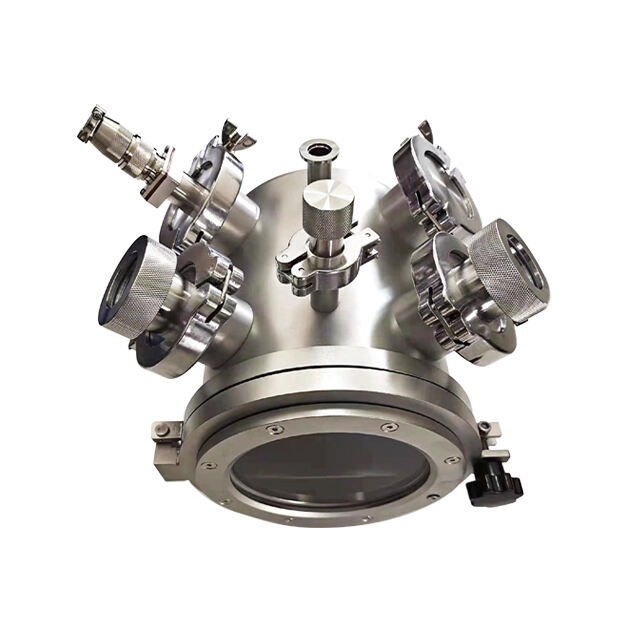
Thoughtful port arrangement enables efficient process integration while maintaining structural integrity and vacuum performance. High-performance vacuum chambers feature strategically positioned ports that accommodate essential components such as pumping systems, instrumentation, and process connections without creating flow restrictions or dead volumes. The angular orientation of ports relative to the chamber axis influences pumping efficiency and particle trajectory control, particularly in applications involving directional deposition or etching processes.
Port sizing must balance accessibility requirements with structural considerations, as larger openings inherently create stress concentrations that can limit operating pressure or reduce fatigue life. Advanced finite element analysis during design phases helps optimize port geometry to minimize stress while providing adequate access for maintenance and component installation. Some chambers incorporate modular port inserts that allow field modification of connection types without compromising the primary chamber structure.
Feedthrough Integration
Electrical and fluid feedthroughs represent critical interface points where external connections penetrate the vacuum boundary, requiring specialized sealing solutions that maintain both vacuum integrity and functional performance. High-performance chambers utilize hermetically sealed feedthroughs with ceramic-to-metal or glass-to-metal joints that provide long-term reliability under thermal cycling and mechanical stress. The selection of conductor materials and insulator types depends on voltage requirements, current capacity, and chemical compatibility with the process environment.
Thermal management of feedthrough assemblies becomes increasingly important in high-power applications where conductor heating could compromise seal integrity or create unwanted thermal gradients. Advanced designs incorporate heat dissipation features such as copper heat spreaders or active cooling passages that maintain acceptable operating temperatures. Some specialized feedthroughs include integrated filters or signal conditioning components that reduce electromagnetic interference while maintaining vacuum compatibility.
Pumping Port Design and Flow Optimization
Conductance Calculations and Flow Dynamics
Effective pumping port design requires comprehensive understanding of gas flow dynamics under vacuum conditions, where molecular flow regimes dominate at low pressures and viscous flow characteristics apply at higher pressures. The conductance of pumping ports directly affects achievable base pressure and pumpdown time, making geometric optimization crucial for high-performance applications. Circular cross-sections generally provide optimal conductance per unit area, while rectangular ports may be necessary to accommodate specific pump flange configurations.
Port length-to-diameter ratios significantly influence flow conductance, with shorter ports providing better pumping performance but potentially compromising structural integrity or manufacturing feasibility. High-performance designs often incorporate gradually tapered transitions that minimize flow turbulence while maintaining adequate structural thickness. Computational fluid dynamics modeling during design phases helps predict flow patterns and identify potential dead zones where gases might accumulate and limit vacuum performance.
Multiple Pumping Stage Integration
Sophisticated vacuum systems frequently employ multiple pumping stages with different operating principles, requiring careful integration to achieve optimal overall performance. Rough pumping connections typically utilize larger ports to handle higher gas loads, while high vacuum ports can be smaller since molecular flow limitations become dominant. The positioning of different pumping ports relative to process areas and gas sources influences pumping efficiency and contamination control.
Valve integration between different pumping stages allows selective operation and isolation during maintenance procedures, but introduces additional potential leak points that must be carefully managed. High-performance systems often incorporate pneumatically actuated valves with position feedback to ensure reliable operation under automated control. Some advanced chambers include differential pumping stages with intermediate pressure regions that provide enhanced contamination isolation for sensitive processes.
Thermal Management and Temperature Control
Heat Distribution Analysis
Temperature uniformity within vacuum chambers directly impacts process repeatability and component longevity, making thermal design a critical performance factor. High-performance chambers incorporate features such as thermal mass distribution, insulation placement, and heat transfer path optimization to achieve desired temperature profiles. Finite element thermal analysis during design phases helps identify potential hot spots or thermal gradients that could affect process outcomes or structural integrity.
Active temperature control systems range from simple heater elements to sophisticated closed-loop control with multiple thermal zones. The placement of heating elements and temperature sensors requires careful consideration of electrical safety, vacuum compatibility, and thermal response characteristics. Some applications require cooling capabilities in addition to heating, necessitating integrated coolant passages or thermoelectric devices that can operate effectively under vacuum conditions.
Insulation and Heat Shielding
External insulation systems protect both personnel and surrounding equipment while improving energy efficiency and temperature control stability. High-performance chambers often utilize multi-layer insulation systems that provide excellent thermal performance while maintaining access to critical components. The selection of insulation materials must consider outgassing characteristics, fire safety, and chemical compatibility with any process gases that might leak through the chamber wall.
Internal heat shielding becomes important in high-temperature applications where radiant heat transfer could affect temperature-sensitive components or create unwanted thermal gradients. Polished metal shields effectively reflect radiant energy while maintaining vacuum compatibility, though their placement must not interfere with gas flow patterns or accessibility requirements. Some chambers incorporate water-cooled shields that actively remove heat from high-power processes while maintaining precise temperature control.
Safety Features and Pressure Relief Systems
Overpressure Protection Mechanisms
Safety considerations in vacuum chamber design extend beyond normal operating conditions to include potential overpressure scenarios that could result from equipment malfunction or process upsets. High-performance systems incorporate multiple layers of protection including pressure relief valves, burst discs, and safety interlocks that prevent dangerous conditions from developing. The sizing and set-point selection for relief devices requires careful analysis of potential failure modes and gas generation rates.
Emergency venting systems must provide rapid pressure equalization while directing released gases safely away from personnel and equipment. Some chambers incorporate dedicated emergency vent connections with flame arresters or gas scrubbing systems that neutralize potentially hazardous effluents. The integration of pressure monitoring systems with automated safety responses ensures rapid detection and mitigation of abnormal conditions before they can escalate into dangerous situations.
Structural Safety Factors
Mechanical design safety factors account for potential loading conditions beyond normal operation, including thermal stress, seismic events, and material degradation over time. High-performance vacuum chambers typically incorporate safety factors of 3:1 or higher for critical structural elements, though these may be reduced through detailed stress analysis and materials testing. The application of appropriate design codes such as ASME Section VIII provides standardized approaches to safety factor determination and structural verification.
Fatigue analysis becomes particularly important for chambers that experience regular pressure cycling or thermal cycling during normal operation. The cumulative effects of stress cycling can lead to crack initiation and propagation that might not be apparent during initial pressure testing. Advanced designs incorporate fatigue-resistant details such as smooth transitions, adequate fillet radii, and stress relief features that extend operational life while maintaining safety margins.
FAQ
What materials are most suitable for high-performance vacuum chamber construction
Stainless steel grades 304 and 316L represent the most common materials for high-performance vacuum chamber construction due to their excellent corrosion resistance, low outgassing characteristics, and proven reliability under vacuum conditions. Grade 316L offers superior performance in applications involving corrosive gases or moisture exposure, while 304 provides excellent general-purpose performance at lower cost. Some specialized applications may require exotic materials such as Inconel or Hastelloy for extreme temperature or chemical resistance requirements.
How do sealing systems affect overall vacuum performance
Sealing systems represent the primary limitation in achieving and maintaining high vacuum levels, as even microscopic leaks can significantly impact performance. O-ring seals with proper groove design can achieve leak rates below 10^-8 mbar·l/s for most applications, while metal sealed systems can reach 10^-10 mbar·l/s or better for ultra-high vacuum requirements. The selection of seal materials must consider chemical compatibility, temperature range, and outgassing characteristics to ensure long-term reliability and performance.
What role does port design play in pumping efficiency
Port geometry directly influences gas flow conductance and therefore affects both achievable base pressure and pumpdown time. Larger diameter ports with shorter lengths provide better conductance, but geometric constraints often require optimization between pumping performance and structural integrity. The positioning of pumping ports relative to gas sources and process areas can significantly impact overall system performance, with strategic placement reducing dead volumes and improving gas removal efficiency.
Why is thermal management critical in vacuum chamber design
Temperature control affects virtually every aspect of vacuum chamber performance, from outgassing rates and seal integrity to process repeatability and component longevity. Thermal gradients can create stress concentrations that reduce fatigue life, while temperature variations affect gas densities and pumping efficiency. High-performance chambers incorporate thermal management features such as uniform heating, effective insulation, and temperature monitoring to maintain optimal operating conditions and ensure consistent process results.