 EN
EN

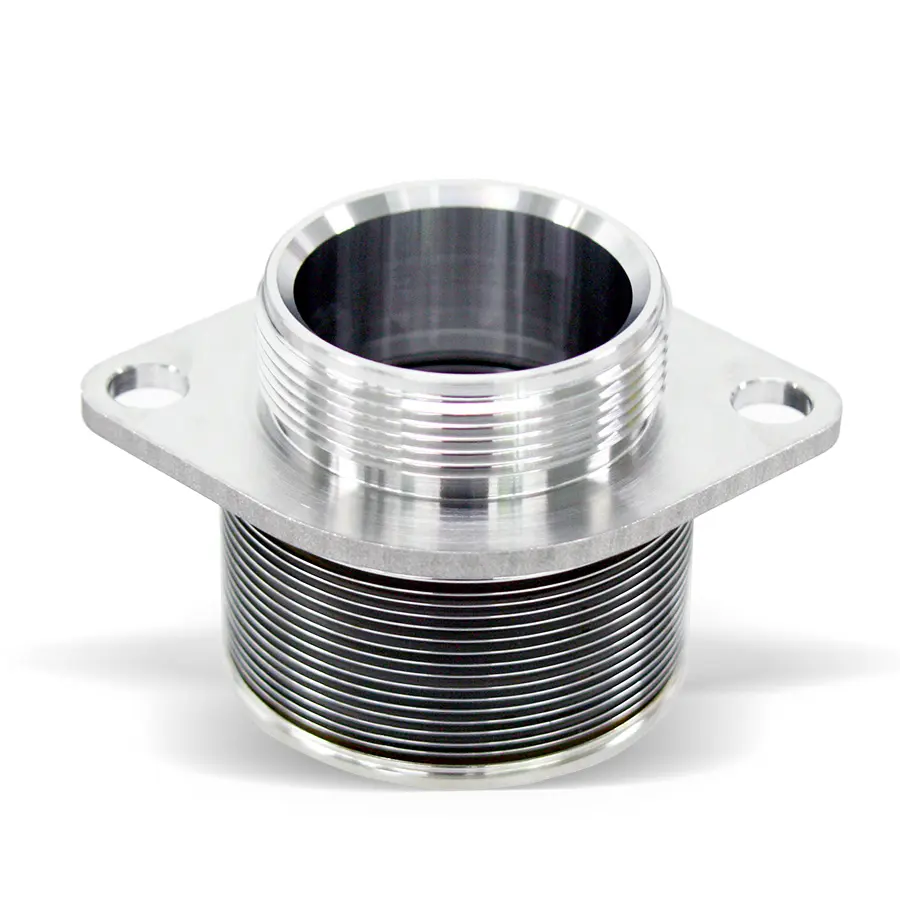
In modern engineering and industrial design, the demand for components that combine flexibility, precision, and long-term reliability has never been higher. The edge welded bellow has emerged as one of the most trusted solutions across a wide range of demanding applications. From semiconductor fabrication to aerospace systems, this component delivers a unique combination of mechanical performance and dimensional accuracy that few alternatives can match.
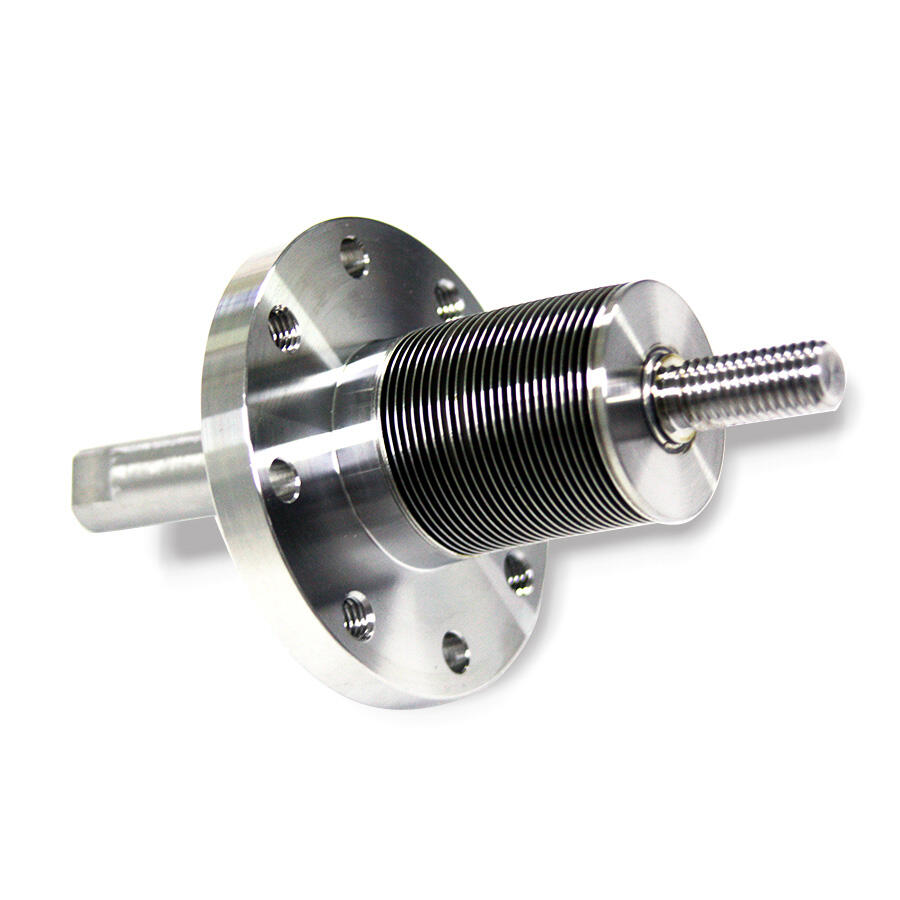
Understanding why the edge welded bellow has achieved such widespread adoption requires looking closely at its structural design, its functional advantages, and the specific industrial conditions that make it the preferred choice over other flexible element technologies. This article explores the core reasons behind its growing presence in precision engineering environments and explains what makes it so well suited to the challenges of today's high-performance systems.
The Structural Foundation of the Edge Welded Bellow
How the Design Differs from Conventional Bellows
A conventional formed bellow is typically manufactured by hydroforming or roll forming a single tube into a corrugated shape. While this method is cost-effective for general applications, it introduces material stress and limits the achievable stroke-to-length ratio. The edge welded bellow takes a fundamentally different approach by stacking individual metal diaphragm discs and welding them together at their inner and outer edges in an alternating pattern.
This construction method allows each disc to flex independently, distributing mechanical stress evenly across the entire assembly. The result is a component with significantly lower spring rates, greater axial travel per unit length, and a much longer fatigue life under cyclic loading. For engineers working in precision motion systems, these characteristics translate directly into measurable performance gains.
The edge welded bellow can be manufactured from a variety of high-performance alloys including stainless steel, titanium, and Inconel, allowing designers to match the material properties to the specific thermal, chemical, and mechanical demands of each application. This material flexibility is one of the reasons the edge welded bellow is found in such a diverse range of industries.
Precision Welding as a Quality Driver
The quality of an edge welded bellow is directly tied to the precision of its welding process. Each weld joint must be consistent, leak-free, and capable of withstanding repeated mechanical cycling without fatigue cracking. Modern manufacturing facilities use laser welding and automated resistance welding systems to achieve the tight tolerances required for high-performance applications.
Because the weld seams are located at the edges of each disc rather than along the convolution walls, the stress concentration at each joint is minimized during flexure. This geometric advantage is a key reason why the edge welded bellow outperforms formed bellows in applications involving high cycle counts or extreme pressure differentials.
Quality control in edge welded bellow production typically includes helium leak testing, pressure testing, and dimensional verification to ensure that every unit meets the specified performance envelope. This level of manufacturing rigor supports the reliability expectations of industries where component failure is not an acceptable outcome.
Key Performance Advantages Driving Widespread Adoption
Ultra-Low Spring Rate and High Stroke Capability
One of the most cited reasons for specifying an edge welded bellow in precision motion applications is its exceptionally low spring rate. Because the individual diaphragm discs are thin and the flexure is distributed across many elements, the force required to compress or extend the assembly is very small relative to the stroke achieved. This makes the edge welded bellow ideal for applications where actuator force is limited or where the bellow must not introduce significant resistance into the mechanical system.
In vacuum feedthrough assemblies, for example, the edge welded bellow must allow precise linear or angular motion to be transmitted through a vacuum wall without compromising the integrity of the vacuum environment. A low spring rate ensures that the motion transmission is accurate and that the actuator does not need to overcome excessive bellow resistance. This is a performance characteristic that formed bellows and elastomeric seals simply cannot replicate at the same level of precision.
The high stroke-to-compressed-length ratio of the edge welded bellow also allows designers to achieve significant travel within a compact envelope. This is particularly valuable in space-constrained systems such as semiconductor process equipment, optical alignment stages, and medical devices where every millimeter of available space is carefully managed.
Hermetic Sealing and Vacuum Compatibility
The all-metal, fully welded construction of the edge welded bellow makes it inherently hermetic. There are no elastomeric seals, no adhesive bonds, and no porous materials in the assembly. This means the edge welded bellow can maintain a leak-tight barrier even under extreme vacuum conditions, high pressures, or aggressive chemical environments where polymer-based seals would degrade or permeate.
In ultra-high vacuum systems, outgassing from component materials is a critical concern. The metal alloys used in edge welded bellow construction have very low outgassing rates, and the smooth internal surfaces can be cleaned and passivated to meet the stringent cleanliness requirements of semiconductor and scientific research applications. This makes the edge welded bellow a standard component in vacuum chambers, mass spectrometers, particle accelerators, and electron beam systems.
The hermetic nature of the edge welded bellow also makes it suitable for containing hazardous or high-purity fluids in chemical processing and pharmaceutical manufacturing. When the process fluid must be completely isolated from the external environment, the all-welded metal construction provides a level of containment integrity that no other flexible element technology can match.
Industries and Applications Where the Edge Welded Bellow Excels
Semiconductor and Vacuum Technology
The semiconductor industry is one of the largest consumers of edge welded bellow components. Process equipment such as chemical vapor deposition systems, ion implanters, etch chambers, and wafer handling robots all rely on edge welded bellow assemblies to provide motion isolation, vibration damping, and hermetic feedthroughs. The cleanliness, outgassing performance, and dimensional precision of the edge welded bellow align perfectly with the requirements of semiconductor fabrication environments.
Vacuum technology applications extend beyond semiconductors to include scientific instruments, coating systems, and analytical equipment. In each of these contexts, the edge welded bellow serves as the flexible element that allows mechanical motion or thermal expansion to be accommodated without breaking the vacuum seal. The reliability of the edge welded bellow in these applications has been validated over decades of industrial use, which is itself a powerful reason for its continued widespread specification.
Aerospace, Defense, and High-Reliability Systems
Aerospace and defense applications demand components that perform reliably across extreme temperature ranges, high vibration environments, and long service intervals without maintenance access. The edge welded bellow meets these requirements through its all-metal construction, its resistance to thermal cycling fatigue, and its ability to function in cryogenic conditions where elastomeric materials would become brittle and fail.
In satellite propulsion systems, the edge welded bellow is used as a flexible joint in propellant lines and as a pressure accumulator element. In aircraft environmental control systems, it serves as a flexible connector that absorbs vibration and thermal expansion between rigid duct sections. The edge welded bellow is also found in missile guidance systems, optical sensor assemblies, and ground support equipment where precision and reliability are non-negotiable.
The defense sector's qualification standards for the edge welded bellow are among the most rigorous in any industry, and the fact that this component consistently meets those standards is a strong indicator of its fundamental engineering quality. When a component is trusted in aerospace and defense applications, its adoption in less demanding industrial contexts follows naturally.
Medical Devices and Precision Instrumentation
Medical device manufacturers specify the edge welded bellow in applications ranging from surgical robotics to diagnostic imaging equipment. The biocompatibility of stainless steel and titanium alloys, combined with the hermetic sealing capability of the edge welded bellow, makes it suitable for use in sterile environments and implantable device assemblies where contamination risk must be eliminated.
In precision instrumentation, the edge welded bellow is used as a pressure sensing element, a flexible coupling in optical systems, and a motion isolation component in vibration-sensitive measurement equipment. The predictable spring rate and low hysteresis of the edge welded bellow make it a reliable mechanical reference element in instruments where repeatability is essential to measurement accuracy.
Design Flexibility and Customization Capabilities
Scalability Across Size and Stroke Requirements
One of the practical reasons for the broad adoption of the edge welded bellow is the ease with which it can be scaled and customized to meet specific application requirements. By adjusting the number of disc pairs, the disc diameter, the material thickness, and the alloy selection, manufacturers can produce an edge welded bellow that precisely matches the required spring rate, stroke, pressure rating, and envelope dimensions.
This scalability means that the same fundamental design concept can be applied to a miniature bellow used in a medical catheter and a large-diameter bellow used in an industrial vacuum valve. The engineering principles remain consistent, and the manufacturing process scales accordingly. For design engineers, this means that the edge welded bellow can be specified with confidence across a wide range of project scales without requiring a fundamentally different component technology.
Integration with End Fittings and System Interfaces
The edge welded bellow is typically supplied with end fittings that are welded or mechanically attached to the bellow assembly, allowing it to be integrated directly into the surrounding system. End fittings can be designed to match standard flange patterns, threaded interfaces, or custom mounting configurations, making the edge welded bellow a versatile building block for system designers.
The ability to specify custom end fittings means that the edge welded bellow can be designed as a drop-in replacement for existing components or as a new element in a system being designed from scratch. This integration flexibility reduces the engineering effort required to incorporate the edge welded bellow into a new design and shortens the development timeline for complex assemblies.
Manufacturers of edge welded bellow products typically offer engineering support to help customers select the correct configuration for their application. This collaborative approach to product specification is another factor that has contributed to the widespread adoption of the edge welded bellow across industries where engineering expertise is valued.
FAQ
What makes an edge welded bellow different from a hydroformed bellow?
An edge welded bellow is constructed by welding individual metal diaphragm discs together at their inner and outer edges, while a hydroformed bellow is shaped from a single tube using fluid pressure. The edge welded design offers a lower spring rate, greater stroke per unit length, and superior fatigue life, making it the preferred choice for precision and high-cycle applications.
In which industries is the edge welded bellow most commonly used?
The edge welded bellow is most commonly found in semiconductor manufacturing, vacuum technology, aerospace and defense, medical devices, and precision instrumentation. Its hermetic sealing capability, low outgassing, and mechanical precision make it suitable for any application where reliability and performance under demanding conditions are required.
Can an edge welded bellow be used in cryogenic or high-temperature environments?
Yes. Because the edge welded bellow is constructed entirely from metal alloys, it can operate across a very wide temperature range, from cryogenic conditions down to liquid nitrogen temperatures to elevated temperatures depending on the alloy selected. This thermal versatility is one of the reasons it is specified in aerospace and scientific applications where extreme temperatures are encountered.
How is the spring rate of an edge welded bellow determined?
The spring rate of an edge welded bellow is determined by the disc material, disc thickness, disc diameter, and the number of disc pairs in the assembly. Thinner discs and larger diameters produce lower spring rates, while more disc pairs increase the total stroke capacity. Manufacturers use established engineering formulas and finite element analysis to predict spring rate accurately during the design phase.