 EN
EN

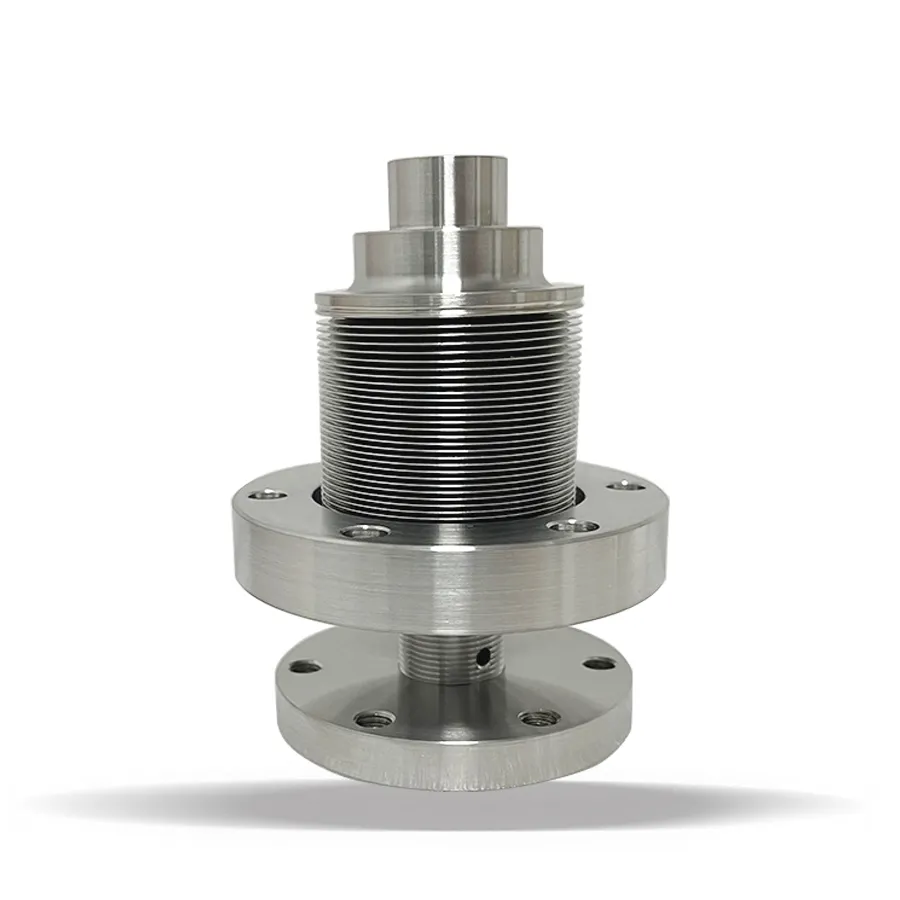
In high-precision vacuum environments, even the smallest mechanical compromise can lead to significant performance degradation. The edge welded bellow has emerged as one of the most reliable solutions for maintaining vacuum integrity while accommodating motion, vibration, and thermal expansion. Unlike conventional flexible components, this technology is engineered specifically to meet the demanding requirements of ultra-high vacuum systems, semiconductor fabrication, aerospace testing, and scientific instrumentation. Understanding how it contributes to vacuum performance begins with recognizing the unique structural and functional advantages it brings to complex system designs.

The performance of a vacuum system depends heavily on the quality and reliability of every component within it. An edge welded bellow contributes to this performance by providing a hermetically sealed, flexible connection that resists leakage, withstands cyclic stress, and maintains dimensional stability under pressure differentials. As vacuum applications grow more demanding across industries, the role of the edge welded bellow in sustaining system efficiency and longevity has become increasingly critical. This article explores the specific mechanisms through which edge welded bellow systems enhance vacuum performance and why engineers consistently choose them for precision-critical applications.
The Structural Basis of Vacuum Performance in Edge Welded Bellow Design
How the Welded Disc Construction Creates a Leak-Free Barrier
The defining characteristic of an edge welded bellow is its construction from a series of thin, precision-stamped metal discs that are welded together at their inner and outer edges in an alternating pattern. This disc-stack architecture creates a flexible yet hermetically sealed structure that can compress, extend, and deflect without introducing any leak paths. Each weld joint is a critical sealing point, and the quality of these welds directly determines the vacuum integrity of the entire assembly.
Because the edge welded bellow relies on welded metal-to-metal joints rather than elastomeric seals or mechanical compression fittings, it eliminates the permeation and outgassing risks associated with polymer-based flexible elements. In ultra-high vacuum environments where pressures drop below 10^-9 mbar, even trace outgassing from non-metallic materials can compromise system performance. The all-metal construction of the edge welded bellow addresses this concern directly, making it the preferred choice for the most demanding vacuum applications.
The disc geometry also allows engineers to tailor the spring rate, stroke length, and lateral flexibility of the edge welded bellow to match specific system requirements. By varying the number of discs, the disc diameter, and the material thickness, manufacturers can produce bellows with precisely controlled mechanical characteristics. This design flexibility ensures that the edge welded bellow can be optimized for each unique vacuum system without sacrificing sealing performance.
Material Selection and Its Impact on Vacuum Compatibility
The materials used in an edge welded bellow are selected not only for mechanical strength but also for their vacuum compatibility. Stainless steel alloys, particularly austenitic grades, are the most common choice because they combine excellent corrosion resistance with low outgassing rates and high weldability. In more specialized applications, materials such as Inconel or titanium may be used to address elevated temperature requirements or aggressive chemical environments.
Surface finish plays an equally important role in vacuum performance. The interior surfaces of an edge welded bellow are typically electropolished or mechanically polished to reduce surface area at the microscopic level, which in turn minimizes the adsorption of gas molecules. This treatment significantly reduces the time required to pump a system down to its target pressure and helps maintain stable vacuum conditions over extended operating periods.
Proper material selection also ensures that the edge welded bellow remains dimensionally stable across a wide temperature range. Thermal cycling is a common challenge in vacuum systems, and a bellow that expands or contracts unpredictably can introduce stress into connected components or alter the alignment of precision instruments. The controlled thermal behavior of well-chosen metallic materials ensures that the edge welded bellow performs consistently regardless of operating temperature fluctuations.
Motion Compensation and Its Role in Sustaining Vacuum Integrity
Absorbing Mechanical Vibration Without Compromising the Vacuum Envelope
One of the most valuable contributions of an edge welded bellow to vacuum system performance is its ability to absorb and isolate mechanical vibration. Vacuum systems often incorporate pumps, motors, and other rotating or reciprocating machinery that generate vibration. If this vibration is transmitted directly through rigid connections to sensitive instruments or process chambers, it can cause measurement errors, mechanical wear, and even structural fatigue in critical components.
The flexible nature of the edge welded bellow allows it to act as a vibration decoupler, absorbing oscillatory motion before it reaches sensitive areas of the system. Because the bellow achieves this flexibility through elastic deformation of its metal disc structure rather than through any compliant sealing material, it maintains full vacuum integrity while performing its vibration isolation function. This combination of flexibility and hermeticity is difficult to achieve with any other component type.
In applications such as electron microscopy, particle accelerators, and precision lithography systems, vibration isolation is not merely a convenience but a fundamental requirement for system functionality. The edge welded bellow provides this isolation reliably over millions of flex cycles, making it a long-term solution rather than a temporary workaround. Its fatigue resistance under cyclic loading is a direct result of the uniform stress distribution achieved by the welded disc geometry.
Accommodating Thermal Expansion to Prevent Stress-Induced Leaks
Thermal expansion is a persistent challenge in vacuum system design. When components at different temperatures are rigidly connected, differential expansion generates mechanical stress that can distort flanges, crack welds, or open leak paths at sealing interfaces. The edge welded bellow addresses this problem by providing a compliant element that absorbs differential expansion without transmitting damaging forces to adjacent components.
In systems that operate across a wide temperature range, such as cryogenic vacuum chambers or high-temperature process reactors, the edge welded bellow serves as a thermal expansion joint that protects the integrity of the entire vacuum envelope. By allowing controlled axial and lateral movement, it prevents the accumulation of thermal stress that would otherwise degrade sealing performance over time.
The ability of the edge welded bellow to accommodate both axial compression and angular deflection simultaneously makes it particularly versatile in complex system geometries. Engineers can route vacuum lines through constrained spaces and around obstacles while still providing adequate flexibility for thermal movement. This geometric adaptability reduces the need for complex expansion loop designs and simplifies overall system layout.
Leak Rate Performance and Long-Term Vacuum Stability
Achieving Ultra-Low Leak Rates Through Precision Welding
The leak rate of a vacuum component is one of the most critical performance metrics in any high-vacuum application. An edge welded bellow achieves exceptionally low leak rates because its sealing mechanism relies entirely on continuous, full-penetration welds rather than on mechanical compression or adhesive bonding. When executed with precision welding techniques such as laser welding or TIG welding under controlled conditions, these joints can achieve helium leak rates well below 1×10^-10 mbar·l/s.
This level of leak tightness is essential in applications where even minute gas ingress would contaminate a process, degrade instrument sensitivity, or require costly system venting and re-pumpdown cycles. The edge welded bellow provides this performance consistently because its leak integrity is built into the structure itself rather than depending on the condition of a replaceable seal element. There are no O-rings to age, no gaskets to compress unevenly, and no adhesive bonds to degrade under thermal cycling.
Quality assurance for an edge welded bellow typically includes 100% helium leak testing of finished assemblies, ensuring that every unit shipped meets the specified leak rate requirement. This rigorous testing protocol gives system designers confidence that the bellow will perform as specified from initial installation through the full service life of the vacuum system.
Maintaining Stable Vacuum Conditions Over Extended Service Life
Long-term vacuum stability depends not only on the initial leak rate of system components but also on their resistance to degradation over time. An edge welded bellow is inherently resistant to the mechanisms that cause other flexible elements to deteriorate. Metal fatigue is managed through careful design of the disc geometry to keep stress levels well below the endurance limit of the chosen material, while corrosion resistance is ensured through material selection and surface treatment.
Unlike elastomeric bellows or flexible hose assemblies, the edge welded bellow does not absorb moisture, does not swell or shrink in response to chemical exposure, and does not develop micro-cracks from UV exposure or ozone attack. These characteristics make it particularly well-suited for vacuum systems that must operate continuously for months or years without scheduled maintenance or component replacement.
The predictable fatigue life of an edge welded bellow also supports planned maintenance programs. Engineers can calculate the expected service life based on the number of flex cycles, the stroke amplitude, and the operating temperature, allowing maintenance intervals to be scheduled before failure rather than in response to it. This predictability reduces unplanned downtime and supports the overall reliability of the vacuum system.
Application Scenarios Where Edge Welded Bellow Systems Deliver Maximum Value
Semiconductor and Thin Film Processing Environments
Semiconductor fabrication processes such as physical vapor deposition, chemical vapor deposition, and ion implantation require vacuum environments of exceptional cleanliness and stability. In these settings, the edge welded bellow is used extensively in gate valve actuators, load lock mechanisms, wafer transfer systems, and process chamber isolation assemblies. Its low outgassing characteristics and compatibility with aggressive process chemistries make it the standard choice for these critical interfaces.
The edge welded bellow also plays a key role in the motion feedthrough assemblies that allow robotic wafer handling systems to operate inside vacuum chambers. These feedthroughs must provide smooth, precise motion transmission while maintaining the vacuum boundary, and the edge welded bellow achieves this by converting external linear or rotary motion into internal movement without any sliding seals that could generate particles or leak gas.
As semiconductor processes continue to push toward smaller feature sizes and more sensitive materials, the demands on vacuum system components become increasingly stringent. The edge welded bellow meets these evolving requirements because its performance characteristics can be precisely engineered and verified, giving process engineers the confidence they need to qualify new equipment designs.
Scientific Research and Analytical Instrumentation
In scientific research environments such as synchrotron beamlines, mass spectrometry systems, and surface science laboratories, the edge welded bellow serves as a critical enabling component for experiments that require both precise mechanical positioning and ultra-high vacuum conditions. The ability to adjust the position of optical elements, sample stages, or detector assemblies while maintaining vacuum integrity is essential for many experimental techniques.
The edge welded bellow supports this capability by providing a flexible vacuum boundary that accommodates the required range of motion without introducing vibration, backlash, or leak risk. In beamline applications, for example, bellows are used to connect beam pipe sections across expansion joints and to allow fine adjustment of optical component positions without breaking vacuum. The precision and reliability of the edge welded bellow are directly reflected in the quality and reproducibility of experimental results.
Analytical instruments such as scanning electron microscopes and X-ray photoelectron spectrometers also rely on the edge welded bellow for sample introduction systems and stage motion mechanisms. In these instruments, the bellow must perform reliably over many thousands of cycles while contributing negligible vibration to the optical or analytical system. The edge welded bellow meets these requirements through its combination of low spring rate, high fatigue resistance, and excellent vacuum compatibility.
FAQ
What makes an edge welded bellow more suitable for vacuum applications than a hydroformed bellow?
An edge welded bellow offers a lower spring rate and greater stroke capacity relative to its diameter compared to a hydroformed bellow of similar size. This makes it better suited for applications requiring large axial travel or high flexibility with minimal restoring force. Additionally, the all-welded construction of the edge welded bellow provides superior leak integrity and lower outgassing, which are critical advantages in high and ultra-high vacuum environments where hydroformed bellows with their thicker walls and higher spring rates may be less appropriate.
How does the number of discs in an edge welded bellow affect its vacuum performance?
Increasing the number of discs in an edge welded bellow increases the total stroke length and reduces the spring rate, allowing greater flexibility with less force. However, a longer bellow also has a larger internal surface area, which can slightly increase outgassing load and pumpdown time. Engineers balance these factors by selecting the minimum number of discs needed to accommodate the required motion, thereby optimizing both mechanical performance and vacuum compatibility for the specific application.
Can an edge welded bellow be used in both compression and extension modes simultaneously?
Yes, an edge welded bellow can accommodate combined axial, lateral, and angular movements simultaneously, which is one of its key advantages in complex vacuum system layouts. However, combined loading reduces the allowable stroke in each individual direction, so engineers must account for the full motion envelope when specifying the bellow. Proper specification ensures that the edge welded bellow operates within its design limits and achieves its rated fatigue life without risk of premature failure or vacuum integrity loss.
What maintenance is typically required for an edge welded bellow in a vacuum system?
In most vacuum applications, an edge welded bellow requires minimal routine maintenance because it has no wear surfaces, no replaceable seal elements, and no lubrication requirements. Periodic visual inspection for signs of mechanical damage, corrosion, or misalignment is generally sufficient. If the system undergoes regular venting and re-pumpdown cycles, the bellow should be inspected for fatigue cracks at the weld joints after a number of cycles consistent with its rated service life. Replacing the edge welded bellow proactively based on cycle count is a best practice for systems where unplanned downtime is costly.
Table of Contents
- The Structural Basis of Vacuum Performance in Edge Welded Bellow Design
- Motion Compensation and Its Role in Sustaining Vacuum Integrity
- Leak Rate Performance and Long-Term Vacuum Stability
- Application Scenarios Where Edge Welded Bellow Systems Deliver Maximum Value
-
FAQ
- What makes an edge welded bellow more suitable for vacuum applications than a hydroformed bellow?
- How does the number of discs in an edge welded bellow affect its vacuum performance?
- Can an edge welded bellow be used in both compression and extension modes simultaneously?
- What maintenance is typically required for an edge welded bellow in a vacuum system?