 EN
EN

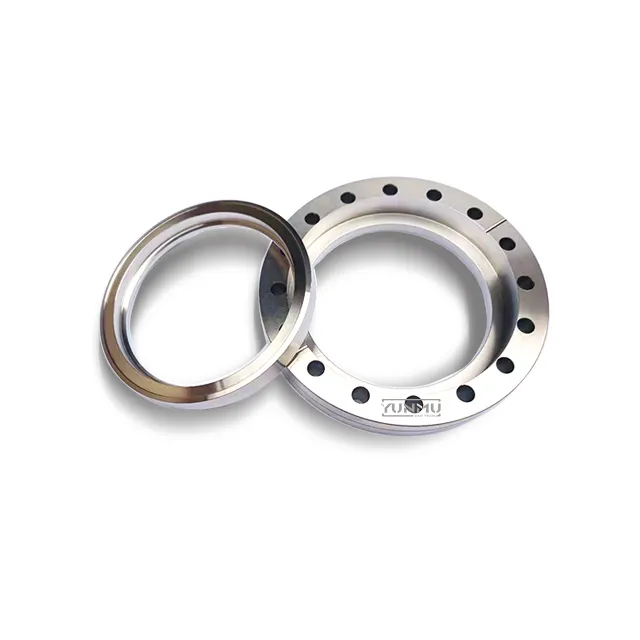
In high-performance industrial environments, the reliability of every individual part determines the integrity of the entire system. vacuum components are among the most critical elements in this equation, forming the backbone of systems that depend on controlled, contamination-free, and pressure-stable environments. From semiconductor fabrication to aerospace testing, the precision of these parts directly influences process outcomes, equipment longevity, and operational safety.
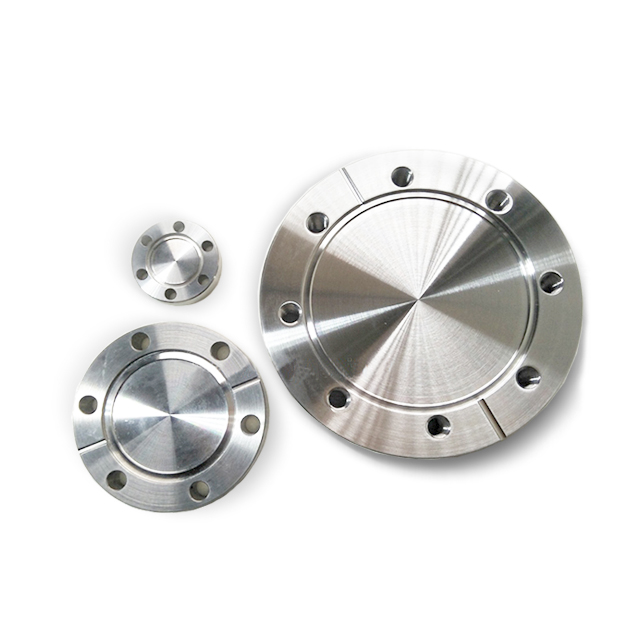
Understanding why precision matters in vacuum components requires looking beyond surface-level specifications. Industrial vacuum systems operate under demanding physical conditions where even microscopic imperfections in a flange, fitting, or seal can lead to catastrophic pressure loss, contamination, or system failure. This article examines the core reasons why precision-engineered vacuum components are not optional in industrial settings — they are essential.
The Role of Vacuum Components in Industrial Systems
Defining the Functional Scope
Vacuum components encompass a broad range of hardware used to create, maintain, and control vacuum environments. These include flanges, valves, feedthroughs, fittings, pumps, gauges, and sealing elements. Each part plays a specific role in ensuring that the system achieves and sustains the required vacuum level without leakage or contamination.
In industrial applications, these components are not interchangeable commodities. They are engineered to meet precise dimensional tolerances, surface finish standards, and material compatibility requirements. A CF blank flange, for example, must conform to exact face geometry to create a reliable metal-to-metal seal under ultra-high vacuum conditions.
The functional scope of vacuum components extends across industries including electronics manufacturing, particle physics research, thin-film coating, chemical processing, and medical device production. In each of these sectors, the performance of vacuum components directly determines process quality and repeatability.
System Integrity Depends on Component Precision
A vacuum system is only as strong as its weakest component. When vacuum components are manufactured with insufficient precision, the consequences cascade through the entire system. A flange with an uneven sealing surface introduces virtual leaks. A fitting with incorrect thread tolerances creates stress points that fail under thermal cycling. These are not theoretical risks — they are documented failure modes in industrial operations.
Precision in vacuum components means that every dimension, every surface finish, and every material property is controlled to a defined standard. This level of control is what allows engineers to design systems with predictable performance characteristics and reliable service intervals.
When vacuum components meet tight tolerances, system integration becomes straightforward. Components from different suppliers can be assembled with confidence because the dimensional standards are consistent. This interoperability is a direct result of precision manufacturing and is critical for large-scale industrial deployments.
Why Precision Directly Affects Vacuum Performance
Leak Integrity and Pressure Stability
The primary function of any vacuum system is to achieve and maintain a target pressure level. This is only possible when all vacuum components form leak-tight connections. Precision machining of sealing surfaces, such as the knife-edge geometry on CF flanges, ensures that metal gaskets deform correctly to create hermetic seals capable of withstanding pressures down to the ultra-high vacuum range.
Even a minor deviation in surface flatness or knife-edge sharpness can prevent proper gasket deformation, resulting in a leak path. In ultra-high vacuum applications, leak rates must be controlled to levels below 10⁻¹⁰ mbar·l/s. Achieving this requires vacuum components that are manufactured and inspected to exacting standards.
Pressure stability over time is equally important. Industrial processes often run continuously for extended periods. Vacuum components that maintain their sealing integrity under thermal cycling, mechanical vibration, and repeated assembly cycles provide the pressure stability that process engineers depend on for consistent results.
Outgassing and Contamination Control
In vacuum environments, the materials used in vacuum components must not release gases that would degrade the vacuum level or contaminate the process. This phenomenon, known as outgassing, is a critical consideration in the selection and specification of vacuum components for industrial use.
Precision vacuum components are typically manufactured from materials with low outgassing rates, such as 304 or 316L stainless steel, and are processed with specific surface treatments including electropolishing and vacuum baking. These treatments reduce the surface area available for gas adsorption and accelerate the removal of residual moisture and hydrocarbons.
Contamination control is particularly critical in semiconductor and optical coating applications, where even trace levels of molecular contamination can ruin product batches worth hundreds of thousands of dollars. Precision vacuum components with controlled surface finishes and material certifications provide the contamination barrier that these industries require.
Industrial Applications That Demand Precision Vacuum Components
Semiconductor and Electronics Manufacturing
The semiconductor industry operates some of the most demanding vacuum environments in existence. Processes such as physical vapor deposition, chemical vapor deposition, ion implantation, and etching all require vacuum components that maintain ultra-clean, ultra-stable vacuum conditions throughout production cycles that may last hours or days.
In these environments, vacuum components must not only perform reliably but must also be compatible with aggressive process chemistries, high-power plasma environments, and rapid thermal cycles. Precision engineering ensures that flanges, valves, and feedthroughs maintain their dimensional integrity and sealing performance under these extreme conditions.
The cost of a vacuum system failure in semiconductor manufacturing is enormous. A single contamination event or pressure excursion can destroy an entire production run. This economic reality makes precision vacuum components a non-negotiable investment rather than a cost-saving opportunity.
Research, Aerospace, and Advanced Testing
Scientific research facilities, including particle accelerators, synchrotrons, and space simulation chambers, rely on vacuum components to create environments that replicate the conditions of outer space or enable experiments that are impossible at atmospheric pressure. These applications demand the highest levels of precision and reliability from every vacuum component in the system.
Aerospace testing facilities use large vacuum chambers to simulate the thermal and pressure conditions of space. The vacuum components used in these chambers must maintain their performance over decades of operation, often with minimal maintenance access. Precision manufacturing and rigorous quality control are the only ways to achieve this level of long-term reliability.
Advanced testing applications in materials science, nuclear research, and photonics also depend on precision vacuum components to create the controlled environments needed for valid experimental results. In these contexts, the quality of vacuum components is directly linked to the quality and credibility of the research output.
Long-Term Value of Investing in Precision Vacuum Components
Reduced Downtime and Maintenance Costs
One of the most compelling business cases for precision vacuum components is the reduction in unplanned downtime. When vacuum components are manufactured to tight tolerances and verified through rigorous quality inspection, they perform predictably over their designed service life. This predictability allows maintenance teams to plan interventions rather than react to failures.
In contrast, low-precision vacuum components introduce variability into system performance. Seals that do not form correctly require more frequent replacement. Flanges with poor surface finishes cause gasket damage that leads to repeated leak events. Each of these failure modes translates directly into production downtime and maintenance labor costs that far exceed the initial savings from purchasing lower-quality parts.
Precision vacuum components also simplify troubleshooting. When a system is built from components with known, consistent specifications, engineers can isolate problems more quickly and with greater confidence. This diagnostic efficiency reduces the time from fault detection to system restoration, minimizing the impact of any maintenance event on production schedules.
Compatibility, Scalability, and System Longevity
Industrial vacuum systems are rarely static. They evolve over time as process requirements change, capacity expands, or technology upgrades are implemented. Precision vacuum components that conform to recognized standards, such as CF, ISO-KF, or ISO-F, provide the dimensional compatibility needed to integrate new components into existing systems without custom modifications.
This standardization is a significant advantage in long-term system management. Engineers can source replacement vacuum components from qualified suppliers with confidence that the new parts will fit and perform correctly. This reduces lead times for maintenance and eliminates the risk of dimensional mismatches that can compromise system integrity.
System longevity is another direct benefit of precision vacuum components. High-quality materials, precise machining, and proper surface treatment extend the service life of individual components and protect adjacent parts from premature wear. Over the lifetime of an industrial vacuum system, the cumulative value of this extended service life is substantial.
FAQ
What makes a vacuum component 'precision' grade?
A precision-grade vacuum component is one that has been manufactured to tight dimensional tolerances, specified surface finish standards, and verified material properties. For vacuum components such as CF flanges, this includes controlled knife-edge geometry, electropolished sealing surfaces, and dimensional conformance to international standards. Quality inspection records and material certifications are typically provided with precision-grade vacuum components.
How do I know if my application requires precision vacuum components?
If your application operates at high vacuum (below 10⁻³ mbar) or ultra-high vacuum (below 10⁻⁷ mbar), precision vacuum components are required. Applications involving sensitive processes such as thin-film deposition, semiconductor fabrication, or scientific research also require precision vacuum components regardless of the specific pressure range, due to contamination sensitivity and process repeatability requirements.
Can standard industrial fittings be used in vacuum systems?
Standard industrial fittings are generally not suitable for high or ultra-high vacuum applications. They are not manufactured to the surface finish, dimensional tolerance, or material purity standards required for reliable vacuum performance. Using non-vacuum-rated fittings in vacuum systems typically results in excessive leak rates, high outgassing, and premature component failure. Dedicated vacuum components are engineered specifically to meet the demands of vacuum environments.
How does component precision affect the overall cost of a vacuum system?
While precision vacuum components carry a higher initial cost than standard alternatives, they reduce total cost of ownership through lower failure rates, reduced maintenance frequency, and longer service life. In industrial settings where downtime is expensive and process quality is critical, the investment in precision vacuum components consistently delivers a positive return. The cost of a single production failure caused by a substandard component typically exceeds the price difference between standard and precision vacuum components many times over.