 EN
EN
Production flexibility is one of the most critical factors in modern industrial manufacturing, and the design of your processing equipment plays a direct role in determining how adaptable your operations truly are. A well-engineered vacuum chamber that is built around your specific process requirements can unlock a level of operational agility that standard off-the-shelf units simply cannot provide. When manufacturers face evolving product lines, changing batch sizes, or multi-process demands, the vacuum chamber they rely on must be capable of growing and adapting alongside those needs.
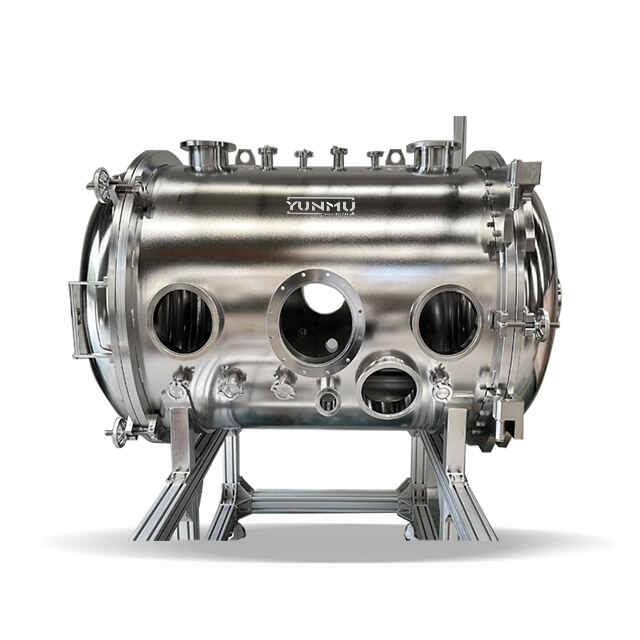
Custom vacuum chamber designs offer manufacturers the opportunity to specify internal dimensions, port configurations, material grades, viewport placements, and pressure tolerances that align precisely with their workflows. Rather than compromising process parameters to fit a generic vacuum chamber, engineers can design a vacuum chamber that fits the process itself. This alignment between equipment design and production intent is what makes custom vacuum chamber engineering a genuine enabler of flexibility rather than just a cost decision.
How Custom Vacuum Chamber Design Supports Process Adaptability
Configurable Internal Geometry
The internal geometry of a vacuum chamber has a direct impact on how many different product types or process configurations a facility can run. A custom vacuum chamber can be built with adjustable shelving systems, modular fixture points, or removable internal walls that allow operators to reconfigure the working space between production runs. This means a single vacuum chamber can support coating applications, drying cycles, degassing operations, and leak testing without requiring a dedicated unit for each task. Standard vacuum chamber units typically have fixed internal layouts that restrict this kind of versatility.
Multi-Port and Multi-Utility Access
A custom vacuum chamber can be specified with multiple feedthrough ports positioned at exact locations on the chamber body, allowing gas injection lines, electrical connections, fluid transfer tubes, and sensor harnesses to enter the vacuum chamber without compromising seal integrity. This multi-utility access is essential when a vacuum chamber must support different process chemistries or measurement instruments across different production runs. Operators can reconfigure external connections without redesigning the vacuum chamber itself, preserving the investment while expanding functional range.
Material and Pressure Specifications That Match Real Process Demands
Choosing the Right Chamber Material
Not every vacuum chamber process involves the same chemical environment or temperature range. A custom vacuum chamber can be fabricated from stainless steel grades, aluminum alloys, or specialty coated materials depending on whether the process involves corrosive gases, high thermal cycling, or hygiene-critical environments. When a vacuum chamber is built from the correct material from the outset, it avoids the performance degradation that occurs when a standard vacuum chamber is used in conditions it was not designed for. Proper material selection extends service life and keeps maintenance intervals predictable.
Pressure Range and Leak Rate Engineering
Different processes require different vacuum chamber pressure ranges, and a custom vacuum chamber can be engineered to achieve the specific base pressure your application demands. Whether your process requires rough vacuum, medium vacuum, or high vacuum performance, the vacuum chamber can be built with the appropriate wall thickness, weld quality, and sealing system to maintain the required leak rate. Off-the-shelf vacuum chamber designs are often over- or under-specified for particular applications, leading to either unnecessary cost or inadequate performance. A custom vacuum chamber eliminates this mismatch.
Scaling and Integration Benefits of Custom Vacuum Chamber Engineering
Integration With Automation and Inline Systems
Modern production environments increasingly rely on automated material handling, robotic loading, and inline process monitoring. A custom vacuum chamber can be dimensioned and interfaced to integrate directly with conveyor systems, robotic arms, and automated valve controls that match your existing production line footprint. This integration capability means the vacuum chamber becomes part of a continuous production flow rather than a standalone bottleneck. When the vacuum chamber fits seamlessly into the surrounding automation, cycle times decrease and throughput consistency improves across all product variants.
Scalability Across Production Volumes
One of the clearest advantages of a custom vacuum chamber is the ability to design for both current and anticipated production volumes. A vacuum chamber can be engineered with future expansion in mind, incorporating access flanges or modular sections that allow the vacuum chamber to be enlarged or reconfigured as production demands change. This forward-thinking design approach means a facility does not need to invest in an entirely new vacuum chamber system every time production capacity is revised upward. The vacuum chamber grows alongside the business, making the original investment more durable and cost-effective over time.
FAQ
What makes a custom vacuum chamber better than a standard one for flexible production?
A custom vacuum chamber is engineered around your actual process requirements, including specific dimensions, port locations, pressure targets, and material grades. This precise fit means the vacuum chamber can handle multiple product types and process configurations without performance compromises. A standard vacuum chamber is built to general specifications that may not align with your production variables, limiting adaptability across different workflows.
How long does it typically take to design and build a custom vacuum chamber?
The lead time for a custom vacuum chamber depends on the complexity of the design, the materials selected, and the required testing protocols. Simple custom vacuum chamber units may be completed in several weeks, while highly complex vacuum chamber systems with specialized feedthroughs, large dimensions, or tight leak rate specifications can take several months. Providing detailed process requirements early in the design phase helps reduce revisions and shortens the overall vacuum chamber delivery timeline.
Can a custom vacuum chamber be modified after it has been delivered?
In many cases, a custom vacuum chamber can be modified post-delivery if it was originally designed with future adaptability in mind. Additions such as extra ports, updated sealing systems, or internal fixture changes to the vacuum chamber are feasible when the original design includes sufficient wall thickness and flange clearances. It is always advisable to discuss anticipated future modifications with the vacuum chamber engineer during the initial design phase so that provisions can be built in from the start.