 EN
EN
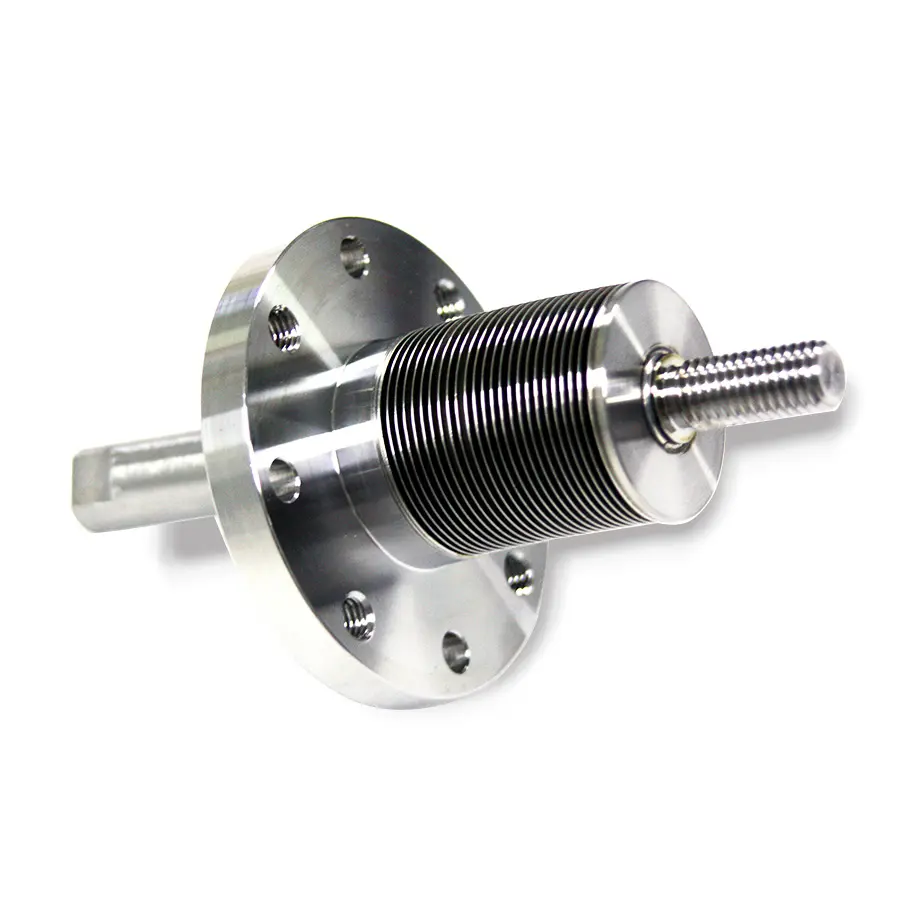
Industrial workflow stability is one of the most critical factors separating high-performing facilities from those that struggle with downtime, inconsistent output, and rising operational costs. When vacuum technology is involved in production, the precision and reliability of that equipment directly shapes how smoothly every upstream and downstream process runs. custom vacuum systems have emerged as a strategic solution for facilities that need more than off-the-shelf equipment can offer, delivering engineered performance that aligns with specific process demands rather than forcing operations to adapt around generic hardware.
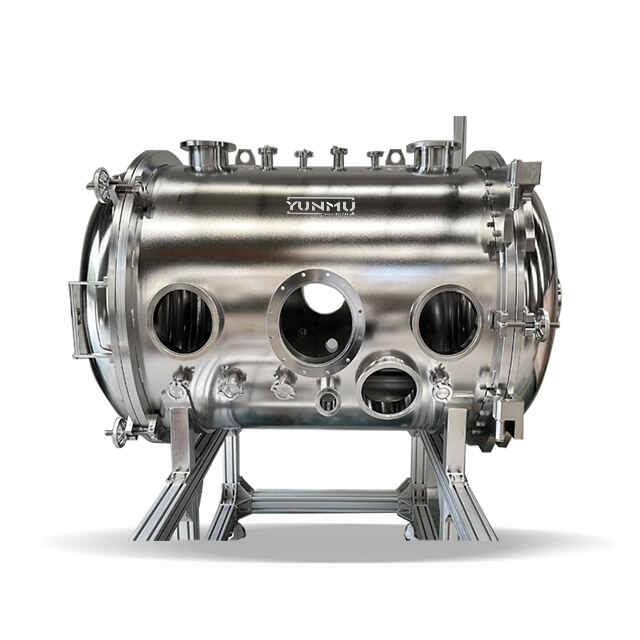
The question of how custom vacuum systems improve industrial workflow stability is not simply about better pumps or stronger chambers. It is about designing vacuum infrastructure that integrates seamlessly into a facility's unique process architecture, responds predictably under variable load conditions, and reduces the friction points that cause production lines to slow, stall, or produce inconsistent results. Understanding this connection requires looking at how customization addresses the root causes of workflow instability rather than just treating symptoms.
The Root Causes of Workflow Instability in Vacuum-Dependent Processes
Mismatched Equipment Specifications
One of the most common sources of instability in industrial environments is the use of vacuum equipment that was not designed for the specific application it serves. Standard vacuum units are built to cover a broad range of general use cases, which means they often operate outside their optimal performance window when applied to specialized processes. This mismatch creates pressure fluctuations, inconsistent cycle times, and unpredictable behavior that ripples through the entire production sequence.
Custom vacuum systems address this directly by being engineered to match the exact pressure ranges, flow rates, and duty cycles required by a given process. When the equipment is sized and configured for the actual workload, it operates within its designed parameters consistently, eliminating the variability that comes from running a general-purpose unit at the edges of its capability. This alignment between equipment specification and process demand is the foundation of workflow stability.
Facilities that have transitioned from standard to custom vacuum systems frequently report that cycle-to-cycle consistency improves significantly. The reason is straightforward: when vacuum levels are achieved reliably and held within tight tolerances, every process step that depends on those conditions becomes more predictable. Quality control becomes easier, reject rates decrease, and operators spend less time compensating for equipment variability.
Integration Gaps Between Vacuum Equipment and Process Controls
Another major contributor to workflow instability is the disconnect between vacuum equipment and the broader process control infrastructure. In many facilities, vacuum units operate as isolated components with their own control logic that does not communicate effectively with programmable logic controllers, supervisory systems, or automated handling equipment. This isolation creates coordination failures that interrupt workflow continuity.
Custom vacuum systems can be designed from the outset with integration in mind. Control interfaces, sensor outputs, alarm logic, and communication protocols can all be specified to match the facility's existing automation architecture. When vacuum equipment speaks the same language as the rest of the production line, operators gain real-time visibility into vacuum performance, and automated systems can respond to vacuum status changes without manual intervention.
This level of integration transforms custom vacuum systems from passive components into active participants in workflow management. A system that can signal when it is approaching a maintenance threshold, automatically adjust output in response to changing process demands, or trigger a controlled shutdown before a failure occurs contributes directly to the kind of predictable, stable operation that industrial facilities depend on.
How Customization Directly Stabilizes Production Flow
Consistent Vacuum Performance Across Variable Conditions
Industrial production environments are rarely static. Load conditions change, ambient temperatures fluctuate, and process demands shift across shifts and seasons. Standard vacuum equipment often struggles to maintain consistent performance across this variability, leading to process drift that operators must constantly monitor and correct. Custom vacuum systems are engineered to account for the specific range of conditions a facility experiences, incorporating design features that maintain stable output even as external variables change.
This might involve variable-speed drive configurations that adjust pump output in real time, thermal management features that prevent performance degradation in high-temperature environments, or redundant components that maintain vacuum levels if a primary element requires service. The specific solution depends on the application, but the outcome is the same: a system that delivers consistent vacuum performance regardless of what else is happening in the facility.
Consistent vacuum performance has a compounding effect on workflow stability. When operators can trust that vacuum conditions will be within specification at the start of every cycle, they can focus on other aspects of production rather than monitoring and adjusting vacuum equipment. This reduction in operator burden improves overall workflow efficiency and reduces the risk of human error introduced by constant manual intervention.
Reduced Unplanned Downtime Through Purpose-Built Reliability
Unplanned downtime is one of the most disruptive forces in industrial production, and vacuum equipment failure is a significant contributor in facilities where vacuum is a critical process input. When a standard vacuum unit fails, the entire production line may halt while replacement parts are sourced or a service technician is dispatched. Custom vacuum systems can be designed with serviceability and reliability as explicit engineering objectives, reducing both the frequency and the duration of unplanned downtime events.
Design choices that improve reliability in custom vacuum systems include the use of components rated for the actual duty cycle rather than a generic standard, redundant vacuum paths that allow production to continue at reduced capacity during maintenance, and modular architectures that allow individual components to be serviced or replaced without taking the entire system offline. These are not features that appear in standard catalog equipment because they require knowledge of the specific application to implement correctly.
The business impact of reduced unplanned downtime extends well beyond the direct cost of lost production time. Facilities that operate with high vacuum system reliability can make more accurate production commitments to customers, reduce the inventory buffers they maintain to cover for production uncertainty, and build a reputation for delivery consistency that becomes a competitive advantage. Custom vacuum systems contribute to this outcome by making vacuum reliability a designed-in characteristic rather than a hoped-for result.
Application-Specific Design Features That Enhance Workflow Stability
Chamber Geometry and Process Compatibility
The physical design of vacuum chambers and system components has a direct effect on how well a vacuum system supports the processes it serves. Standard chambers are designed around common workpiece sizes and shapes, which means they often require fixtures, adapters, or workarounds to accommodate the actual parts being processed. These accommodations introduce variability and add steps to the workflow that would not exist if the chamber were designed for the specific application.
Custom vacuum systems allow chamber geometry to be optimized for the actual workpieces, process media, and handling methods used in a specific facility. A chamber designed to accept a particular part family without fixturing reduces loading and unloading time, minimizes the risk of part damage during handling, and ensures that vacuum conditions are achieved uniformly across the workpiece. These improvements in process compatibility translate directly into faster cycle times and more consistent output quality.
Beyond geometry, custom vacuum systems can incorporate process-specific features such as integrated heating elements for thermal processing applications, specialized port configurations for gas backfill or process gas introduction, and surface treatments that prevent contamination or chemical interaction with sensitive materials. Each of these features eliminates a potential source of process variability, contributing to the overall stability of the workflow.
Scalability and Future-Proofing for Evolving Production Demands
Industrial facilities rarely operate at a fixed production volume indefinitely. Demand fluctuations, new product introductions, and capacity expansions all create pressure on vacuum infrastructure to perform at levels it was not originally configured for. Standard vacuum systems often become bottlenecks as production scales, requiring replacement or supplementation with additional units that may not integrate cleanly with existing equipment.
Custom vacuum systems can be designed with scalability as a core requirement, incorporating modular pump configurations that can be expanded, control systems that can manage additional capacity without reprogramming, and structural designs that accommodate future modifications. This forward-looking approach means that the vacuum infrastructure grows with the facility rather than constraining it, preserving workflow stability through periods of change that would otherwise introduce significant disruption.
The ability to anticipate and accommodate future demands is one of the most underappreciated advantages of custom vacuum systems. Facilities that invest in scalable custom infrastructure avoid the workflow disruption and capital expenditure associated with replacing vacuum equipment every time production requirements change. Over a multi-year operational horizon, this scalability contributes substantially to the total value delivered by custom vacuum systems.
Operational and Maintenance Advantages That Sustain Long-Term Stability
Predictive Maintenance Enablement
Maintaining workflow stability over the long term requires more than reliable equipment at installation. It requires a maintenance strategy that prevents performance degradation before it affects production. Custom vacuum systems can be instrumented with sensors and monitoring capabilities that provide the data needed to implement predictive maintenance programs, shifting maintenance activity from reactive to proactive.
When custom vacuum systems are designed with monitoring in mind, operators gain continuous visibility into parameters such as pump temperature, vibration signatures, ultimate pressure achievement times, and seal integrity indicators. Trends in these parameters can reveal developing issues before they cause failures, allowing maintenance to be scheduled during planned downtime windows rather than in response to unexpected breakdowns. This shift from reactive to predictive maintenance is one of the most powerful tools available for sustaining workflow stability.
The data generated by well-instrumented custom vacuum systems also supports continuous improvement efforts. By analyzing performance trends over time, facilities can identify opportunities to optimize maintenance intervals, adjust operating parameters for better efficiency, and make informed decisions about component upgrades. This ongoing optimization capability means that custom vacuum systems can actually improve in their contribution to workflow stability over time rather than simply maintaining their initial performance level.
Operator Familiarity and Reduced Training Burden
Workflow stability is not purely a mechanical or engineering concern. It also depends on the ability of operators to interact with equipment confidently and correctly. Standard vacuum systems often present operators with interfaces and operating procedures that were designed for a generic user base, requiring adaptation and interpretation to apply correctly in a specific facility context. This gap between equipment design and operational reality is a source of human error that undermines workflow consistency.
Custom vacuum systems can be designed with the actual operators in mind, incorporating control interfaces that reflect the facility's terminology, alarm systems that communicate in operationally meaningful terms, and operating procedures that align with the facility's workflow rather than a generic manual. When operators understand their equipment intuitively and interact with it confidently, the risk of procedural errors decreases and response to abnormal conditions improves.
This human factors dimension of custom vacuum systems is often overlooked in technical discussions but has a measurable impact on workflow stability. Facilities that invest in equipment designed for their operators report faster onboarding of new personnel, fewer operator-induced process deviations, and greater confidence in the production team's ability to maintain stable output across shifts and personnel changes.
FAQ
What makes custom vacuum systems more effective than standard units for workflow stability?
Custom vacuum systems are engineered to match the specific pressure requirements, duty cycles, integration needs, and physical constraints of a particular application. This precise alignment eliminates the performance gaps and adaptation workarounds that standard units require, resulting in more consistent vacuum conditions, fewer process deviations, and reduced downtime. The stability improvement comes from designing the equipment around the process rather than adapting the process around the equipment.
How long does it typically take to see workflow improvements after installing custom vacuum systems?
Many facilities observe immediate improvements in cycle-to-cycle consistency and vacuum achievement times from the first production runs with custom vacuum systems. Longer-term benefits such as reduced maintenance frequency and improved predictive maintenance capability typically become measurable within the first few months of operation. The timeline depends on the specific application and how significant the performance gap was between the previous equipment and the custom solution.
Can custom vacuum systems be integrated with existing automation and control infrastructure?
Yes, integration with existing automation infrastructure is one of the primary design objectives for most custom vacuum systems. Control interfaces, communication protocols, sensor outputs, and alarm logic can all be specified to match the facility's existing systems. This integration capability is a key advantage over standard equipment, which often requires additional interface hardware or software to communicate with facility-level control systems.
Are custom vacuum systems suitable for small or mid-sized industrial facilities, or only for large operations?
Custom vacuum systems are appropriate for any facility where the performance gap between standard equipment and process requirements is large enough to affect workflow stability or product quality. Small and mid-sized facilities often benefit significantly from customization because their production volumes may not justify the workarounds and inefficiencies that standard equipment introduces. The decision should be based on the cost of workflow instability relative to the investment in custom vacuum systems, not on facility size alone.
Table of Contents
- The Root Causes of Workflow Instability in Vacuum-Dependent Processes
- How Customization Directly Stabilizes Production Flow
- Application-Specific Design Features That Enhance Workflow Stability
- Operational and Maintenance Advantages That Sustain Long-Term Stability
-
FAQ
- What makes custom vacuum systems more effective than standard units for workflow stability?
- How long does it typically take to see workflow improvements after installing custom vacuum systems?
- Can custom vacuum systems be integrated with existing automation and control infrastructure?
- Are custom vacuum systems suitable for small or mid-sized industrial facilities, or only for large operations?