 EN
EN

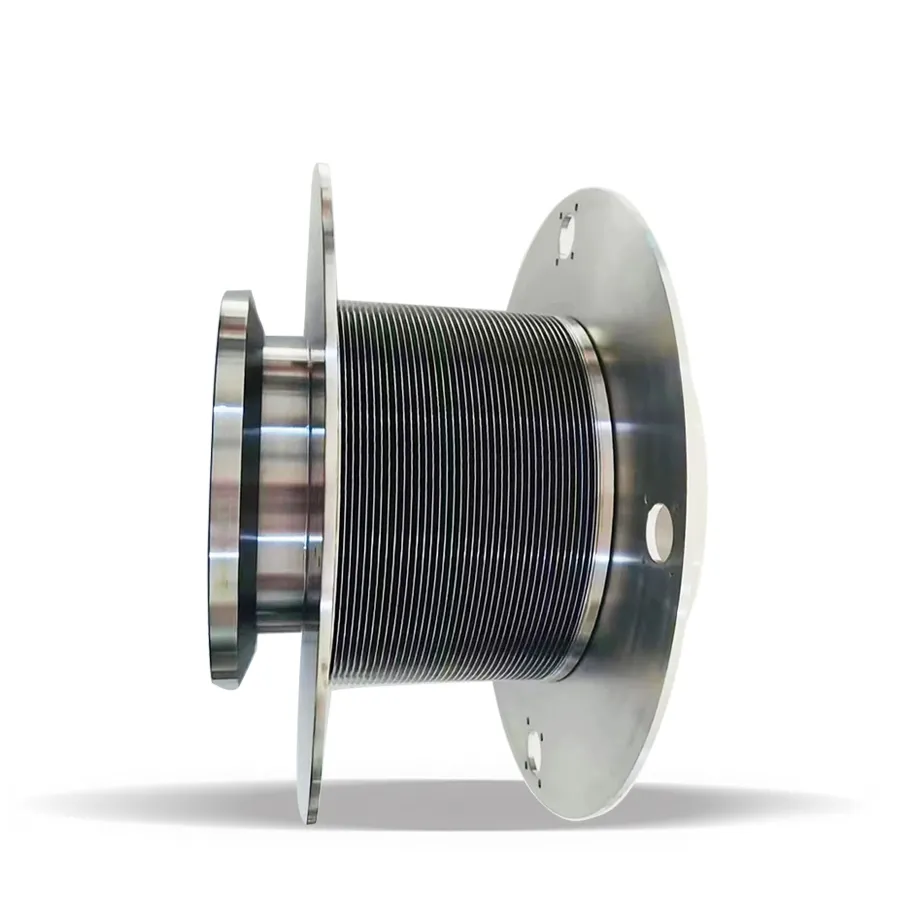
When a vacuum system needs to be upgraded, the speed and success of that process depend heavily on more than just the main pump or chamber. The supporting components — the fittings, adapters, flanges, and connectors that link every element of the system together — play a decisive role in how quickly and cleanly an upgrade can be completed. vacuum accessories are the practical enablers that allow engineers and technicians to reconfigure, extend, or modernize a vacuum system without tearing down the entire infrastructure from scratch.
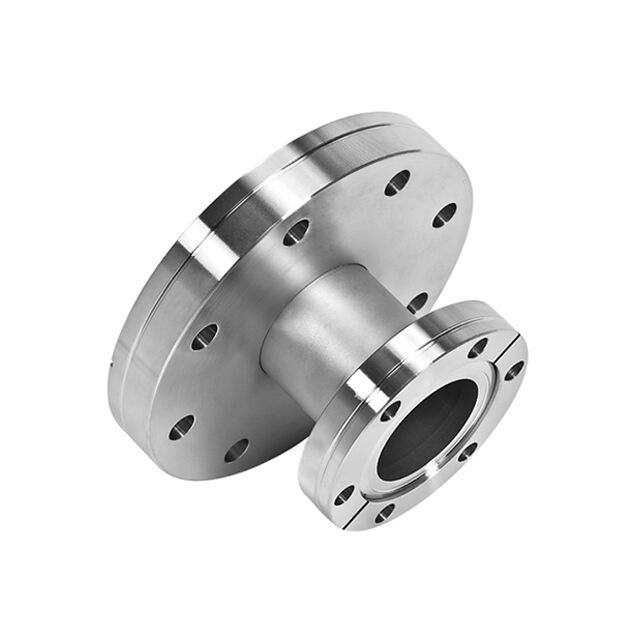
Understanding how vacuum accessories contribute to faster upgrades requires looking at the specific mechanical, logistical, and compatibility challenges that arise during system transitions. Whether a facility is scaling up production capacity, integrating new instrumentation, or replacing aging components, the right vacuum accessories determine whether the upgrade takes days or weeks. This article explores the mechanisms through which these components accelerate the upgrade process and why selecting them carefully is a critical part of any vacuum system modernization strategy.
The Role of Vacuum Accessories in System Reconfiguration
Bridging Incompatible Flange Standards
One of the most common obstacles during a vacuum system upgrade is the mismatch between existing flange standards and the new equipment being introduced. Different generations of vacuum hardware often use different flange types — CF, KF, ISO, and others — and connecting them without the right interface components would require custom fabrication or complete replacement of existing pipework. Vacuum accessories such as conical adapters and reducing adaptors solve this problem directly by providing a standardized mechanical bridge between incompatible connections.
A CF conical adapter, for example, allows a technician to connect a larger-diameter CF flange to a smaller one without modifying either component. This kind of vacuum accessory eliminates the need for custom machining, which can add days or even weeks to a project timeline. By stocking the appropriate reducing adaptors and transition fittings, a facility can respond to upgrade requirements with far greater agility than would otherwise be possible.
The availability of well-matched vacuum accessories also reduces the risk of improvised solutions that compromise system integrity. When engineers can select from a range of precisely engineered adapters, they avoid the pressure leaks and contamination risks that come from forcing incompatible components together. This directly supports faster upgrades by keeping the process clean and predictable from the start.
Enabling Modular System Design
Modular vacuum system design is a strategy that relies entirely on the availability of versatile vacuum accessories. When a system is built with modularity in mind, individual sections can be isolated, removed, and replaced without disrupting the rest of the installation. This approach is only practical when the connecting components — the vacuum accessories that join each module — are standardized and interchangeable.
In practice, this means that an upgrade to one section of a vacuum system, such as replacing a roughing pump or adding a new process chamber, can be completed while other sections remain operational. The vacuum accessories that define the module boundaries act as clean break points, allowing technicians to work on one area without compromising the vacuum integrity of adjacent sections. This parallel workflow capability is one of the most significant ways that vacuum accessories support faster upgrades.
Facilities that invest in modular design supported by quality vacuum accessories also benefit from reduced downtime during future upgrades. Each upgrade becomes a more contained and predictable operation, with well-defined connection points and known component specifications. Over time, this approach compounds into a significant operational advantage.
How Vacuum Accessories Reduce Downtime During Upgrades
Minimizing Custom Fabrication Requirements
Custom fabrication is one of the primary sources of delay in vacuum system upgrades. When standard vacuum accessories are not available or not specified in advance, engineers may find themselves waiting for custom-machined parts that can take days or weeks to produce. By contrast, a well-stocked inventory of vacuum accessories — including reducing adaptors, cross-fittings, tee sections, and transition flanges — allows most connection challenges to be resolved immediately using off-the-shelf components.
The time savings from avoiding custom fabrication are substantial. A single custom-machined adapter might require design review, material procurement, machining, surface finishing, and quality inspection before it is ready for installation. A standard vacuum accessory from an established product line can be installed the same day it is identified as the correct solution. For facilities operating under tight production schedules, this difference can be the deciding factor in whether an upgrade is completed on time.
Specifying vacuum accessories early in the upgrade planning process is therefore a best practice that directly reduces downtime. When the connecting components are identified and sourced before the upgrade begins, the installation team can proceed without interruption. This proactive approach to vacuum accessories procurement is a hallmark of well-managed vacuum system projects.
Supporting Rapid Leak Testing and Validation
After any vacuum system upgrade, the system must be leak-tested and validated before returning to service. The quality and precision of the vacuum accessories used in the upgrade directly affect how quickly this validation process can be completed. Components with well-machined sealing surfaces and consistent dimensional tolerances are far less likely to produce leak points that require rework, which means the validation phase proceeds more smoothly.
Vacuum accessories that conform to recognized standards — such as CF flanges with knife-edge sealing geometry — provide predictable and reliable sealing performance. Technicians working with these components can apply established torque specifications and gasket selection criteria with confidence, reducing the trial-and-error that can extend the validation phase. When every vacuum accessory in the upgraded section performs as expected, the system reaches its target base pressure faster and with fewer iterations.
Conversely, vacuum accessories of inconsistent quality introduce uncertainty into the validation process. A single poorly machined flange face or an out-of-tolerance adapter can cause a leak that is difficult to locate and time-consuming to resolve. Investing in precision vacuum accessories is therefore not just a quality decision — it is a schedule decision that directly supports faster upgrade completion.
Compatibility Planning and Vacuum Accessories Selection
Mapping Existing Infrastructure Before Selecting Accessories
Effective use of vacuum accessories to accelerate upgrades begins with a thorough mapping of the existing system infrastructure. Before any components are ordered or installation work begins, the upgrade team should document every connection point in the affected sections, including flange types, nominal sizes, material specifications, and pressure ratings. This information forms the basis for selecting vacuum accessories that will integrate cleanly with both the existing system and the new equipment being introduced.
Without this mapping exercise, there is a significant risk of ordering vacuum accessories that are close to correct but not precisely matched to the actual installation requirements. Even small dimensional mismatches — a flange that is the right type but the wrong size, or an adapter with the correct outer diameter but an incompatible bolt circle — can halt an upgrade until the correct component is sourced. Thorough pre-upgrade documentation eliminates this risk and allows the vacuum accessories selection process to be completed with confidence.
This planning discipline also creates a valuable record for future upgrades. When the connection specifications of every section are documented, subsequent upgrade projects can be planned more quickly because the infrastructure baseline is already known. The vacuum accessories used in each upgrade become part of the system record, making future modifications easier to plan and execute.
Matching Accessories to Operating Conditions
Vacuum accessories must be selected not only for dimensional compatibility but also for suitability to the operating conditions of the upgraded system. Factors such as ultimate vacuum level, operating temperature, process gas compatibility, and bakeout requirements all influence which vacuum accessories are appropriate for a given application. Selecting accessories that are rated for conditions beyond the actual operating requirements provides a margin of safety, while selecting accessories that are underrated for the application creates reliability risks that can lead to premature failure and unplanned downtime.
For high-vacuum and ultra-high-vacuum applications, vacuum accessories must be fabricated from materials with low outgassing rates, such as 304 or 316 stainless steel, and must be compatible with bakeout temperatures that may reach 200°C or higher. In these environments, the choice of gasket material — copper, aluminum, or elastomer — is also a critical decision that affects both the achievable base pressure and the long-term reliability of the connection. Vacuum accessories that are correctly specified for these conditions contribute directly to faster system qualification after an upgrade.
In less demanding applications, such as rough vacuum or medium vacuum systems used in industrial processes, the selection criteria for vacuum accessories may be less stringent, but the principle of matching accessories to operating conditions remains equally important. An accessory that is over-specified for a low-vacuum application may be unnecessarily expensive, while one that is under-specified may fail prematurely. Correct specification of vacuum accessories is always the foundation of a reliable and efficient upgrade.
Practical Workflow Benefits of Well-Chosen Vacuum Accessories
Accelerating Installation Through Standardization
Standardization of vacuum accessories across a facility's vacuum systems creates compounding workflow benefits that become more valuable with each successive upgrade. When all systems in a facility use the same flange standards and the same families of vacuum accessories, technicians develop deep familiarity with the components and can work more quickly and confidently. Installation procedures become more repeatable, training requirements are reduced, and the risk of installation errors decreases.
Standardization also simplifies spare parts management. A facility that maintains a standardized inventory of vacuum accessories can respond to unexpected component failures or last-minute upgrade requirements without the delays associated with sourcing unfamiliar parts. The same reducing adaptors, gaskets, and transition flanges that support planned upgrades also serve as the spare parts inventory for emergency repairs, creating a unified and efficient approach to vacuum system maintenance and modification.
For facilities managing multiple vacuum systems across different production areas, the benefits of standardized vacuum accessories are even more pronounced. Technicians can move between systems with confidence, and components can be shared across projects when needed. This flexibility is a direct operational benefit of investing in a coherent and standardized approach to vacuum accessories selection.
Supporting Parallel Upgrade Activities
When vacuum accessories are available in advance and correctly specified, upgrade projects can be organized to allow parallel work streams that significantly compress the overall project timeline. For example, while one team is preparing the new equipment for installation, another team can be pre-assembling the vacuum accessories sub-assemblies — adapter stacks, instrumentation ports, and transition sections — that will connect the new equipment to the existing system. When the new equipment is ready, the pre-assembled vacuum accessories can be installed quickly, reducing the total time the system is offline.
This parallel workflow approach is only practical when the vacuum accessories are available and their specifications are confirmed before the upgrade begins. It requires careful coordination between the procurement, engineering, and installation teams, but the schedule benefits are substantial. Projects that might otherwise require a full week of system downtime can often be completed in two or three days when vacuum accessories are pre-staged and sub-assemblies are prepared in advance.
The ability to support parallel upgrade activities is one of the most tangible ways that vacuum accessories contribute to faster system upgrades. By enabling preparation work to proceed independently of the main installation sequence, they allow the critical path of the project to be shortened without compromising quality or safety.
FAQ
What types of vacuum accessories are most commonly needed during a system upgrade?
The most commonly needed vacuum accessories during a system upgrade include reducing adaptors, conical adapters, transition flanges, tee and cross fittings, and instrumentation ports. The specific components required depend on the flange standards used in the existing system and the new equipment being integrated. CF conical adapters and CF reducing adaptors are particularly common in high-vacuum and ultra-high-vacuum upgrade projects where different CF flange sizes need to be connected.
How do vacuum accessories affect the leak testing phase of an upgrade?
The quality and dimensional precision of vacuum accessories have a direct impact on how quickly and successfully the leak testing phase can be completed. Accessories with well-machined sealing surfaces and consistent tolerances are far less likely to produce leak points, which means the system reaches its target base pressure faster and with fewer rework cycles. Poorly manufactured vacuum accessories can introduce leak points that are difficult to locate and time-consuming to resolve, significantly extending the post-upgrade validation period.
Can vacuum accessories be reused across multiple upgrade projects?
Many vacuum accessories, particularly metal-bodied components such as stainless steel flanges, adapters, and fittings, can be reused across multiple upgrade projects provided they are inspected and found to be free of damage, corrosion, or contamination. Sealing elements such as copper or aluminum gaskets are typically single-use and should be replaced with each reassembly. Elastomer O-rings may be reusable if they show no signs of compression set or degradation, but replacement is generally recommended for critical applications.
How early in the upgrade planning process should vacuum accessories be specified and ordered?
Vacuum accessories should be specified as early as possible in the upgrade planning process, ideally during the initial design and engineering phase. Early specification allows the procurement team to confirm availability, address any lead time issues, and ensure that the correct components are on hand before installation work begins. Late specification of vacuum accessories is one of the most common causes of upgrade project delays, as even standard components may have lead times of several days to a few weeks depending on the supplier and the specific product.
Table of Contents
- The Role of Vacuum Accessories in System Reconfiguration
- How Vacuum Accessories Reduce Downtime During Upgrades
- Compatibility Planning and Vacuum Accessories Selection
- Practical Workflow Benefits of Well-Chosen Vacuum Accessories
-
FAQ
- What types of vacuum accessories are most commonly needed during a system upgrade?
- How do vacuum accessories affect the leak testing phase of an upgrade?
- Can vacuum accessories be reused across multiple upgrade projects?
- How early in the upgrade planning process should vacuum accessories be specified and ordered?