 EN
EN

In high precision manufacturing, even the smallest environmental variable can compromise the integrity of a finished component. Contaminants in the air, fluctuating pressure, and trace moisture are invisible threats that can distort measurements, weaken material bonds, and introduce defects that only surface after deployment. This is precisely why the vacuum chamber has become an indispensable tool across industries where tolerances are measured in microns and failure is not an option.
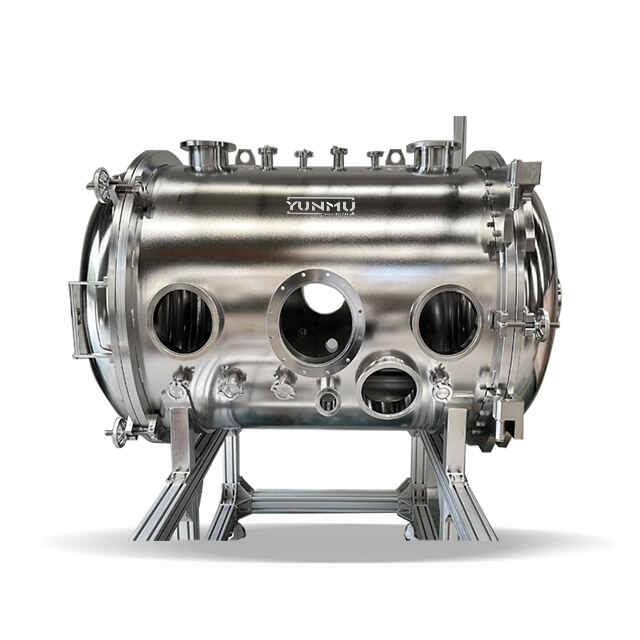
A vacuum chamber creates a controlled, low-pressure environment by evacuating air and other gases from an enclosed space. This controlled environment eliminates the atmospheric interference that would otherwise affect sensitive manufacturing processes. From semiconductor fabrication and aerospace component testing to optical coating and medical device assembly, the vacuum chamber serves as the foundation upon which precision is reliably achieved and consistently reproduced.
The Role of a Controlled Environment in Precision Manufacturing
Why Atmospheric Conditions Interfere with Precision Processes
Standard atmospheric conditions introduce a range of variables that are incompatible with high precision manufacturing. Oxygen causes oxidation on metal surfaces, altering their chemical composition and surface finish. Humidity introduces moisture that can affect adhesive bonding, thin-film deposition, and the dimensional stability of sensitive materials. Even nitrogen and inert gases present in ambient air can interfere with plasma-based or chemical vapor processes at the microscale.
A vacuum chamber removes these variables by reducing the internal pressure to levels far below atmospheric norm. Depending on the application, this can range from rough vacuum levels suitable for degassing to ultra-high vacuum environments used in electron beam processes. By eliminating or drastically reducing the presence of gas molecules, the vacuum chamber creates a neutral, repeatable baseline that precision manufacturing demands.
This level of environmental control is not merely a convenience — it is a technical requirement. Processes that depend on line-of-sight material deposition, for example, cannot function correctly if gas molecules scatter the deposited particles before they reach the substrate. The vacuum chamber solves this problem at the most fundamental level.
Repeatability and Process Consistency
One of the most critical requirements in precision manufacturing is repeatability. A process that produces excellent results once but cannot be reliably reproduced offers little industrial value. The vacuum chamber supports repeatability by providing a stable, controllable environment where the same conditions can be recreated with high fidelity across production runs.
Operators can define and monitor pressure levels, temperature gradients, and gas composition within the vacuum chamber with a high degree of accuracy. This means that a coating process validated at a specific vacuum level will behave identically whether it is run today or six months from now, provided the chamber parameters are maintained. This consistency is what allows manufacturers to meet tight specification windows and pass rigorous quality audits.
For industries operating under ISO, AS9100, or FDA quality frameworks, the ability to document and reproduce controlled process conditions is not optional. The vacuum chamber provides the physical infrastructure that makes this documentation meaningful and the process outcomes trustworthy.
Key Manufacturing Processes That Depend on a Vacuum Chamber
Thin-Film Deposition and Surface Coating
Thin-film deposition is one of the most widely used precision manufacturing processes, and it is entirely dependent on the vacuum chamber. Techniques such as physical vapor deposition, chemical vapor deposition, and sputtering all require a vacuum environment to function correctly. In these processes, source materials are vaporized or ionized and then directed toward a substrate where they condense to form extremely thin, uniform layers.
Without the vacuum chamber, gas molecules in the atmosphere would collide with the vaporized material, scattering it unpredictably and preventing the formation of a uniform film. The result would be inconsistent coating thickness, poor adhesion, and compromised optical or electrical properties. The vacuum chamber eliminates this interference, allowing the deposited material to travel in a controlled path and adhere to the substrate with the precision the application requires.
This process is critical in the production of semiconductors, solar cells, optical lenses, hard disk drives, and decorative or functional coatings on industrial components. In each case, the vacuum chamber is not a peripheral tool — it is the core process environment.
Degassing and Material Preparation
Before many precision components can be assembled or processed, the materials themselves must be degassed. Polymers, adhesives, potting compounds, and composite materials often contain trapped gases or volatile compounds that, if not removed, will outgas during operation and cause dimensional changes, delamination, or contamination of adjacent components.
A vacuum chamber is used to expose these materials to low pressure, which causes dissolved and trapped gases to migrate to the surface and be evacuated. This degassing step is particularly important in aerospace and defense manufacturing, where components may be exposed to extreme temperature differentials or vacuum conditions in service. A component that outgasses in orbit or at altitude can compromise an entire system.
The vacuum chamber used for degassing does not need to reach ultra-high vacuum levels, but it must be capable of maintaining stable low pressure for extended periods. The process is straightforward but requires a well-sealed, reliable chamber to be effective. Proper degassing upstream prevents costly failures downstream.
Electron Beam and Plasma-Based Processes
Electron beam welding, electron beam melting, and plasma etching are precision manufacturing processes that can only be performed inside a vacuum chamber. Electron beams are rapidly scattered and absorbed by gas molecules at atmospheric pressure, making it physically impossible to direct them with the precision required for welding or additive manufacturing without a vacuum environment.
Inside the vacuum chamber, electron beams can travel in a straight, focused path, delivering concentrated energy to a precise location on the workpiece. This allows for welds with extremely narrow heat-affected zones, minimal distortion, and exceptional joint strength — qualities that are essential in aerospace, medical implant, and nuclear component manufacturing.
Plasma etching, used extensively in semiconductor manufacturing, also relies on the vacuum chamber to control the plasma density, ion energy, and etch uniformity. The chamber geometry, pressure level, and gas flow rates all interact to define the etch profile. Without the vacuum chamber as the controlled reaction vessel, achieving the nanometer-scale feature sizes required in modern chip fabrication would be impossible.
Structural and Design Considerations for Precision Applications
Chamber Material and Sealing Integrity
The performance of a vacuum chamber in precision manufacturing is directly tied to its construction quality. Chambers used in high precision applications are typically fabricated from stainless steel, which offers excellent outgassing characteristics, corrosion resistance, and dimensional stability under repeated thermal cycling. The internal surface finish is also critical — rough surfaces have higher surface area and retain more adsorbed gases, which increases pump-down time and makes it harder to reach and maintain target vacuum levels.
Sealing integrity is equally important. Even a microscopic leak in a vacuum chamber will allow atmospheric gases to enter, raising the base pressure and introducing contaminants that can ruin sensitive processes. High precision chambers use metal gaskets, such as copper or aluminum, rather than elastomer O-rings for applications requiring ultra-high vacuum, because elastomers have higher permeation rates and outgassing levels.
Feedthroughs — the ports that allow electrical signals, motion, fluids, or optical access to pass through the chamber wall — must also be designed and installed with the same attention to sealing. A poorly designed feedthrough is one of the most common sources of vacuum leaks in precision manufacturing environments.
Pumping System Selection and Vacuum Level Matching
Not all precision manufacturing processes require the same vacuum level, and selecting the appropriate pumping system for the vacuum chamber is a critical engineering decision. Rough vacuum applications, such as degassing or vacuum forming, can be served by rotary vane or diaphragm pumps. Medium vacuum processes may require a combination of a backing pump and a roots blower. High and ultra-high vacuum applications demand turbomolecular pumps, ion pumps, or cryopumps, often used in combination.
The pumping system must be matched to the chamber volume, the process gas load, and the target base pressure. An undersized pumping system will struggle to reach the required vacuum level within an acceptable time frame, reducing throughput and increasing operating costs. An oversized system may be unnecessarily expensive and complex to maintain.
For precision manufacturing environments, the pumping system is also evaluated for its vibration characteristics. Mechanical pumps introduce vibration that can affect sensitive measurement or deposition processes. Vibration isolation mounts and remote pump placement are common engineering solutions used to protect the vacuum chamber environment from pump-induced disturbances.
Quality Assurance and Testing Applications
Leak Testing and Component Validation
Beyond its role as a process environment, the vacuum chamber is also a powerful quality assurance tool. Leak testing using a vacuum chamber is one of the most sensitive and reliable methods for detecting defects in sealed components, pressure vessels, and fluid systems. By placing a component inside the vacuum chamber and monitoring for pressure rise or using a helium mass spectrometer leak detector, manufacturers can identify leaks that would be undetectable by other means.
This application is particularly important in the production of medical devices, aerospace fluid systems, and electronic enclosures where leak integrity is a safety-critical requirement. The vacuum chamber provides a controlled test environment where the sensitivity of the leak detection method is not compromised by background noise or atmospheric interference.
Component validation testing in a vacuum chamber also extends to thermal cycling, outgassing characterization, and functional testing of components intended for use in space or high-altitude environments. The vacuum chamber simulates the operational environment, allowing engineers to identify failure modes before the component is deployed.
Dimensional Measurement in a Controlled Environment
For the most demanding dimensional metrology applications, measurements must be taken in an environment where thermal expansion, air turbulence, and humidity are controlled. Some precision coordinate measuring machines and interferometric measurement systems are housed within or adjacent to a vacuum chamber to eliminate the refractive index variations in air that can introduce measurement errors at the nanometer scale.
In semiconductor lithography, for example, the alignment and overlay measurement systems operate in environments where air pressure and composition are tightly controlled, effectively creating a partial vacuum chamber effect around the measurement optics. This level of environmental control is what enables the sub-nanometer overlay accuracy required in advanced node chip manufacturing.
The vacuum chamber, in this context, is not just a process tool but a measurement infrastructure component. Its contribution to precision manufacturing extends beyond the production step and into the verification and validation stages that determine whether a component meets specification.
FAQ
What vacuum level is typically required for precision thin-film deposition?
Most thin-film deposition processes require a base pressure in the high vacuum range, typically between 10^-5 and 10^-7 Torr, before process gases are introduced. The exact requirement depends on the deposition technique and the sensitivity of the material being deposited. Sputtering processes may operate at slightly higher pressures with a controlled argon atmosphere, while electron beam evaporation typically requires a cleaner, lower base pressure to prevent contamination of the deposited film.
How does a vacuum chamber prevent oxidation during precision welding?
By evacuating oxygen and other reactive gases from the vacuum chamber before and during the welding process, the chamber eliminates the primary cause of oxidation at elevated temperatures. Electron beam welding, performed inside a vacuum chamber, produces welds with no oxide inclusions, minimal heat-affected zones, and superior mechanical properties compared to welds made in atmospheric conditions. This is why vacuum chamber welding is the preferred method for titanium, refractory metals, and other oxidation-sensitive materials used in aerospace and medical applications.
Can a vacuum chamber be customized for specific manufacturing processes?
Yes, vacuum chambers are routinely engineered to match the specific requirements of a manufacturing process. Custom configurations include non-standard geometries to accommodate large or irregularly shaped workpieces, specialized feedthroughs for electrical, optical, or motion access, integrated heating or cooling systems, and custom port arrangements for process gas introduction and monitoring. Working with an experienced vacuum chamber supplier to define the chamber specification based on process requirements is standard practice in precision manufacturing environments.
How often should a vacuum chamber be inspected and maintained in a precision manufacturing setting?
Maintenance frequency depends on the process intensity and the vacuum level required. In high-throughput precision manufacturing environments, vacuum chambers are typically inspected at regular intervals defined by the number of process cycles or operating hours. Key maintenance activities include checking and replacing seals and gaskets, inspecting feedthroughs for signs of wear or leakage, cleaning internal surfaces to remove process deposits, and verifying the performance of the pumping system. A well-maintained vacuum chamber will consistently achieve its target base pressure and provide the stable environment that precision manufacturing processes depend on.
Table of Contents
- The Role of a Controlled Environment in Precision Manufacturing
- Key Manufacturing Processes That Depend on a Vacuum Chamber
- Structural and Design Considerations for Precision Applications
- Quality Assurance and Testing Applications
-
FAQ
- What vacuum level is typically required for precision thin-film deposition?
- How does a vacuum chamber prevent oxidation during precision welding?
- Can a vacuum chamber be customized for specific manufacturing processes?
- How often should a vacuum chamber be inspected and maintained in a precision manufacturing setting?