 EN
EN
In high-stakes industrial environments, off-the-shelf equipment rarely meets every operational demand. Custom vacuum systems have emerged as the preferred solution for industries where process precision, material sensitivity, and environmental control are non-negotiable. Whether in semiconductor fabrication, aerospace testing, pharmaceutical processing, or advanced materials research, custom vacuum systems offer a level of adaptability that standard products simply cannot match. Understanding why these tailored solutions are consistently chosen reveals the deeper logic behind modern industrial engineering decisions.
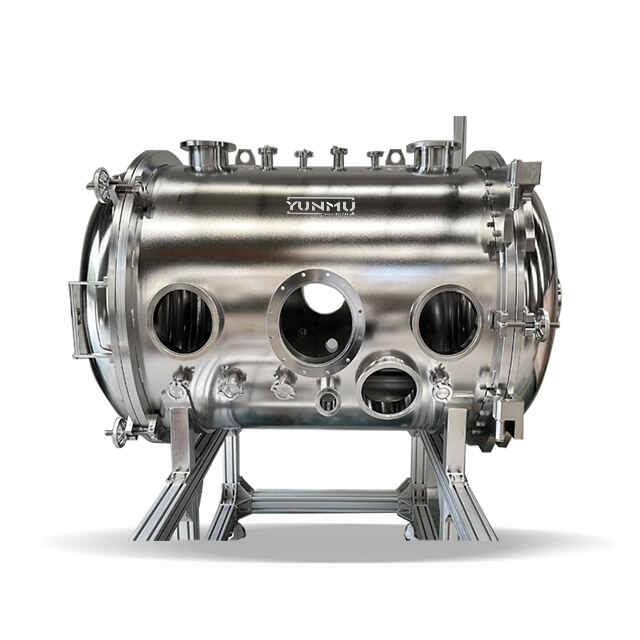
The preference for custom vacuum systems is not simply about preference — it is about necessity. Complex industries operate under conditions that demand precise pressure ranges, specific chamber geometries, compatible material construction, and process integration that standardized equipment cannot provide. Custom vacuum systems are engineered from the ground up to fit the exact operational parameters of a given application, making them a strategic investment rather than a procurement shortcut. This article explores the key reasons why custom vacuum systems consistently outperform generic alternatives in demanding industrial settings.
The Limitations of Standard Vacuum Equipment in Complex Applications
When Generic Solutions Fall Short
Standard vacuum equipment is designed around the broadest possible range of common use cases. While this approach works for routine laboratory or light industrial tasks, it creates significant gaps when applied to complex industrial processes. Custom vacuum systems address these gaps directly by allowing engineers to define the chamber size, pumping speed, ultimate pressure, sealing mechanisms, and material compatibility with full precision. In industries like electronics manufacturing or aerospace component testing, even minor deviations from required vacuum conditions can cause product defects, failed test results, or safety incidents.
Custom vacuum systems allow facilities to specify internal surface finishes, port configurations, heating or cooling integration, and automation interfaces. These specifications are simply not available in catalog products. When a process requires maintaining ultra-high vacuum alongside elevated internal temperatures, or when the chamber must resist specific chemical exposure, custom vacuum systems become the only viable path forward. Generic equipment forces operations to compromise on performance — a compromise complex industries cannot afford.
Industry-Specific Process Requirements
Each complex industry carries its own set of process requirements that define what a vacuum system must do. Semiconductor fabrication requires custom vacuum systems with contamination-free interiors, precisely controlled pressure gradients, and integration with gas delivery systems. Pharmaceutical lyophilization demands custom vacuum systems designed to meet cleanroom standards while handling moisture-laden environments. Research institutions rely on custom vacuum systems capable of achieving and maintaining pressures in the milliTorr or even microTorr range for extended periods. These requirements cannot be met by pulling an item from a standard product catalog.
Engineering Advantages That Drive Performance and Reliability
Precision Design Aligned with Process Parameters
One of the most compelling reasons custom vacuum systems are preferred is that they are engineered to match the process rather than the other way around. When engineers design custom vacuum systems for a specific application, they account for load size and geometry, target pressure levels, cycle time requirements, and integration with upstream and downstream equipment. This alignment eliminates performance bottlenecks that arise when a process must be adapted to fit the constraints of a standard system. Custom vacuum systems therefore contribute directly to higher throughput, tighter process control, and reduced cycle variability.
Reliability is another major engineering advantage. Custom vacuum systems built to exact specifications are less likely to experience component strain or system mismatch. When pumps, valves, gauges, and chamber materials are all selected and sized to work together precisely, the system experiences fewer failure points. In industries where downtime carries enormous financial consequences, the reliability of custom vacuum systems translates directly into business resilience. Predictive maintenance is also easier because the system behavior is known and well-documented from commissioning.
Material Selection and Structural Integrity
Custom vacuum systems give engineers the freedom to select materials that match the exact chemical, thermal, and mechanical demands of the process environment. Stainless steel grades, aluminum alloys, specialty coatings, and elastomer or metal seals can all be specified to resist the particular stresses the system will face. In contrast, standard vacuum equipment may use materials that are adequate for general use but unsuitable for aggressive chemical exposure, high-temperature cycling, or radiation environments. Custom vacuum systems therefore deliver structural integrity that supports long-term performance without accelerated degradation.
Strategic Value for Complex Industry Operations
Seamless Integration with Existing Infrastructure
Complex industries often operate within tightly engineered facility environments where space, utility connections, and safety protocols are strictly governed. Custom vacuum systems can be designed to fit existing footprint constraints, connect to in-place utility lines, and comply with facility-specific safety standards. This seamless integration capability is a decisive advantage. Standard vacuum equipment may require costly facility modifications or create workflow interference that undermines operational efficiency. Custom vacuum systems eliminate these friction points by being designed for the environment they will occupy.
custom vacuum systems also support process scalability. As production volumes grow or process requirements evolve, a custom-designed system can be built with expansion provisions, modular sections, or upgrade pathways already incorporated into the original design. This forward-looking engineering approach means that complex industrial operations can scale without replacing the entire vacuum infrastructure.
Long-Term Cost Efficiency and Total Value
While custom vacuum systems carry a higher upfront cost compared to standard alternatives, the total cost of ownership often favors customization significantly. Custom vacuum systems reduce energy waste by matching pump capacity to actual process needs rather than over-engineering with excess capacity. They reduce consumable costs by using sealing and filtration components sized for actual service conditions. They reduce unplanned downtime by eliminating system mismatches that cause premature failures. Over a typical operational lifespan of ten to twenty years, custom vacuum systems routinely deliver lower total ownership costs than a series of standard systems retrofitted and replaced to meet evolving needs.
Complex industries also benefit from the technical partnership that comes with procuring custom vacuum systems. The engineering dialogue required to specify, design, and commission custom vacuum systems builds institutional knowledge about the process and its requirements. This knowledge supports better troubleshooting, faster process optimization, and more informed future investment decisions. The value of custom vacuum systems therefore extends beyond the hardware itself into the operational and strategic capabilities they enable.
FAQ
What makes custom vacuum systems better suited for complex industries than standard systems?
Custom vacuum systems are engineered to meet the exact pressure, material, geometry, and integration requirements of a specific industrial process. Standard systems are designed for general use and often cannot meet the precise performance demands of complex industries, forcing process compromises that affect quality and efficiency. Custom vacuum systems eliminate those compromises entirely.
Are custom vacuum systems significantly more expensive than off-the-shelf options?
Custom vacuum systems typically involve a higher initial investment, but the total cost of ownership is often lower over time. Because custom vacuum systems are sized and configured precisely for the application, they waste less energy, require fewer unplanned repairs, and have longer service lives than standard systems that have been adapted to fit demanding roles they were not designed for.
How long does it take to design and deliver custom vacuum systems?
Lead times for custom vacuum systems vary depending on complexity, materials, and integration requirements, but typical projects range from several weeks to a few months. The design and engineering phase is critical and requires close collaboration between the client team and the vacuum system engineers to ensure the final custom vacuum systems meet all specified operational and safety requirements before fabrication begins.