 EN
EN

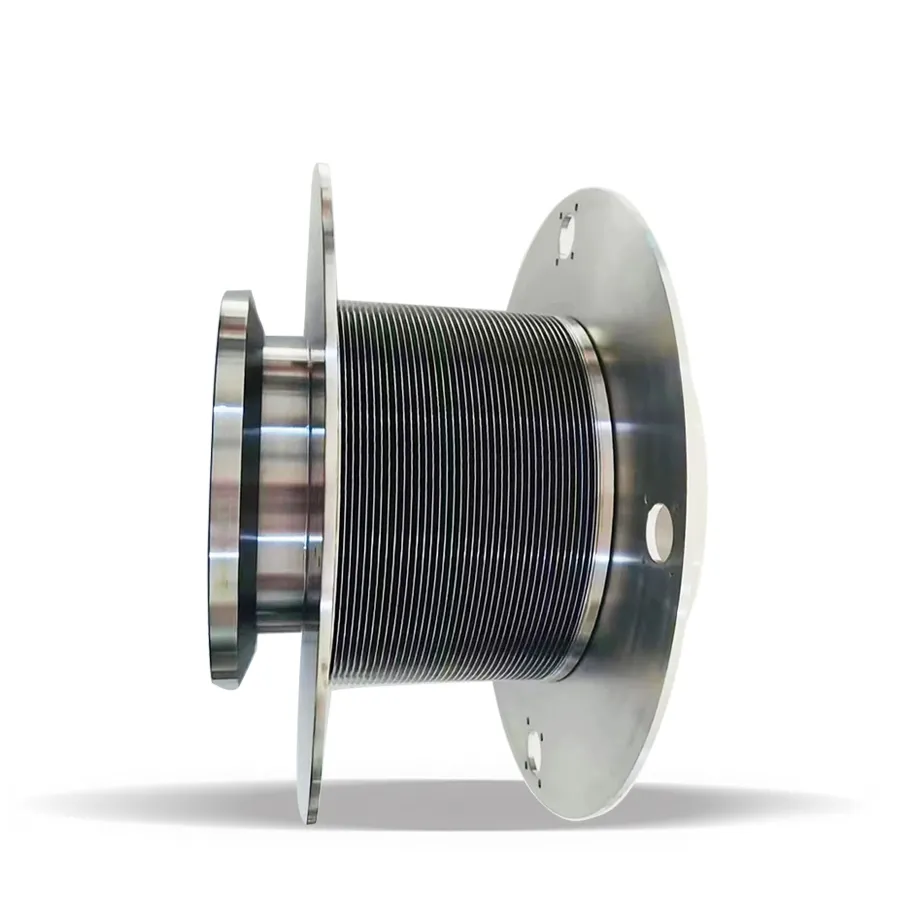
In industrial environments where precision and reliability are non-negotiable, the integrity of every component in a vacuum system determines whether operations succeed or fail. Among all the components that make up a vacuum assembly, vacuum fittings occupy a uniquely critical role. These connectors, adapters, and reducers are the structural and functional bridges between chambers, pumps, gauges, and process lines. When they perform well, the entire system operates at its intended vacuum level. When they fail, the consequences ripple across the entire process.
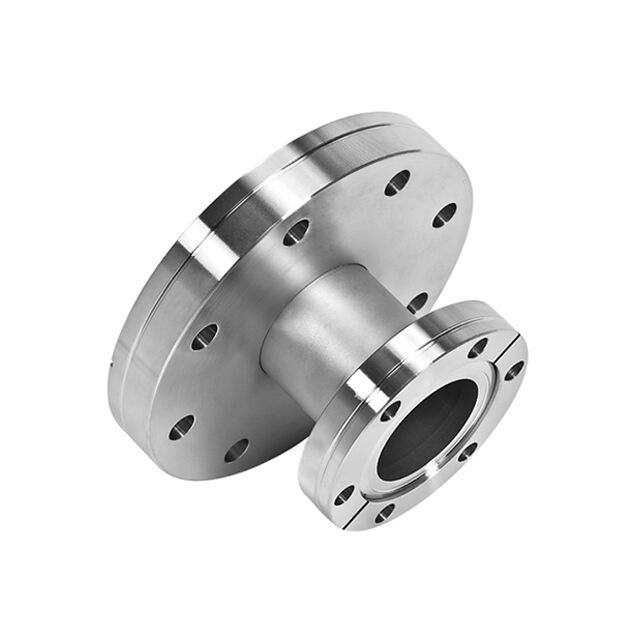
The question of why high quality vacuum fittings are critical is not merely academic. It is a practical concern for engineers, procurement managers, and facility operators who depend on stable vacuum conditions for semiconductor fabrication, pharmaceutical processing, scientific research, and a wide range of other demanding industrial applications. Understanding the reasons behind this criticality helps organizations make better sourcing decisions, reduce downtime, and protect the long-term performance of their vacuum infrastructure.
The Functional Role of Vacuum Fittings in Industrial Systems
Connecting and Sealing the Vacuum Pathway
Vacuum fittings serve as the physical connection points between different sections of a vacuum system. Every joint, transition, and interface in the system passes through a fitting of some kind. Whether the application involves a simple roughing pump setup or a complex ultra-high vacuum research chamber, vacuum fittings define where one component ends and another begins. Their primary function is to create a leak-tight seal that maintains the desired pressure differential between the inside of the system and the surrounding atmosphere.
A fitting that fails to seal properly introduces atmospheric gas into the system, raising the base pressure and compromising process conditions. In applications such as thin-film deposition or electron beam processing, even a minor leak can render an entire production batch unusable. This is why the sealing performance of vacuum fittings is treated as a fundamental engineering requirement rather than a secondary consideration.
High quality vacuum fittings are manufactured to tight dimensional tolerances that ensure consistent mating surfaces. The geometry of flanges, the smoothness of sealing faces, and the precision of thread profiles all contribute to the reliability of the seal. Inferior fittings with loose tolerances or rough surface finishes create gaps that allow virtual leaks or real leaks to develop over time, degrading system performance in ways that are often difficult to diagnose.
Enabling System Flexibility and Scalability
Industrial vacuum systems are rarely static. They evolve as processes change, as equipment is upgraded, and as production requirements shift. Vacuum fittings play a central role in enabling this flexibility. Reducing adapters, conical adapters, and cross-standard transition fittings allow engineers to connect components with different flange sizes or standards without redesigning the entire system. This adaptability is essential in facilities that operate equipment from multiple generations or multiple manufacturers.
High quality vacuum fittings are designed with interoperability in mind. They conform to recognized standards such as CF, ISO, KF, and others, ensuring that components from different sources can be reliably integrated. When vacuum fittings meet these standards precisely, system designers can plan expansions and modifications with confidence, knowing that new components will mate correctly with existing infrastructure.
The ability to reconfigure a vacuum system quickly and reliably also reduces maintenance downtime. When a fitting needs to be replaced or a new branch added to the system, high quality vacuum fittings allow technicians to complete the work efficiently without improvising solutions or accepting compromised sealing performance.
Why Quality Directly Affects Vacuum System Performance
Material Integrity and Outgassing Behavior
The materials used in vacuum fittings have a direct impact on the achievable vacuum level and the cleanliness of the process environment. In high and ultra-high vacuum applications, outgassing from internal surfaces is one of the primary factors limiting base pressure. Materials that contain trapped gases, moisture, or volatile compounds release these substances slowly under vacuum conditions, continuously loading the pumping system and preventing the system from reaching its target pressure.
High quality vacuum fittings are typically manufactured from materials such as 304 or 316 stainless steel, which offer low outgassing rates, excellent corrosion resistance, and compatibility with a wide range of process gases and cleaning procedures. The surface finish of these fittings is carefully controlled, with electropolished or mechanically polished interiors that minimize the surface area available for gas adsorption. This attention to material quality and surface treatment is what separates purpose-built vacuum fittings from general-purpose plumbing components.
When lower quality vacuum fittings made from unsuitable alloys or with poor surface finishes are used, the outgassing burden on the pumping system increases significantly. This translates into longer pump-down times, higher base pressures, and in sensitive applications, contamination of the process environment. The cost of using substandard vacuum fittings is therefore not just the price of the fitting itself but the cumulative cost of degraded system performance over time.
Mechanical Durability Under Thermal and Pressure Cycling
Industrial vacuum systems are frequently subjected to thermal cycling as they are brought up to process temperatures and then cooled down for maintenance or reconfiguration. They also experience repeated pressure cycling as they are vented to atmosphere and then pumped back down. These cycles impose mechanical stress on every component in the system, including vacuum fittings. Over time, fittings that lack sufficient mechanical integrity develop micro-cracks, deformation at sealing surfaces, or loosening of threaded connections.
High quality vacuum fittings are engineered to withstand these cyclic stresses without degradation. The wall thickness, flange geometry, and material selection are all optimized to maintain dimensional stability across a wide range of operating conditions. This durability is particularly important in applications such as heat treatment furnaces, vacuum brazing systems, and semiconductor process chambers, where thermal excursions are frequent and the consequences of fitting failure are severe.
The mechanical robustness of vacuum fittings also affects the ease and safety of maintenance operations. Fittings that maintain their geometry through repeated assembly and disassembly cycles allow technicians to work efficiently and confidently. Fittings that deform or gall during assembly create maintenance challenges that increase labor costs and introduce the risk of contamination or improper sealing.
The Business and Operational Case for Investing in Quality
Reducing Unplanned Downtime and Maintenance Costs
From a business perspective, the argument for high quality vacuum fittings is fundamentally about total cost of ownership rather than unit price. A fitting that costs more upfront but lasts for years without failure delivers far better value than a cheaper alternative that requires frequent replacement or causes system downtime. In industrial settings where vacuum systems support continuous production processes, unplanned downtime carries a cost that can dwarf the price difference between quality and economy components.
Leak detection and repair is one of the most time-consuming and disruptive maintenance activities in vacuum system operation. When vacuum fittings are the source of leaks, identifying the specific fitting responsible often requires systematic testing of every connection in the system. This process takes skilled technicians away from other tasks and may require the system to be taken offline for extended periods. High quality vacuum fittings, by maintaining their sealing integrity over time, dramatically reduce the frequency of these events.
Procurement teams that evaluate vacuum fittings purely on initial cost often underestimate the downstream costs associated with premature failure. A comprehensive cost analysis that includes labor for leak detection, lost production time, and the cost of scrapped product batches consistently favors investment in high quality vacuum fittings. This is a well-established principle in industrial maintenance management, and it applies with particular force to vacuum system components where failure modes are often subtle and their consequences disproportionately large.
Supporting Process Consistency and Product Quality
In process industries, the consistency of vacuum conditions directly affects the quality and repeatability of the end product. Semiconductor devices, optical coatings, pharmaceutical freeze-dried products, and scientific instruments all depend on stable, well-controlled vacuum environments during their manufacture or testing. Any variation in vacuum level caused by leaking or outgassing vacuum fittings introduces variability into the process that can manifest as yield loss, specification failures, or batch-to-batch inconsistency.
High quality vacuum fittings contribute to process consistency by providing stable, predictable performance over extended operating periods. When every fitting in the system maintains its specified leak rate and outgassing behavior, process engineers can trust that variations in product quality are attributable to process parameters rather than infrastructure failures. This traceability is essential in regulated industries where process validation and documentation requirements demand a high degree of system stability.
The relationship between vacuum fittings quality and product quality is therefore not indirect or theoretical. It is a direct causal link that experienced process engineers recognize and account for in their system design and component selection decisions. Specifying high quality vacuum fittings is one of the most straightforward ways to protect process integrity and reduce the risk of quality-related losses.
Selection Criteria That Define High Quality Vacuum Fittings
Dimensional Precision and Standards Compliance
The quality of vacuum fittings is most reliably assessed through their conformance to dimensional standards and the precision of their manufactured geometry. Flanges that meet CF, ISO-K, or KF standards within tight tolerances ensure that mating surfaces align correctly and that gaskets or O-rings are compressed uniformly. Uniform compression is essential for achieving a leak-tight seal, and it can only be guaranteed when both mating components are manufactured to the same precise standard.
High quality vacuum fittings are produced using precision machining processes that hold critical dimensions to tolerances measured in hundredths of a millimeter. The knife-edge geometry on CF flanges, for example, must be sharp and consistent around the entire circumference of the flange to achieve the metal-to-metal seal that makes CF connections suitable for ultra-high vacuum applications. Any deviation from the specified geometry compromises the seal and limits the achievable vacuum level.
When evaluating vacuum fittings for procurement, dimensional inspection reports and material certifications provide objective evidence of quality. Suppliers who can provide these documents demonstrate a commitment to quality assurance that goes beyond visual inspection. This documentation is also valuable for maintaining records in regulated industries where component traceability is a compliance requirement.
Surface Finish and Cleanliness Standards
The internal surface finish of vacuum fittings affects both outgassing performance and the ease of cleaning. Rough surfaces have a larger effective area for gas adsorption and are more difficult to clean thoroughly, both of which increase the outgassing burden on the system. High quality vacuum fittings intended for high or ultra-high vacuum service are typically electropolished to achieve a smooth, low-area surface that minimizes these effects.
Cleanliness at the point of manufacture and packaging is equally important. Vacuum fittings that are contaminated with machining oils, particulates, or moisture during manufacturing or storage introduce these contaminants into the vacuum system when installed. High quality vacuum fittings are cleaned to vacuum-compatible standards before packaging and are sealed in protective packaging that prevents recontamination during storage and shipping.
The combination of appropriate surface finish and proper cleanliness control is what makes high quality vacuum fittings suitable for demanding applications. These characteristics cannot be easily added after the fact, which is why they must be specified and verified at the procurement stage rather than assumed based on appearance alone.
FAQ
What makes vacuum fittings different from standard pipe fittings?
Vacuum fittings are specifically engineered to maintain leak-tight seals under sub-atmospheric pressure conditions, using precision-machined mating surfaces, low-outgassing materials, and standardized flange geometries. Standard pipe fittings are designed for positive pressure service and do not meet the dimensional, material, or surface finish requirements needed for reliable vacuum system performance.
How do I know if my vacuum fittings are causing system performance problems?
Common indicators include longer-than-expected pump-down times, inability to reach the target base pressure, and pressure rise rates that exceed the system specification. Helium leak detection is the most reliable method for identifying specific vacuum fittings that are leaking. Outgassing issues from poor-quality fittings are harder to diagnose but can be identified through systematic bake-out testing and residual gas analysis.
Can vacuum fittings be reused after disassembly?
High quality vacuum fittings made from stainless steel can typically be reused many times, provided that sealing surfaces are inspected for damage before reassembly. CF knife-edge flanges require new copper gaskets with each assembly cycle, while elastomer-sealed fittings such as KF and ISO-K types may allow gasket reuse if the elastomer is undamaged. The reusability of vacuum fittings is one of the practical advantages of investing in quality components.
What flange standards are most commonly used for industrial vacuum fittings?
The most widely used standards for vacuum fittings in industrial applications are CF (ConFlat), KF (Klein Flange or QF), and ISO-K. CF flanges are preferred for high and ultra-high vacuum applications due to their metal gasket sealing capability. KF and ISO-K flanges use elastomer O-rings and are suitable for rough and medium vacuum service. Selecting the appropriate standard for the application pressure range is an important step in ensuring that vacuum fittings deliver the required performance.