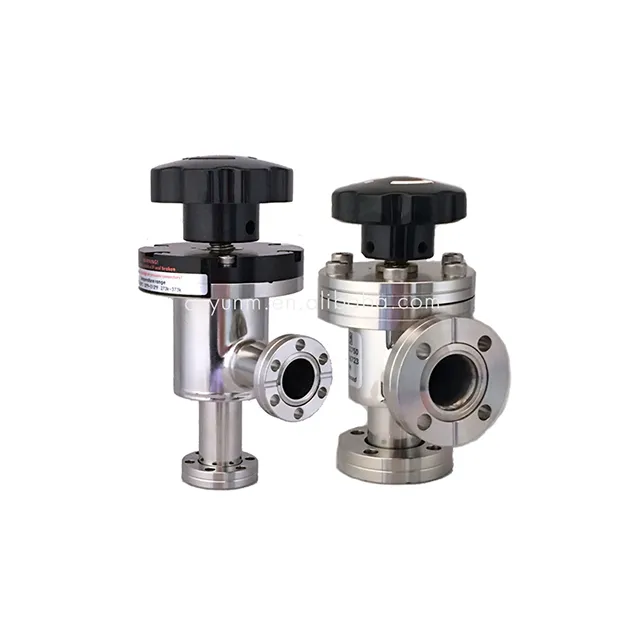
ultra high vacuum valve
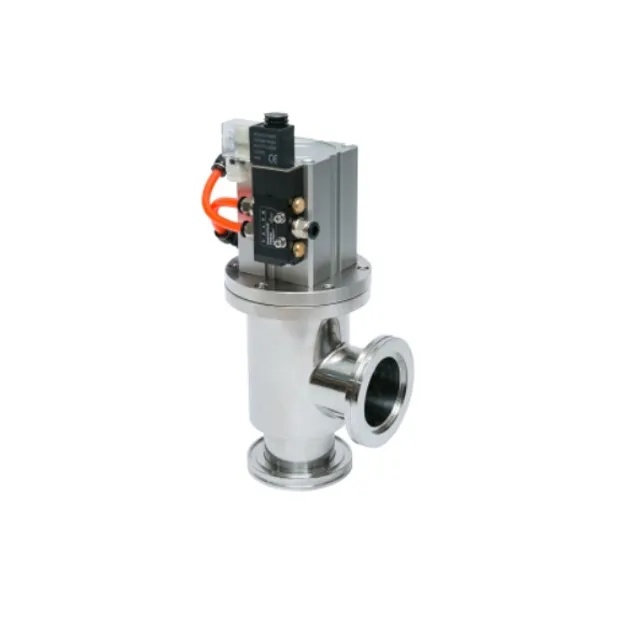
An ultra high vacuum valve is a precision-engineered component designed to control and isolate gas flow in systems operating at extremely low pressure levels, typically below 10^-7 torr. These specialized valves play a critical role in maintaining the integrity of vacuum environments where even minimal contamination or pressure fluctuation can compromise sensitive processes. The ultra high vacuum valve features advanced sealing mechanisms, often utilizing metal seals or specially treated elastomers, to achieve leak rates as low as 10^-10 mbar-liters per second. Constructed from high-grade stainless steel or aluminum alloys, these valves undergo rigorous surface treatments including electropolishing and vacuum baking to minimize outgassing and particle generation. The technological features include bakeable designs capable of withstanding temperatures up to 450 degrees Celsius, manual or pneumatic actuation systems, and all-metal construction that eliminates virtual leaks. Applications span across semiconductor manufacturing, particle accelerators, mass spectrometry systems, surface analysis equipment, thin-film deposition chambers, and research laboratories conducting material science studies. The ultra high vacuum valve ensures reliable operation in demanding environments where conventional vacuum components would fail, providing consistent performance in applications requiring exceptional cleanliness and minimal contamination. These valves are essential for processes such as molecular beam epitaxy, electron microscopy, fusion research, and space simulation testing, where maintaining ultra-clean vacuum conditions directly impacts experimental accuracy and product quality.
 EN
EN