 EN
EN

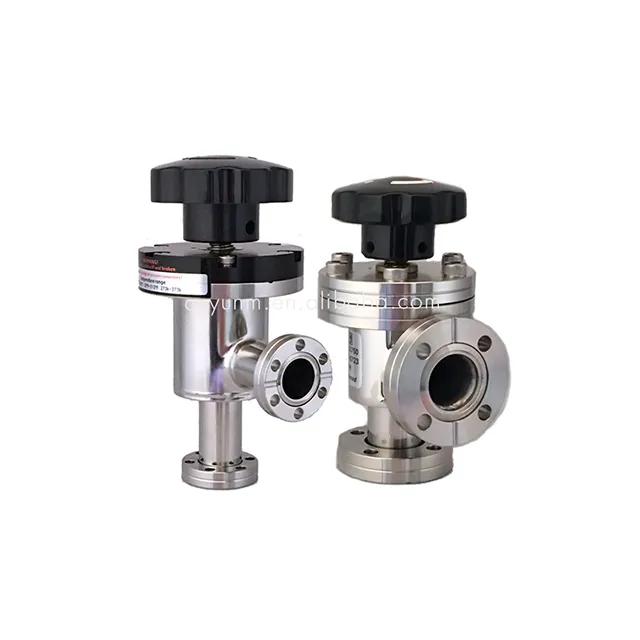
When engineers and procurement specialists evaluate vacuum system components for demanding thermal environments, the cf flange consistently emerges as the connection standard of choice. Its design is not accidental — every dimensional and material decision made in the cf flange specification directly addresses the challenges that high temperature operation introduces. From semiconductor fabrication chambers to particle accelerator beam lines, the ability to maintain a leak-tight seal under sustained thermal stress separates reliable systems from costly failures.
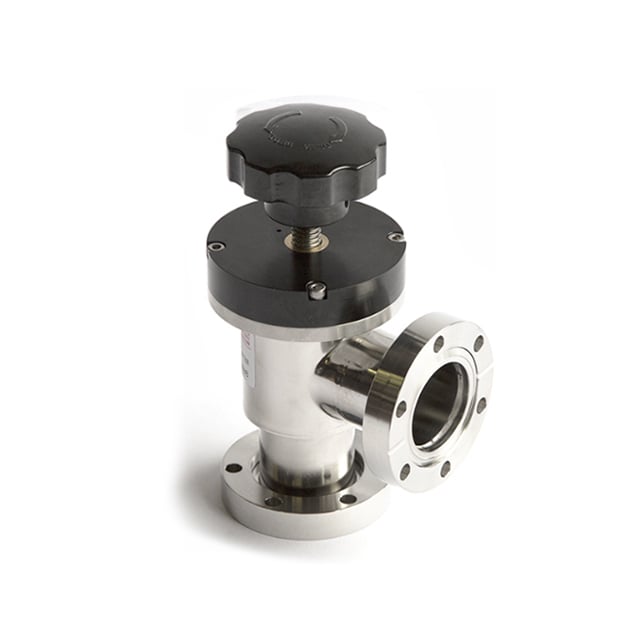
Understanding how the cf flange achieves this performance requires a close look at its core design principles. The geometry of the knife-edge sealing surface, the choice of gasket material, the bolt-circle configuration, and the overall flange body construction all work together to create a connection that remains stable even as temperatures climb well above what elastomer-sealed alternatives can tolerate. This article examines each of those design elements in detail, explaining why the cf flange is engineered the way it is and how those engineering choices translate into real-world high temperature reliability.
The Knife-Edge Sealing Mechanism and Thermal Stability
How the Knife-Edge Geometry Creates a Metal-to-Metal Seal
The defining feature of the cf flange is its precision-machined knife-edge sealing surface. Unlike flat-face flanges that rely on compressible gaskets to fill surface irregularities, the cf flange uses a sharp, raised edge that bites directly into a soft metal gasket — typically oxygen-free high-conductivity copper or aluminum. This cold-welding action creates a metal-to-metal seal that is fundamentally different in character from elastomer-based connections.
At elevated temperatures, elastomers outgas, soften, and eventually lose their elastic recovery. A metal gasket compressed by a cf flange knife-edge does not suffer from these failure modes. The deformed metal fills microscopic surface variations and maintains intimate contact even as the surrounding structure expands and contracts through thermal cycles. This is why the cf flange is rated for bakeout temperatures that would destroy conventional O-ring sealed connections.
The knife-edge geometry also concentrates sealing force into a very narrow contact band. This concentration means that relatively modest bolt torque produces extremely high contact pressure at the seal interface, ensuring that the gasket deforms sufficiently to create a hermetic barrier. In high temperature applications where bolt preload can relax due to thermal expansion differences between materials, this concentrated contact geometry provides a meaningful safety margin.
Thermal Expansion Compatibility in the Sealing Zone
A critical but often overlooked aspect of cf flange design is how the system manages differential thermal expansion between the flange body and the gasket. Stainless steel, which is the standard body material for a cf flange, has a coefficient of thermal expansion that is reasonably well matched to copper and aluminum gasket materials across the temperature ranges typical of vacuum bakeout procedures.
When a cf flange assembly is heated, both the flange body and the gasket expand. Because the knife-edge has already plastically deformed the gasket during initial assembly, the gasket material accommodates further dimensional changes without losing contact with the sealing surface. This plastic deformation reservoir is one reason why cf flange connections are specified for systems that undergo repeated thermal cycling — the seal does not depend on elastic recovery that could be exhausted over time.
Engineers designing systems that will experience wide temperature swings must also consider the bolt circle. The cf flange bolt pattern distributes clamping force evenly around the circumference, preventing the localized stress concentrations that could cause a knife-edge to lift away from the gasket on one side during uneven heating. This uniform load distribution is essential for maintaining seal integrity in real-world thermal environments where temperature gradients across a flange face are common.
Material Selection and Its Role in High Temperature Performance
Stainless Steel Body Construction
The cf flange body is manufactured from austenitic stainless steel, most commonly 304L or 316L grades. These alloys were selected not only for their corrosion resistance but for their mechanical stability at elevated temperatures. Austenitic stainless steel retains meaningful yield strength at temperatures well above 300 degrees Celsius, which means the flange body itself does not deform plastically under the combination of bolt preload and thermal stress that bakeout conditions impose.
Low-carbon grades such as 304L are preferred in many cf flange applications because they resist sensitization — a grain boundary chromium depletion phenomenon that can occur in standard 304 stainless when held at temperatures between approximately 425 and 870 degrees Celsius. Sensitization weakens corrosion resistance and can compromise the structural integrity of the flange over time. By specifying low-carbon variants, cf flange manufacturers ensure that repeated high temperature exposure does not degrade the material properties that the design depends on.
Surface finish on the knife-edge and flange face is held to tight tolerances during manufacturing. This precision is not merely cosmetic — surface roughness directly affects how completely the metal gasket conforms to the sealing surface. In high temperature applications where the gasket may be softer due to annealing effects, a well-finished cf flange knife-edge ensures that the seal remains effective even if gasket material properties shift slightly during service.
Gasket Material Choices for Elevated Temperature Service
The gasket used with a cf flange is as important as the flange body itself when high temperature performance is the requirement. Copper gaskets are the most widely used option and are suitable for bakeout temperatures up to approximately 450 degrees Celsius in standard vacuum applications. Copper's relatively low hardness compared to stainless steel ensures that the knife-edge can achieve full plastic deformation of the gasket without requiring excessive bolt torque.
For applications requiring even higher temperature capability or where copper contamination is a concern — such as certain semiconductor processes — aluminum gaskets are available for the cf flange. Aluminum has a lower melting point than copper but is entirely adequate for typical bakeout temperatures and offers the advantage of being compatible with processes sensitive to copper ion contamination. The choice between gasket materials is therefore driven by both thermal requirements and process chemistry considerations.
Indium gaskets represent a specialized option for cf flange assemblies in cryogenic-to-high-temperature cycling applications. Indium's exceptional ductility allows it to accommodate large dimensional changes without cracking, making it valuable in systems that must seal reliably across an unusually wide temperature range. Understanding which gasket material best matches the specific thermal profile of an application is a key part of correctly specifying a cf flange assembly.
Bolt Circle Design and Clamping Force Distribution
The Relationship Between Bolt Count and Sealing Reliability
The cf flange standard specifies a fixed bolt circle diameter and bolt count for each nominal flange size. This standardization is not arbitrary — it reflects careful engineering of the relationship between available clamping force, knife-edge contact pressure, and the structural stiffness of the flange body. For high temperature applications, the bolt circle design has particular significance because thermal expansion can alter bolt preload in ways that affect seal integrity.
When a cf flange assembly is heated, the bolts and the flange body expand at rates determined by their respective materials. If bolts are made from a material with a higher coefficient of thermal expansion than the flange body, they will elongate more than the flange gap widens, potentially increasing clamping force. Conversely, if the flange body expands more than the bolts, preload can decrease. Standard cf flange practice uses stainless steel bolts with the stainless steel flange body, keeping expansion rates closely matched and minimizing preload variation during thermal cycling.
The number of bolts in a cf flange also determines how evenly the knife-edge load is distributed around the circumference. More bolts mean smaller angular spacing between load points, which reduces the bending moment that the flange body must resist between bolt positions. For large-diameter cf flange connections in high temperature service, this even distribution is critical — a flange that deflects between bolt positions can allow the knife-edge to lift away from the gasket, creating a leak path that only appears at temperature.
Torque Specifications and High Temperature Assembly Practice
Correct bolt torque is essential for achieving a reliable cf flange seal, and this requirement becomes even more important in high temperature applications. Under-torquing leaves the knife-edge insufficiently embedded in the gasket, creating a seal that may hold at room temperature but leak when thermal expansion alters the contact geometry. Over-torquing can damage the knife-edge or cause the gasket to extrude beyond the sealing zone, also compromising the seal.
For systems that will be baked out, it is good practice to re-torque cf flange bolts after the first thermal cycle. The initial bakeout anneals the gasket material slightly and allows the knife-edge to achieve its final seated position. Re-torquing after cooling ensures that any preload relaxation that occurred during heating is corrected before the system is put into service. This two-stage torquing approach is a recognized best practice in high-performance vacuum system assembly.
Anti-seize compounds are sometimes used on cf flange bolts to prevent galling during assembly and disassembly, particularly in systems that undergo frequent thermal cycling. However, the use of anti-seize changes the relationship between applied torque and actual bolt tension, so torque values must be adjusted accordingly. Consulting the flange manufacturer's guidance on anti-seize correction factors is important for maintaining the correct clamping force in high temperature cf flange applications.
Bakeout Capability and Outgassing Performance
Why Bakeout Compatibility Defines High Temperature Suitability
In ultra-high vacuum technology, bakeout is the process of heating the entire vacuum system to drive adsorbed water vapor and other contaminants off internal surfaces, allowing the system to reach base pressures that would otherwise be unattainable. The cf flange is the standard connection for ultra-high vacuum systems precisely because it can withstand the bakeout temperatures — typically 150 to 450 degrees Celsius — that this process requires.
During bakeout, every component in the vacuum system must maintain its integrity and contribute minimally to the gas load inside the chamber. The all-metal construction of the cf flange means that it does not release significant quantities of gas during heating. Elastomer O-rings, by contrast, outgas substantially at elevated temperatures, releasing water vapor, hydrocarbons, and other species that contaminate the vacuum environment and extend pump-down times dramatically.
The cf flange therefore serves a dual function in high temperature applications: it provides a mechanically reliable seal that does not leak under thermal stress, and it contributes negligibly to the internal gas load that the vacuum pumping system must handle. Both functions are essential for achieving and maintaining the ultra-high vacuum conditions required in advanced research and industrial processes.
Surface Treatment and Cleanliness Standards
High temperature vacuum applications impose strict cleanliness requirements on all system components, and the cf flange is no exception. Machining oils, fingerprints, and particulate contamination on flange surfaces can outgas during bakeout, introducing contaminants into the vacuum environment at exactly the moment when the system is trying to achieve its lowest possible pressure. For this reason, cf flange components are typically supplied with electropolished or chemically passivated surfaces.
Electropolishing removes the outermost layer of metal from the cf flange surface, eliminating embedded contaminants and creating a smooth, chromium-rich passive layer that resists corrosion and minimizes outgassing. This surface treatment is particularly valuable for flanges that will be exposed to reactive process gases at elevated temperatures, where a compromised surface could become a source of contamination or a site for accelerated corrosion.
Proper handling and storage of cf flange components before installation is equally important. Even a well-manufactured and properly treated cf flange can be compromised by careless handling that introduces contamination onto the knife-edge or gasket seating surfaces. Vacuum system builders working with high temperature applications typically handle cf flange components with clean gloves and store them in sealed packaging until the moment of installation.
Application Scenarios Where CF Flange Design Delivers Critical Value
Semiconductor and Thin Film Processing Equipment
Semiconductor fabrication equipment operates under some of the most demanding combinations of high temperature, high vacuum, and process gas exposure found in any industrial setting. Deposition chambers, etch reactors, and ion implantation systems all rely on the cf flange to maintain hermetic connections between components that must be baked out regularly and exposed to reactive chemistries at elevated temperatures. The all-metal seal of the cf flange ensures that process gas purity is not compromised by outgassing from connection points.
In these environments, the cf flange also provides the dimensional stability needed for precise alignment of optical, mechanical, and electrical feedthroughs. When a connection shifts dimensionally due to thermal cycling, it can misalign sensitive components and affect process results. The rigid, metal-to-metal nature of the cf flange connection minimizes such shifts, contributing to process repeatability across thousands of thermal cycles over the equipment's service life.
Research Accelerators and Scientific Instruments
Particle accelerators, synchrotron light sources, and surface science instruments represent another major application domain for the cf flange in high temperature service. Beam line components must be baked out to extreme vacuum levels, and the connections between those components must maintain their integrity through years of repeated thermal cycling. The cf flange has been the standard connection for these applications for decades, and its track record in this demanding environment is extensive.
Scientific instruments that operate at cryogenic temperatures but must be baked out before cooling also depend on the cf flange. The ability of the cf flange to seal reliably across the full temperature range from bakeout temperatures down to liquid helium temperatures — a span of several hundred degrees — is a unique capability that no elastomer-sealed alternative can match. This wide operating range makes the cf flange indispensable in research environments where experimental flexibility is valued.
The standardization of the cf flange across the global vacuum industry also benefits research institutions, which frequently assemble systems from components sourced from multiple suppliers. Because cf flange dimensions are standardized, components from different manufacturers mate reliably, simplifying system design and reducing the risk of compatibility problems that could compromise high temperature performance.
FAQ
What is the maximum temperature a cf flange can withstand during bakeout?
A standard cf flange with a copper gasket is rated for bakeout temperatures up to approximately 450 degrees Celsius. The actual limit depends on the specific gasket material used and the duration of exposure. Aluminum gaskets are suitable for similar temperature ranges, while specialized gasket materials can extend performance in specific applications. Always consult the manufacturer's specifications for the exact thermal limits of a given cf flange assembly.
Can a cf flange be reused after high temperature bakeout?
The cf flange body itself is reusable, but the gasket should be replaced each time the connection is broken and reassembled. Once a metal gasket has been plastically deformed by the knife-edge, it cannot provide a reliable seal a second time. The knife-edge on the cf flange body can typically withstand many assembly cycles before showing wear, provided that assembly is performed correctly and the knife-edge is protected from mechanical damage during handling.
How does the cf flange compare to other vacuum flange types in high temperature service?
The cf flange is specifically designed for ultra-high vacuum and high temperature applications, which distinguishes it from KF and ISO flanges that rely on elastomer O-rings. Elastomer-sealed flanges are limited to temperatures below approximately 150 degrees Celsius and cannot achieve the ultra-high vacuum levels that the cf flange supports. For applications requiring bakeout capability and ultra-high vacuum performance, the cf flange is the appropriate choice, while elastomer-sealed flanges remain suitable for rougher vacuum levels and ambient temperature service.
What causes a cf flange to leak after thermal cycling?
Leaks in a cf flange after thermal cycling are most commonly caused by insufficient initial bolt torque, gasket reuse, knife-edge damage, or contamination on the sealing surfaces. Differential thermal expansion that was not accounted for in the bolt material selection can also cause preload relaxation sufficient to open a leak path. Inspecting the knife-edge for nicks or deformation, using a fresh gasket, and following the manufacturer's torque specifications — including re-torquing after the first thermal cycle — resolves the majority of cf flange leak issues in high temperature service.