High Vacuum Bellows - Flexible Vacuum Components

All Categories

high vacuum bellows

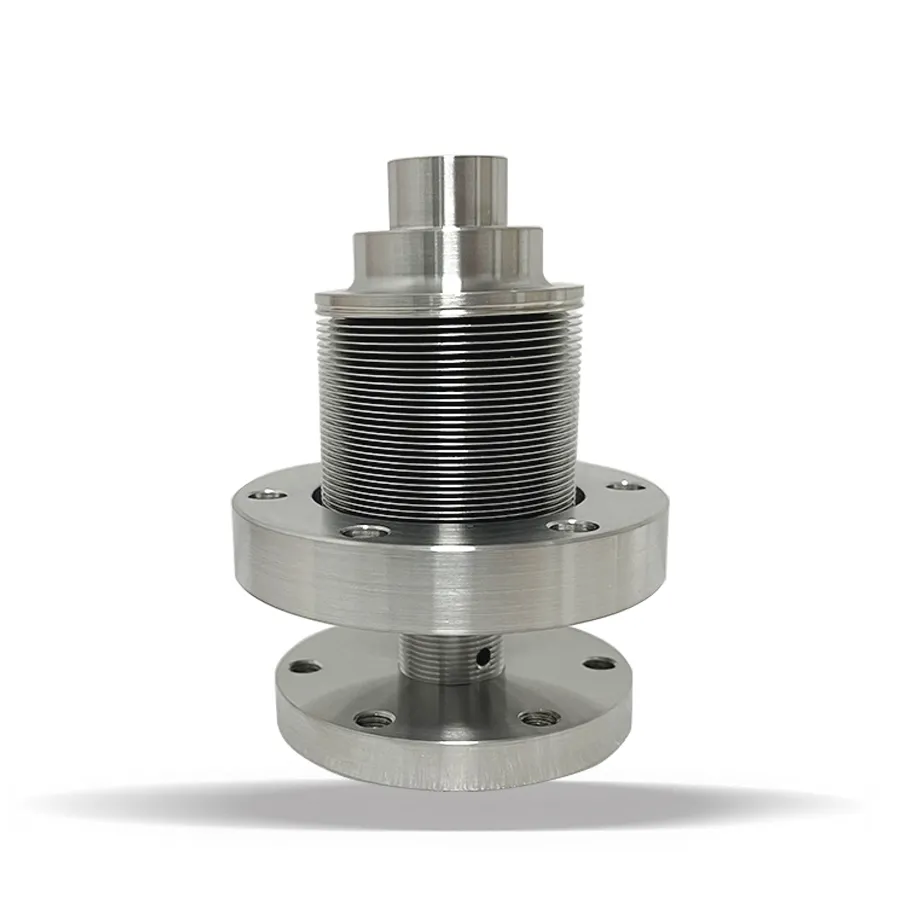
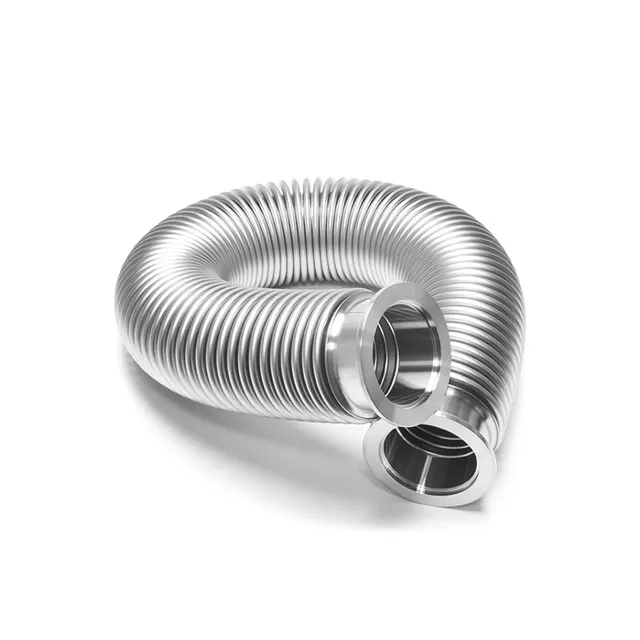
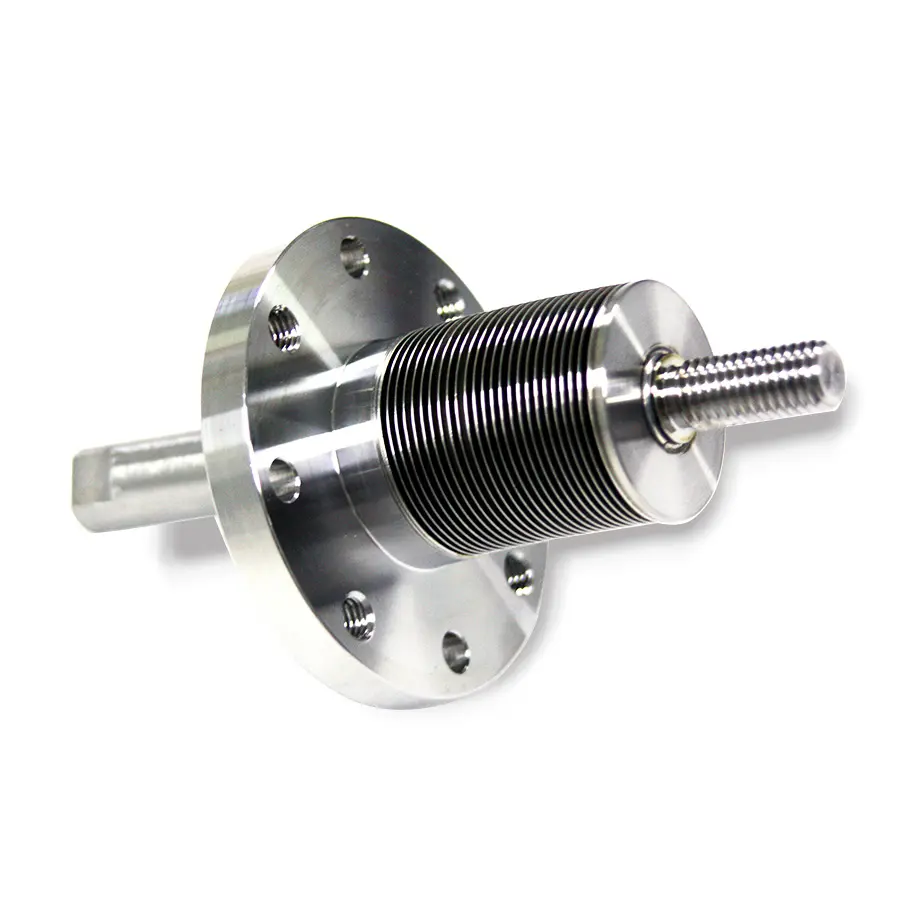
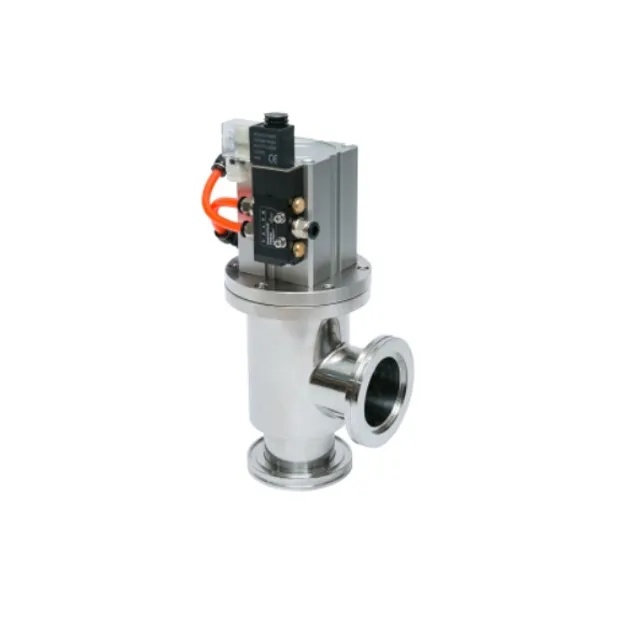
High vacuum bellows are essential flexible components designed to maintain vacuum integrity while allowing controlled movement in ultra-high vacuum systems. These precision-engineered devices serve as critical sealing elements that accommodate axial compression, extension, lateral deflection, and angular rotation without compromising the vacuum environment. Manufactured from high-quality stainless steel or specialized alloys, high vacuum bellows provide leak-tight performance in demanding applications where pressure levels reach from 10^-3 to 10^-12 mbar. The bellows feature corrugated wall construction that enables flexibility while maintaining structural strength and vacuum tightness. Their primary functions include absorbing thermal expansion, compensating for misalignment, reducing vibration transmission, and protecting sensitive equipment from mechanical stress. Technologically, high vacuum bellows incorporate advanced fabrication techniques such as hydroforming, electroforming, or edge-welded construction to ensure minimal outgassing rates and maximum reliability. The internal surface finish is meticulously controlled to minimize virtual leaks and contamination sources. These components are indispensable in semiconductor manufacturing equipment, particle accelerators, space simulation chambers, analytical instruments, and vacuum coating systems. High vacuum bellows enable motion feedthroughs for valves, positioning stages, and load locks while preserving the ultra-clean vacuum environment essential for sensitive processes. Their ability to function reliably across extreme temperature ranges and under corrosive conditions makes them vital for modern vacuum technology applications requiring both flexibility and absolute vacuum integrity in scientific research and industrial production environments.

New Product Recommendations

Choosing high vacuum bellows delivers substantial practical benefits that directly impact your operational efficiency and system reliability. These components eliminate the need for sliding seals or dynamic O-rings that introduce friction, wear particles, and potential leak paths into your vacuum system. By providing flexible movement without rotating or sliding parts, high vacuum bellows significantly reduce maintenance requirements and extend system uptime, translating into lower operational costs and improved productivity. The hermetically sealed construction ensures consistent vacuum performance over millions of compression cycles, offering exceptional durability that protects your investment. Installation is straightforward, with standard flanges that integrate seamlessly into existing vacuum systems without requiring specialized tools or complex procedures. The bellows absorb mechanical shocks and thermal expansion automatically, protecting expensive downstream components from stress-induced damage and premature failure. This protective function is particularly valuable in systems experiencing temperature fluctuations or mechanical vibrations. For applications requiring precise positioning or frequent access, high vacuum bellows enable smooth motion control while maintaining vacuum levels that would be impossible with conventional sealing methods. The corrosion-resistant materials ensure compatibility with aggressive process gases and cleaning procedures, extending service life even in harsh chemical environments. Energy efficiency improves because the low spring rate of high vacuum bellows requires minimal force for actuation, reducing power consumption in automated systems. The bakeable design supports high-temperature degassing procedures essential for achieving ultra-high vacuum conditions, making these bellows suitable for the most demanding scientific and production applications. Decision-makers appreciate that high vacuum bellows offer predictable performance characteristics, with established ratings for pressure differential, cycle life, and temperature range that simplify system design and risk assessment.

Tips And Tricks

Why Are Stainless Steel Vacuum Fittings Preferred in Harsh Environments?

29

May

Why Are Stainless Steel Vacuum Fittings Preferred in Harsh Environments?

In industrial and scientific settings where reliability is non-negotiable, the choice of vacuum fittings can determine whether a system performs flawlessly or fails under pressure. Stainless steel has emerged as the dominant material for vacuum fitti...
View More
What Should Buyers Know Before Choosing a Vacuum Chamber Supplier?

29

May

What Should Buyers Know Before Choosing a Vacuum Chamber Supplier?

Selecting the right supplier for a vacuum chamber is one of the most consequential procurement decisions an industrial buyer can make. Whether you are sourcing for research and development, manufacturing, food processing, or aerospace testing, the qu...
View More
Why Are Custom Vacuum Systems Important for Precision Automation?

29

May

Why Are Custom Vacuum Systems Important for Precision Automation?

In precision automation, the margin for error is measured in microns, and the environments in which sensitive processes occur must be controlled with exceptional care. custom vacuum systems have become a foundational element in this landscape, enabli...
View More
How Can Custom Vacuum Systems Improve Industrial Workflow Stability?

29

May

How Can Custom Vacuum Systems Improve Industrial Workflow Stability?

Industrial workflow stability is one of the most critical factors separating high-performing facilities from those that struggle with downtime, inconsistent output, and rising operational costs. When vacuum technology is involved in production, the p...
View More

Get a Free Quote

Our representative will contact you soon.
Email
Name
Company Name
Message
0/1000

high vacuum bellows

Superior Vacuum Integrity and Leak-Tight Performance

Superior Vacuum Integrity and Leak-Tight Performance

High vacuum bellows deliver unmatched vacuum integrity through their monolithic metal construction that eliminates potential leak paths inherent in dynamic seal designs. Unlike elastomer seals or packed glands that degrade over time and release contaminants, the welded metal structure of high vacuum bellows maintains hermetic sealing indefinitely when operated within design parameters. The helium leak rate typically achieves values below 10^-9 mbar·l/s, meeting the stringent requirements of ultra-high vacuum applications in semiconductor fabrication and particle physics research. The corrugated geometry distributes stress evenly across the bellows convolutions, preventing fatigue cracks that could compromise vacuum integrity even after extended cycling. Advanced manufacturing processes ensure that weld seams are fully penetrated and free from porosity, providing reliable containment of vacuum environments. This leak-tight performance remains consistent across the operating temperature range, from cryogenic conditions to bake-out temperatures exceeding 450 degrees Celsius. The stable vacuum performance eliminates costly production interruptions caused by seal failures and reduces the need for frequent system regeneration. For quality-critical applications where contamination control is paramount, high vacuum bellows provide the confidence that your vacuum environment remains pristine throughout operation.
Exceptional Flexibility with Minimal Spring Force

Exceptional Flexibility with Minimal Spring Force

The engineering design of high vacuum bellows achieves an optimal balance between mechanical flexibility and structural stability, enabling significant axial travel with remarkably low actuation force. The thin-wall corrugated construction allows compression and extension movements that accommodate thermal expansion, positional adjustments, and vibration isolation without imposing excessive loads on connected equipment. This low spring rate characteristic is particularly beneficial in precision positioning systems where external forces could disturb alignment or measurement accuracy. High vacuum bellows can typically handle axial strokes ranging from several millimeters to over 100 millimeters depending on design, while lateral and angular deflections provide additional degrees of freedom for system layout optimization. The predictable force-deflection relationship simplifies actuator sizing and control system design, enabling engineers to specify motors and drives with confidence. Multi-ply bellows configurations can be engineered for applications requiring either increased pressure capacity or reduced spring force, offering design flexibility to match specific application requirements. The inherent damping properties of high vacuum bellows attenuate vibration transmission between system components, protecting sensitive instruments from mechanical noise generated by pumps or motors. This vibration isolation capability is invaluable in electron microscopy, precision metrology, and spectroscopy applications where even micro-scale disturbances degrade performance. The combination of flexibility and strength ensures that high vacuum bellows function reliably throughout their rated cycle life without developing leaks or mechanical failures.
Wide Material Compatibility and Temperature Range

Wide Material Compatibility and Temperature Range

High vacuum bellows are manufactured from carefully selected materials that provide exceptional chemical resistance and thermal stability across diverse operating environments. Stainless steel grades including 304, 316L, and 321 offer excellent corrosion resistance to most process gases, cleaning agents, and atmospheric exposure, ensuring long service life with minimal degradation. For applications involving halogen gases, high-purity nickel, or specialized alloys can be specified to prevent chemical attack. The bakeable design of high vacuum bellows supports vacuum system conditioning procedures that drive adsorbed gases from internal surfaces, enabling achievement of ultra-high vacuum levels below 10^-9 mbar. Operating temperature capabilities extend from cryogenic applications near absolute zero to elevated temperatures exceeding 450 degrees Celsius during bake-out cycles, accommodating the thermal management requirements of diverse processes. The low thermal expansion coefficient of metal bellows minimizes dimensional changes during temperature cycling, maintaining alignment precision in sensitive applications. Electropolished internal surfaces reduce surface area and eliminate microscopic crevices where contaminants could hide, further improving cleanliness and reducing outgassing rates. The material selection and surface treatment options available for high vacuum bellows enable customization to match specific process chemistry, temperature profiles, and cleanliness requirements. This versatility makes high vacuum bellows suitable for applications ranging from cryogenic research systems to high-temperature vacuum furnaces, providing a single proven solution across multiple application domains.

Have questions about the company?

Get a Free Quote

Our representative will contact you soon.
Email
Name
Company Name
Message
0/1000

Get a Free Quote

Our representative will contact you soon.
Email
Name
Company Name
Message
0/1000

Get a Free Quote

Our representative will contact you soon.
Email
Name
Company Name
Message
0/1000