Thin Wall Bellows - Flexible Expansion Joints

All Categories

thin wall bellows

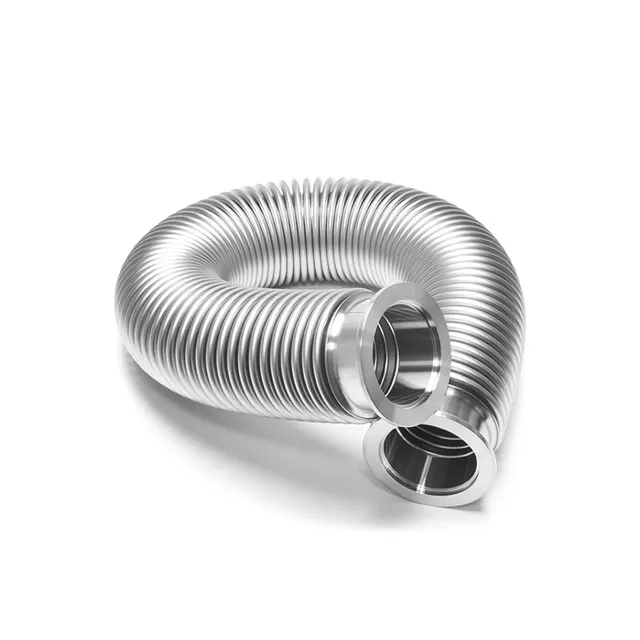
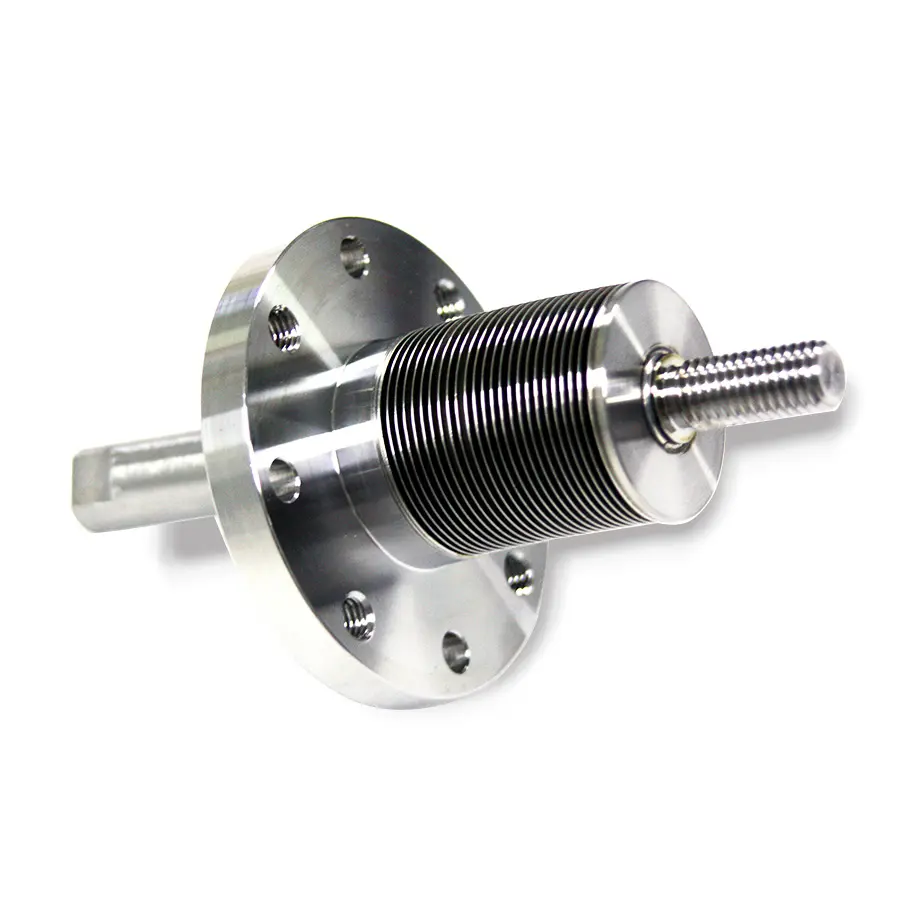
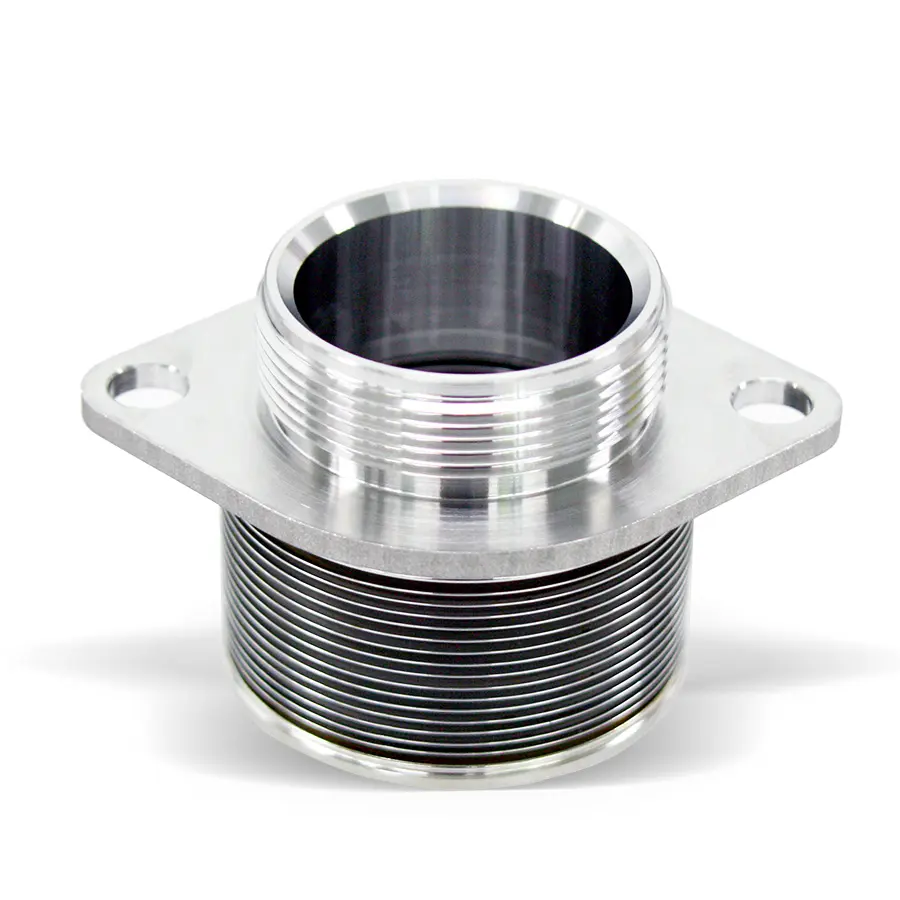
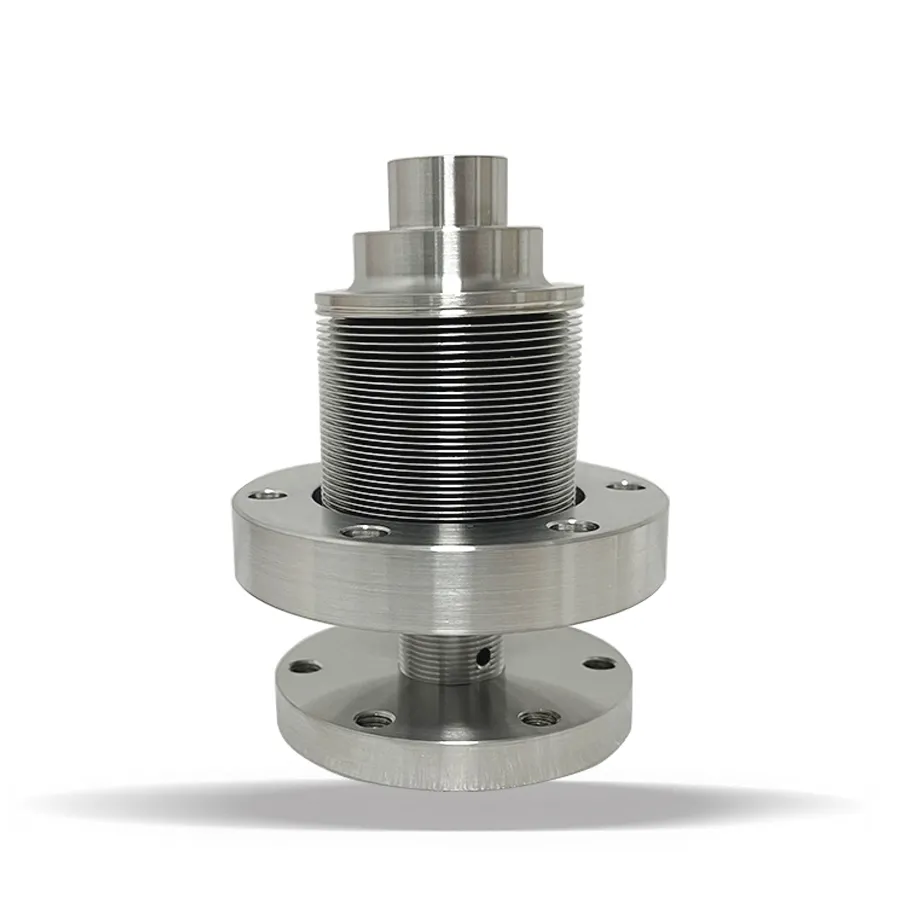
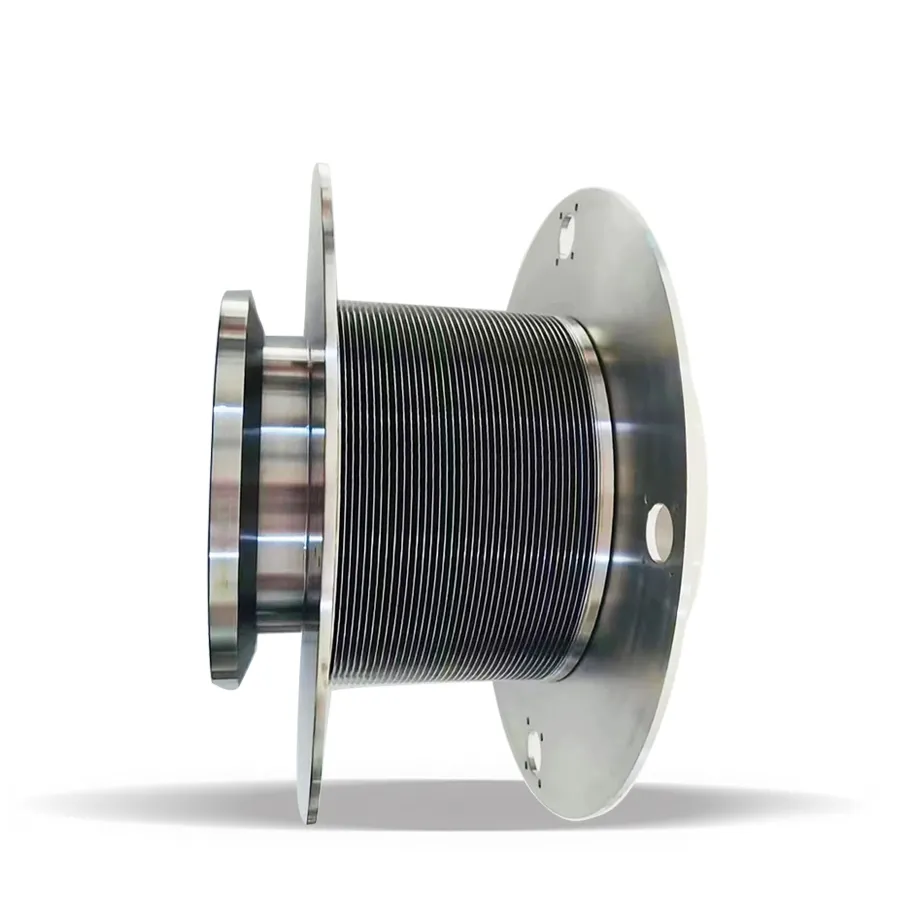
Thin wall bellows are flexible, corrugated tubular components engineered with exceptionally reduced wall thickness to deliver superior performance in demanding industrial applications. These precision-manufactured expansion joints feature alternating convolutions that enable significant axial, lateral, and angular movement while maintaining structural integrity under pressure and temperature variations. The primary functions of thin wall bellows include compensating for thermal expansion, absorbing vibration, reducing noise transmission, and accommodating misalignment in piping systems and mechanical assemblies. Technological features distinguish thin wall bellows through advanced forming processes such as hydroforming and electroforming, which produce seamless construction with uniform wall thickness typically ranging from 0.05mm to 0.5mm. This design methodology maximizes flexibility while minimizing spring rate, allowing installations in space-constrained environments where traditional expansion joints cannot fit. Common applications span aerospace fuel systems, semiconductor manufacturing equipment, vacuum technology, automotive exhaust systems, HVAC installations, and precision instrumentation. The reduced mass of thin wall bellows contributes to lower inertia in dynamic systems, making them ideal for high-cycle applications requiring fatigue resistance. Material options include stainless steel, Inconel, Hastelloy, and specialty alloys selected based on corrosion resistance requirements and operating temperatures. Whether protecting sensitive equipment from thermal stress or enabling compact system designs, thin wall bellows represent an essential solution for engineers seeking reliable flexible connections that deliver consistent performance across temperature extremes and pressure differentials.

New Products

Choosing thin wall bellows provides immediate operational benefits that translate directly into cost savings and enhanced system performance. The reduced wall thickness creates exceptional flexibility, allowing your equipment to accommodate movement with minimal resistance force, which significantly extends component lifespan by reducing stress on connected equipment. This flexibility means installations require less space compared to traditional expansion joints, enabling more compact system designs that save valuable real estate in crowded mechanical rooms or aerospace applications where every millimeter matters. The lightweight construction of thin wall bellows reduces shipping costs and simplifies installation procedures, allowing your maintenance teams to complete replacements faster with fewer personnel. From a performance perspective, the low spring rate characteristic ensures minimal reaction forces on adjacent components, protecting expensive pumps, compressors, and precision instruments from damaging loads. Buyers benefit from superior fatigue resistance, with properly designed thin wall bellows achieving millions of operational cycles without failure, reducing unplanned downtime and maintenance expenses. The seamless construction available through advanced manufacturing eliminates potential leak paths present in welded alternatives, ensuring reliable containment of critical fluids and gases. Temperature tolerance ranges from cryogenic conditions to extreme heat, making thin wall bellows suitable for applications from liquid nitrogen transfer systems to high-temperature exhaust assemblies. Corrosion resistance can be optimized through material selection, protecting your investment in harsh chemical environments. Decision-makers appreciate the customization possibilities, as thin wall bellows can be precisely engineered to match specific pressure ratings, movement requirements, and dimensional constraints unique to each application. This adaptability ensures optimal performance rather than compromising with standard off-the-shelf components that may underperform or overengineer your solution.

Latest News

Which Vacuum Accessories Improve Industrial Process Reliability Most?

29

May

Which Vacuum Accessories Improve Industrial Process Reliability Most?

In high-demand industrial environments, the performance of a vacuum system is rarely determined by the pump alone. The supporting components — the vacuum accessories that seal, connect, isolate, and protect every part of the system — are what separat...
View More
How Can Custom Vacuum Systems Improve Industrial Workflow Stability?

29

May

How Can Custom Vacuum Systems Improve Industrial Workflow Stability?

Industrial workflow stability is one of the most critical factors separating high-performing facilities from those that struggle with downtime, inconsistent output, and rising operational costs. When vacuum technology is involved in production, the p...
View More
How Can Vacuum Solutions Improve Industrial Process Reliability?

29

May

How Can Vacuum Solutions Improve Industrial Process Reliability?

In modern industrial environments, process reliability is not a luxury — it is a fundamental requirement. Equipment downtime, inconsistent output quality, and unpredictable system behavior all carry significant operational and financial consequences....
View More
Why Are Precision Edge Welded Bellow Products Widely Used Today?

05

Jun

Why Are Precision Edge Welded Bellow Products Widely Used Today?

In modern engineering and industrial design, the demand for components that combine flexibility, precision, and long-term reliability has never been higher. The edge welded bellow has emerged as one of the most trusted solutions across a wide range o...
View More

Get a Free Quote

Our representative will contact you soon.
Email
Name
Company Name
Message
0/1000

thin wall bellows

Exceptional Flexibility and Compact Design

Exceptional Flexibility and Compact Design

Thin wall bellows deliver unmatched flexibility through their reduced wall thickness design, enabling installations in confined spaces where conventional expansion joints simply cannot function. The thinner material profile creates lower spring rates, meaning the bellows require significantly less force to compress or extend, which directly translates to reduced stress on connected piping and equipment. This characteristic proves invaluable in precision applications where maintaining alignment and minimizing reaction forces are critical to operational success. Engineers designing compact systems particularly value how thin wall bellows accommodate necessary thermal expansion and vibration absorption without demanding excessive installation length. The space-saving advantage becomes especially important in aerospace assemblies, marine applications, and semiconductor fabrication equipment where dimensional constraints are severe. Furthermore, the enhanced flexibility allows thin wall bellows to handle complex multi-directional movements simultaneously, addressing axial compression, lateral offset, and angular rotation within a single component. This multi-axis capability simplifies system design by eliminating the need for multiple expansion joints, reducing both component count and potential failure points. The compact footprint combined with superior movement capability makes thin wall bellows the preferred solution when space limitations would otherwise compromise system functionality or force costly design modifications.
Superior Fatigue Resistance and Service Life

Superior Fatigue Resistance and Service Life

Thin wall bellows demonstrate exceptional fatigue resistance that significantly outperforms traditional thick-walled alternatives in high-cycle applications, delivering extended service life that reduces replacement frequency and maintenance costs. The controlled manufacturing processes used to create thin wall bellows, such as hydroforming and precision rolling, produce uniform wall thickness and smooth surface finishes that eliminate stress concentration points where fatigue cracks typically initiate. This manufacturing precision combined with optimized convolution geometry distributes operational stresses evenly across the bellows structure, allowing components to withstand millions of compression and extension cycles without material degradation. Applications involving constant thermal cycling, continuous vibration, or repetitive mechanical movement benefit tremendously from this durability, as thin wall bellows maintain structural integrity and leak-tight performance throughout their extended operational life. The reduced material thickness paradoxically contributes to improved fatigue performance by lowering the stress magnitude during flexure compared to thicker walls resisting the same movement. Material selection further enhances longevity, with high-grade stainless steels and specialty alloys offering excellent resistance to corrosion fatigue in aggressive chemical environments. Buyers investing in thin wall bellows realize lower total cost of ownership through reduced downtime, fewer emergency repairs, and extended intervals between planned replacements, making these components particularly cost-effective for critical applications where reliability directly impacts production continuity.
Precise Engineering for Application-Specific Performance

Precise Engineering for Application-Specific Performance

Thin wall bellows can be precisely engineered to meet exact application requirements, providing customized solutions that optimize performance parameters including pressure rating, movement capacity, spring rate, and dimensional specifications. This engineering flexibility ensures that each installation receives a component designed specifically for its operating conditions rather than adapting a generic product that may compromise performance or safety margins. Manufacturers employ sophisticated finite element analysis and empirical testing to validate designs before production, confirming that each thin wall bellows will reliably perform under specified pressure differentials, temperature extremes, and movement cycles. Material selection can be tailored to address specific environmental challenges, whether requiring high-temperature Inconel alloys for exhaust systems, corrosion-resistant Hastelloy for chemical processing, or standard stainless steel grades for general industrial use. Convolution geometry parameters including pitch, depth, and quantity can be adjusted to achieve desired flexibility characteristics while maintaining adequate pressure capacity and fatigue life. End connection configurations accommodate various installation requirements, from welded terminations to flanged interfaces or threaded fittings. This customization capability proves essential for specialized applications in aerospace, medical equipment, vacuum systems, and research instrumentation where standard components cannot meet stringent performance criteria. Engineers appreciate working with manufacturers who understand application-specific challenges and can recommend optimal thin wall bellows configurations that balance competing requirements for a successful installation.

Have questions about the company?

Get a Free Quote

Our representative will contact you soon.
Email
Name
Company Name
Message
0/1000

Get a Free Quote

Our representative will contact you soon.
Email
Name
Company Name
Message
0/1000

Get a Free Quote

Our representative will contact you soon.
Email
Name
Company Name
Message
0/1000