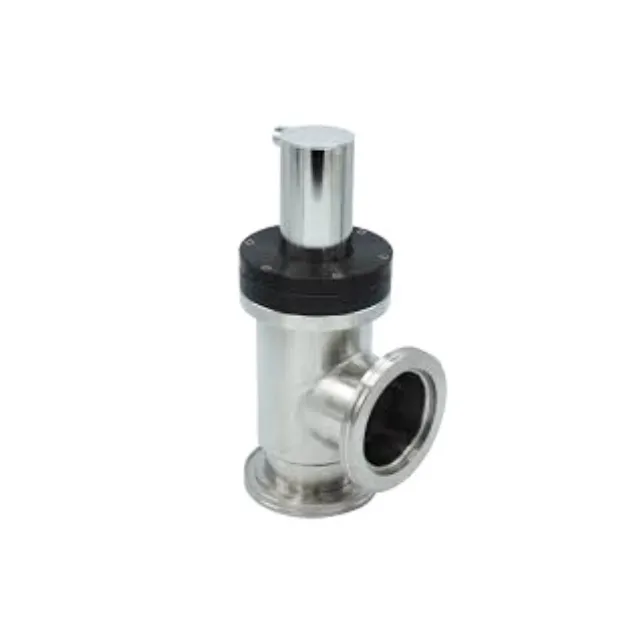
vacuum inlet valve
A vacuum inlet valve is a critical component in vacuum systems that controls the admission of air or gas into a vacuum chamber or process environment. This precision-engineered device serves as a protective barrier between atmospheric pressure and the vacuum space, enabling controlled venting and pressure equalization when required. The vacuum inlet valve operates by opening and closing to regulate gas flow, preventing sudden pressure changes that could damage sensitive equipment or compromise process integrity. Modern vacuum inlet valves incorporate advanced sealing technologies, durable construction materials such as stainless steel or aluminum, and various actuation methods including manual, pneumatic, or electric operation. These valves feature robust designs that withstand repeated cycling while maintaining leak-tight performance across different pressure ranges. The vacuum inlet valve finds extensive application in semiconductor manufacturing, pharmaceutical production, research laboratories, food processing, and industrial coating operations. Its primary functions include controlled venting of vacuum chambers, emergency pressure relief, process gas introduction, and system protection during power failures. The technological features of a vacuum inlet valve encompass high-quality sealing surfaces, corrosion-resistant materials, minimal internal volume, and compatibility with various gases and process conditions. Installation flexibility allows integration into existing vacuum systems with standard flanges and connection types. The valve's response time, flow capacity, and pressure rating are carefully engineered to meet specific application requirements while ensuring operational safety and process reliability.
 EN
EN