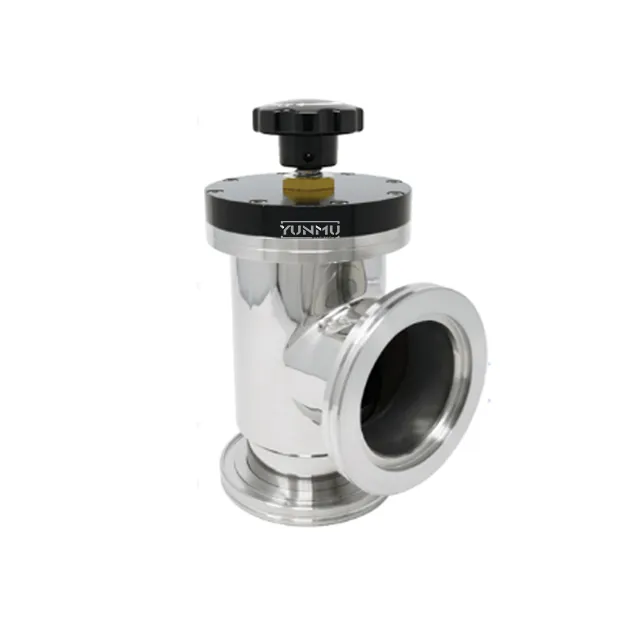
manual vacuum valve
A manual vacuum valve is a precision-engineered component designed to control the flow of gases or create isolation within vacuum systems through direct mechanical operation. This essential device enables operators to manually regulate vacuum pressure by opening, closing, or throttling the valve position without requiring external power sources or automated controls. The manual vacuum valve functions as a critical interface between different sections of vacuum equipment, allowing technicians to establish, maintain, or release vacuum conditions with complete manual authority. These valves incorporate robust sealing mechanisms that ensure leak-tight performance even under high vacuum conditions, typically ranging from rough vacuum to ultra-high vacuum applications. The technological features of a manual vacuum valve include durable construction materials such as stainless steel, aluminum, or specialized alloys that resist corrosion and maintain structural integrity under demanding operational conditions. Advanced sealing technologies, including elastomer O-rings, metal seals, or combination sealing systems, provide reliable vacuum integrity across various pressure differentials. The valve design incorporates precision-machined components that deliver smooth operation and consistent performance throughout extended service cycles. Applications for the manual vacuum valve span numerous industries, including semiconductor manufacturing, pharmaceutical processing, research laboratories, analytical instrumentation, and industrial vacuum systems. These valves serve critical functions in vacuum chambers, processing equipment, load-lock systems, and experimental setups where manual control offers advantages in safety, reliability, and operational flexibility. The manual vacuum valve represents an indispensable solution for facilities requiring dependable vacuum control without complex automation requirements.
 EN
EN